
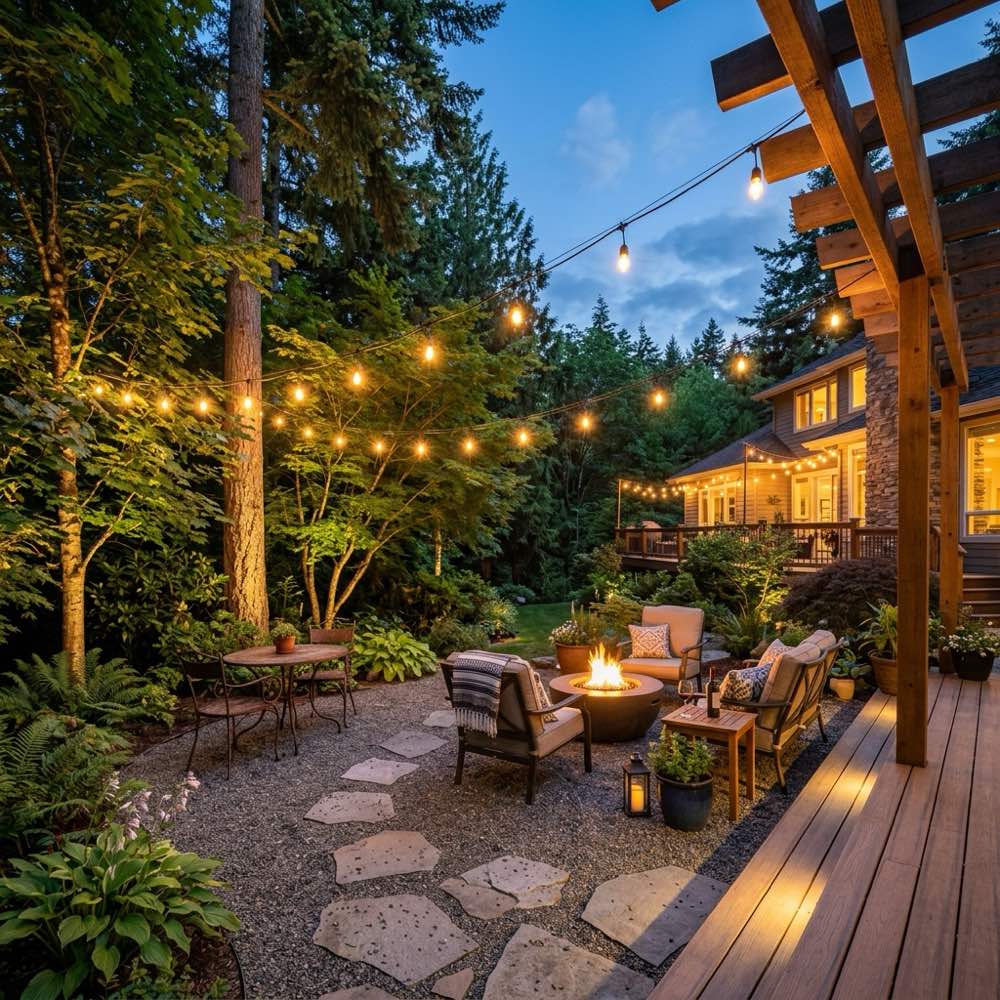
A beautiful backyard should not become unusable once the sun goes down. With the right light placement, you can turn your patio, garden, and lawn into a warm, inviting outdoor living room that is perfect for evening gatherings. Adopting professional backyard lighting design ideas is the best way to extend your home’s living space and create a magical evening atmosphere. Outdoor lighting does more than just illuminate dark walkways; it highlights architectural features, accentuates beautiful trees, and sets a cozy mood. In this comprehensive landscaping guide, we explore how to layer different light sources, choose the right fixtures, and integrate smart controls to illuminate your backyard beautifully.
The Power of Layered Outdoor Lighting
Just like indoor spaces, successful outdoor lighting relies on layering different types of light: ambient, task, and accent lighting. When researching different backyard lighting design ideas, the key is to avoid using a single, bright floodlight that washes out the yard. Instead, use a mix of soft, low-intensity light sources. Ambient lighting provides general illumination for seating and dining areas. Task lighting ensures safety along paths, steps, and cooking zones. Accent lighting draws attention to focal points like fountains, stone walls, or mature trees. Layering these sources creates depth, eliminates dark corners, and makes your yard feel balanced, cozy, and professionally designed.
1. Ambient String Lights and Festoons for Patios
String lights are a classic and affordable way to add instant warmth and a festive mood to your patio or deck. Hang commercial-grade LED festoon lights in a zigzag or crisscross pattern above your seating area to create a cozy canopy of light. This is one of the most popular backyard lighting design ideas for dining zones because it casts a soft, even glow that makes guests feel comfortable. Secure the lights to sturdy posts, trees, or the side of your house, and use a dimmable controller so you can adjust the brightness to suit the occasion, from lively dinners to quiet stargazing nights.
2. Highlighting Features with Path and Uplighting
Accent lighting is where you can get creative, using light to highlight the natural beauty of your landscape. Use low-voltage LED uplights placed at the base of mature trees, stone pillars, or garden sculptures to cast light upward, highlighting their textures and shapes. Integrating uplighting into your backyard lighting design ideas draws the eye to the perimeter of the yard, making the entire space feel larger and more dimensional. For paths and garden beds, install low-profile path lights that direct light downward, illuminating your walkways without shining directly into your eyes or creating glare.
3. Recessed Deck and Step Lighting for Safety
Safety should always be a priority when designing outdoor lighting, especially around steps, pool decks, and changes in elevation. Install small, recessed LED puck lights directly into the risers of your stairs to guide footsteps safely in the dark. You can also place low-voltage cap lights on fence and deck posts to outline the edges of your deck. Additionally, installing linear LED strip lights underneath the handrails of your stairs or deck railing creates a beautiful glowing effect that enhances safety without adding glare. This subtle lighting ensures that guests can navigate your outdoor space without tripping, while adding a sleek, modern look that enhances the architectural lines of your deck or patio installation.
4. Selecting Warm LED Voltages and Lumens
When planning modern backyard lighting design ideas, choosing the right light temperature and brightness is critical. For a cozy, relaxing atmosphere, always choose warm white LEDs, ideally between 2700K and 3000K. This warm light mimics the soft glow of candlelight, which is flattering and soothing. Avoid cool white or blue-toned lights (above 4000K), which can look clinical, harsh, and artificial in natural settings. Beam angles also matter when highlighting foliage; choose a narrow 15-degree spot angle for tall palm trees and a wide 60-degree flood angle for wide shrubs. Keep the brightness low, using fixtures with 100 to 200 lumens for paths and accent areas, and up to 300 lumens for uplighting large trees or architectural features.
5. Solar vs. Low-Voltage Wired Lighting Systems
You must choose between solar-powered fixtures and a low-voltage wired lighting system. Solar lights are easy to install because they do not require wiring, but they depend on direct sunlight and can be dim or unreliable during cloudy weather or winter months. For a professional, reliable setup, install a 12-volt low-voltage wired system. This system uses an outdoor transformer to step down your home’s 120-volt electricity to a safe 12 volts. Run buried, weather-resistant cables to your fixtures, ensuring consistent, bright illumination that you can control reliably year-round. Take the time to calculate your voltage drops over long runs so that the last fixture in the circuit is just as bright as the first one.
6. Smart Lighting Controls and Automation
Modern outdoor lighting systems can be integrated with smart home technology for convenience and energy efficiency. Connect your transformer to a smart plug or install smart LED bulbs that you can control using a smartphone app or voice assistants. You can program schedules that automatically turn on your lights at sunset and turn them off at midnight, or dim the patio lights when you activate a “Movie Night” scene. Using astronomical timers ensures that your system adjusts automatically as sunset times change throughout the seasons, saving energy and effort. Adding motion sensors near entryways or dark garden paths is also highly recommended to turn on lights when movement is detected, providing both safety and security.
7. Cozy Seating and Outdoor Dining Area Staging
To balance your new lighting design, style your outdoor living areas with comfortable furniture and cozy textures. Arrange a low-profile sectional sofa upholstered in weather-resistant linen around a central fire table. Add outdoor throw pillows, a soft knit blanket for chilly evenings, and a large woven outdoor rug to define the space. Position a few tabletop lanterns or candles on your dining table to add flickering, intimate light at eye level. Staging your seating area with these cozy elements invites guests to relax and enjoy the warm glow of your illuminated backyard.
8. Outdoor Lighting Installation and Maintenance Rules
Installing outdoor lighting requires attention to safety and weatherproofing. Ensure all wires are buried at least six inches deep to protect them from lawnmowers and garden tools. Use silicone-filled wire connectors to prevent moisture from entering connections and causing short circuits. Once a year, clean dirt and debris off fixture lenses, trim back any plants that have grown over the lights, and check for burned-out bulbs or damaged wires. Regular maintenance keeps your system working efficiently and ensures your outdoor lights continue to shine brightly for years to come.
In conclusion, implementing these creative backyard lighting design ideas is a wonderful way to transform your outdoor space into a functional, beautiful retreat. By layering ambient string lights, adding uplights to highlight trees, installing step lights for safety, and choosing warm LED colors, you can design a stunning yard. Work with low-voltage systems for reliability, automate your lights with smart controls, and stage your seating area with cozy furniture. Take the time to install and maintain your fixtures properly, and enjoy your magical backyard sanctuary all evening long.