
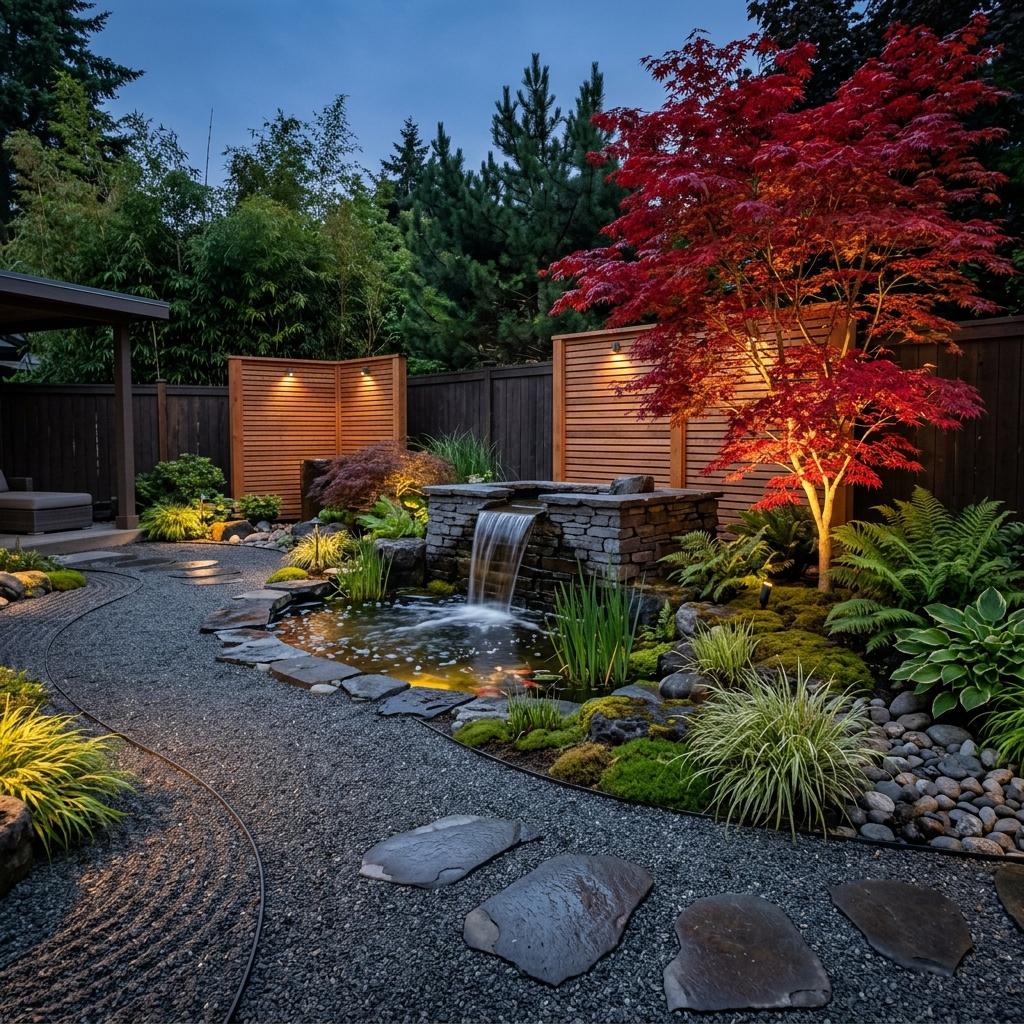
Reclaim your peace of mind outdoors. In 2026, premium landscape design has turned its focus toward high-end private wellness sanctuaries. Homeowners are moving away from traditional grass lawns in favor of low-maintenance, deeply meditative spaces. If you are looking to design a luxurious relaxation retreat, creating a **backyard zen garden ideas** guide is your perfect reference. Let’s explore the key hardscaping, plant selections, and water features to master this peaceful garden aesthetic.
The Philosophy of a Backyard Zen Garden
A Japanese-style Zen garden (karesansui) is designed to represent the natural world in miniature. Raked gravel represents water ripples, large standing basalt rocks represent mountains, and sparse green foliage represents islands. By adopting this minimalist landscaping philosophy, you build an outdoor space that is free of lawnmowing chore, highly sustainable, and deeply therapeutic to look at and walk through.
1. Layer with Raked Gravel and Slate Stone Paths
The foundation of a backyard Zen garden is texture underfoot. Ditch sprawling, thirsty grass lawns. Instead, create large areas of fine white or grey granite gravel. Rake the gravel in swirling, circular grid patterns to evoke waves. To navigate the space, install a curved pathway using flat, charcoal-colored slate stepping stones. The dark slate contrasts beautifully with light grey gravel, guiding visitors slowly through the garden.
2. Position Large Basalt Standing Stones
To anchor the visual layout of your garden, stage clusters of large, natural **basalt standing stones**. Choose stones that are tall, flat-faced, and weathered by water. Bury the base of the stones slightly in the gravel or soil to make them look like they have naturally erupted from the earth. Surround the base of the stones with dark green forest moss or low-growing evergreen shrubs to mimic ancient, island-like mountain peaks.
3. Install a Flowing Slate Rock Waterfall Fountain
Introduce the soothing sensory element of water. Stage a modern, low-profile waterfall fountain built from stacked slate stone. The gentle, bubbling sound of flowing water masks neighborhood noise, creating a quiet bubble of peace. Under the waterfall, build a small gravel basin or a shallow koi pond lined with smooth river stones. Place warm, submersible LED up-lighting inside the water basin to cast dynamic reflections at night.
4. Frame with a Vibrant Red Japanese Maple
Add a spectacular focal point of color. Plant a signature **red Japanese maple tree** (Acer palmatum) near your stone waterfall. The delicate, lacy red leaves of the Japanese maple contrast beautifully with green bamboo privacy screens and dark basalt stone walls. To ensure privacy and structured elegance, frame the perimeter of your Zen garden with light timber slatted fencing or living bamboo walls, keeping the space entirely secluded.
Summary: The Zen Landscaping Checklist
Ready to design your backyard oasis? Refer to this handy design checklist:
| Zen Element | Landscaping Choice | Symbolic Purpose |
|---|---|---|
| Water Representation | Fine grey granite gravel & slate paths | Represents oceans and flowing streams in miniature |
| Mountain Anchors | Weathered Basalt standing stones | Represents ancient volcanic peaks and permanence |
| Sensory Element | Stacked slate waterfall & lighting | Masks background noise with relaxing sounds |
| Color Highlight | Ornamental Red Japanese Maple | Adds explosive crimson color and delicate textures |
To learn more about optimizing your space, explore our guide on Modern Backyard Office Pod Layouts.
For additional tips on creating a beautiful home, read our article about Modern Backyard Inground Trampoline Setups.
If you are planning a renovation, you might also find our ideas on Raised Bed Gardening Guide helpful.
To discover more sustainable choices, check out our tips on Garden Soil Preparation.
Enhance your living space further by exploring our recommendations for Best Solar Outdoor String Lights for Patio.