When designing an eco-friendly home, selecting the right flooring material is one of the most impactful decisions a homeowner can make. Traditional options like solid hardwood contribute to deforestation, while synthetic options like vinyl release toxic chemicals into the indoor air. As warm minimalism and natural materials dominate interior design trends in 2026, cork has emerged as a premium, highly sustainable alternative. By reviewing this detailed analysis of cork flooring pros and cons, you can determine if this unique, comfortable, and regenerative material aligns with your household needs and aesthetic goals.
What is Cork Flooring?
Cork flooring is a natural surface material manufactured from the bark of the cork oak tree (Quercus suber), primarily grown in the Mediterranean region. Unlike standard hardwood flooring that requires cutting down the entire tree, cork is harvested by gently stripping the outer bark from the living tree. The tree survives the harvest and naturally regenerates its bark over the next nine years, allowing for a continuous, sustainable harvest lifecycle that can last for over two hundred years. The harvested bark is ground up, mixed with non-toxic binders, pressed into sheets, and cut into tiles or planks, resulting in a warm, textured floor.
1. Understanding Cork Sourcing and Environmental Sustainability
The environmental credentials of cork are unmatched in the building industry. Cork forests (known as montados) support high levels of biodiversity, providing habitats for rare wildlife and preventing soil erosion. Also, harvested cork oak trees absorb up to five times more carbon dioxide than unharvested trees to fuel their bark regeneration process. This makes cork flooring a carbon-negative building product, as the material stores more carbon than is emitted during manufacturing and transportation. Choosing cork directly supports the preservation of these critical ecosystems, making it a true champion of green home design.
2. The Pros: Comfort, Sound Absorption, and Insulation
Cork has a unique cellular structure filled with millions of microscopic air pockets, acting like a natural honeycomb. When examining the cork flooring pros and cons, comfort stands out as the single greatest advantage. This cellular cushioning provides a soft, springy feel underfoot, reducing fatigue on your joints when standing for long periods. These air pockets also make cork an excellent thermal insulator, keeping floors warm in the winter, and a natural sound absorber, significantly reducing room echo and footstep noise between floors, which is ideal for bedrooms and nurseries.
3. The Cons: Susceptibility to Scratches and Moisture Sensitivity
While cork is highly resilient, it is a soft material that requires careful protection. A vital factor in planning a durable cork layout is understanding its vulnerability to physical damage. High heels, sharp pet claws, and heavy furniture legs can easily puncture, scratch, or dent the soft cork surface. Next, raw cork is highly porous; while it naturally contains suberin—a waxy substance that resists mold and pests—standing water can seep into the seams, causing the tiles to swell and warp. This makes cork unsuitable for high-moisture bathrooms, mudrooms, or high-traffic wet entryways.
4. Choose Between Glue-Down Tiles and Floating Plank Systems
Cork flooring is available in two main formats: glue-down tiles and floating click-together planks. Glue-down tiles are made of 100% solid cork and are adhered directly to a perfectly flat concrete or plywood subfloor. They are highly water-resistant when sealed correctly and allow for creative pattern layouts, such as herringbone or checkerboard. Floating planks feature a top layer of cork laminated to a high-density fiberboard (HDF) core. Floating planks click together easily without glue, making them a popular choice for quick DIY installations, though they are more vulnerable to moisture damage at the seams.
5. Select Eco-Friendly, Low-VOC Protective Sealers
To protect cork from staining, fading, and scratches, you must apply a high-quality sealant. Traditional sealers utilize polyurethane containing high levels of volatile organic compounds (VOCs) that off-gas harmful chemicals into your home. To maintain your home’s indoor air health, choose an eco-friendly water-based polyurethane sealer, or a natural hardwax oil. Hardwax oils penetrate deep into the pores, highlighting the natural grain of the cork while providing a matte finish. Apply three coats of sealer shortly after installation, and re-apply a fresh top coat every few years.
6. Pair with Organic Linen Bedding and Wood Frames
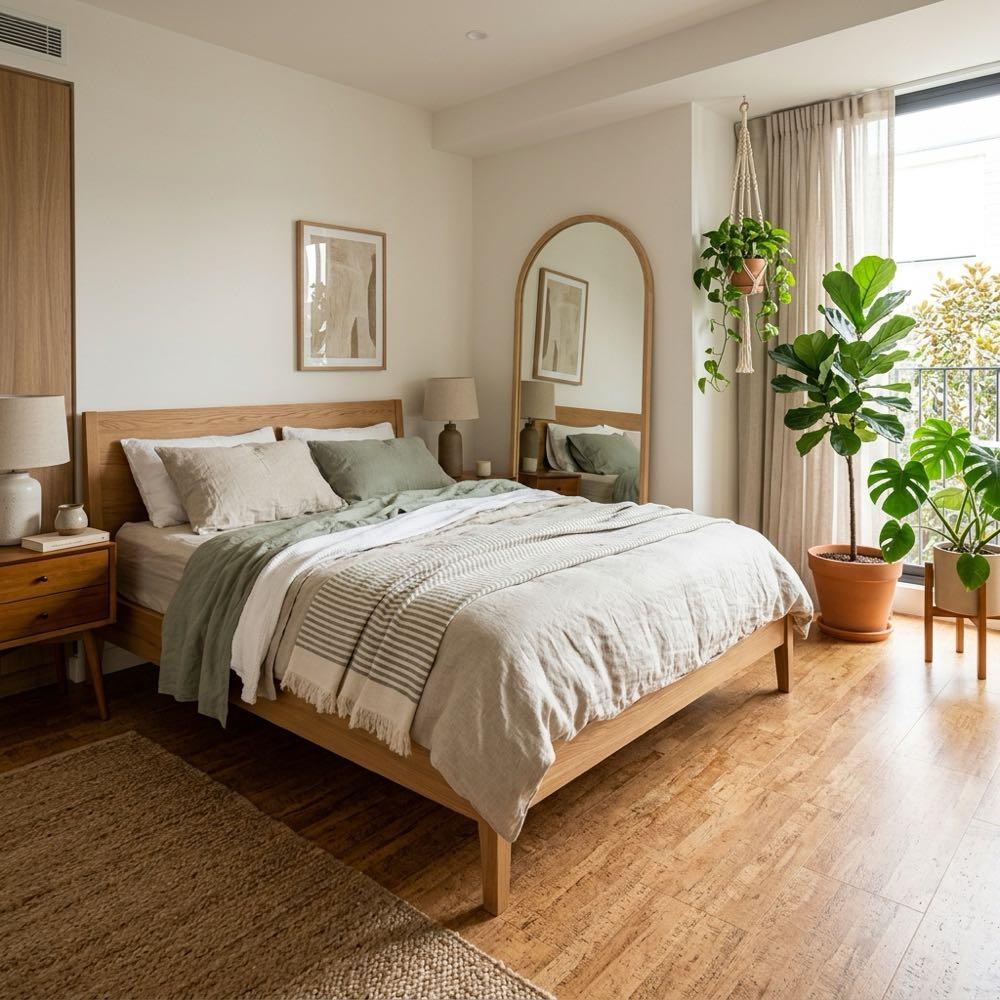
Cork has a warm, honey-like color and a rich, organic texture that fits beautifully within warm minimalist and Japandi design schemes. To stage a cork-floored room, pair it with other natural, sustainable materials. Choose a simple, low-profile bed frame made from FSC-certified white oak or ash timber. Upholster your bedding in organic, un-dyed flax linen in shades of cream, sand, and sage green. Position large green houseplants in terracotta pots around the room to create a soft, biophilic space that feels peaceful, grounded, and connected to the natural world.
7. Maintain and Clean Cork Flooring Correctly
Daily maintenance is key to preventing scratches. Dust and grit act like sandpaper under your feet, grinding down the protective sealer. Sweep or vacuum your cork floor daily using a vacuum set to “hard floor” mode to disable the rotating brush, which could scratch the wood. For weekly cleaning, use a damp—never soaking wet—microfiber mop dipped in warm water and a pH-neutral wood cleaner. Never use harsh chemical sprays, bleach, or steam mops, as excessive moisture and heat will dissolve the glue and cause the cork panels to buckle.
8. Sourcing, Delivery, and Acclimation Requirements
Cork is sensitive to changes in indoor temperature and humidity. Before installing your flooring, you must allow the tiles or planks to acclimate to your home’s environment for at least 48 to 72 hours. Unbox the packages and stack them in the room where they will be installed, keeping the indoor relative humidity between 35% and 55%. This acclimation process ensures the cork tiles stabilize their moisture content, preventing the flooring from expanding, warping, or creating wide gaps between the joints after it is secured to your subfloor pad.
Summary: Cork Flooring Pros and Cons Checklist
Assess cork’s performance and suitability for your home remodel using this checklist compiled from our cork flooring pros and cons guide:
| Feature / Factor | Cork Performance | Sustainability / Layout Purpose |
|---|---|---|
| Harvest Method | Bark stripped from living cork oak trees, regenerates every 9 years | Extremely sustainable, carbon-negative, and protects biodiversity |
| Comfort & Sound | Microscopic air pockets provide elastic cushioning and sound dampening | Reduces joint fatigue, absorbs room echo, and muffles footstep noise |
| Vulnerabilities | Sensitive to sharp pet claws, heavy furniture, and standing water | Requires protective furniture pads and is unsuitable for wet baths |
| Sealer Option | Water-based low-VOC polyurethane or a natural hardwax plant oil | Protects the floor from moisture and stains without off-gassing chemicals |
| Installation Form | Glue-down tiles for water resistance, floating planks for easy DIY | Allows pattern layouts (tiles) or glueless click joints (planks) |
To finish, by weighing the cork flooring pros and cons carefully, you can design a beautiful, healthy, and highly sustainable home. While cork requires basic care to avoid scratches and moisture damage, its unmatched walking comfort, sound-dampening qualities, and carbon-negative environmental benefits make it a superior choice for modern bedrooms and active family living rooms. Take the time to properly acclimate your planks, apply a non-toxic water-based sealer, and enjoy the organic warmth of your eco-friendly, textured flooring.
To learn more about optimizing your space, explore our guide on Sustainable Geothermal Heating and Cooling.
For additional tips on creating a beautiful home, read our article about Sustainable Solar Power Home Battery Storage.
If you are planning a renovation, you might also find our ideas on Rainwater Harvesting System for Home helpful.
To discover more sustainable choices, check out our tips on Upcycled Home Decor Ideas.
Enhance your living space further by exploring our recommendations for Best Eco Friendly Laundry Detergent Sheets.