
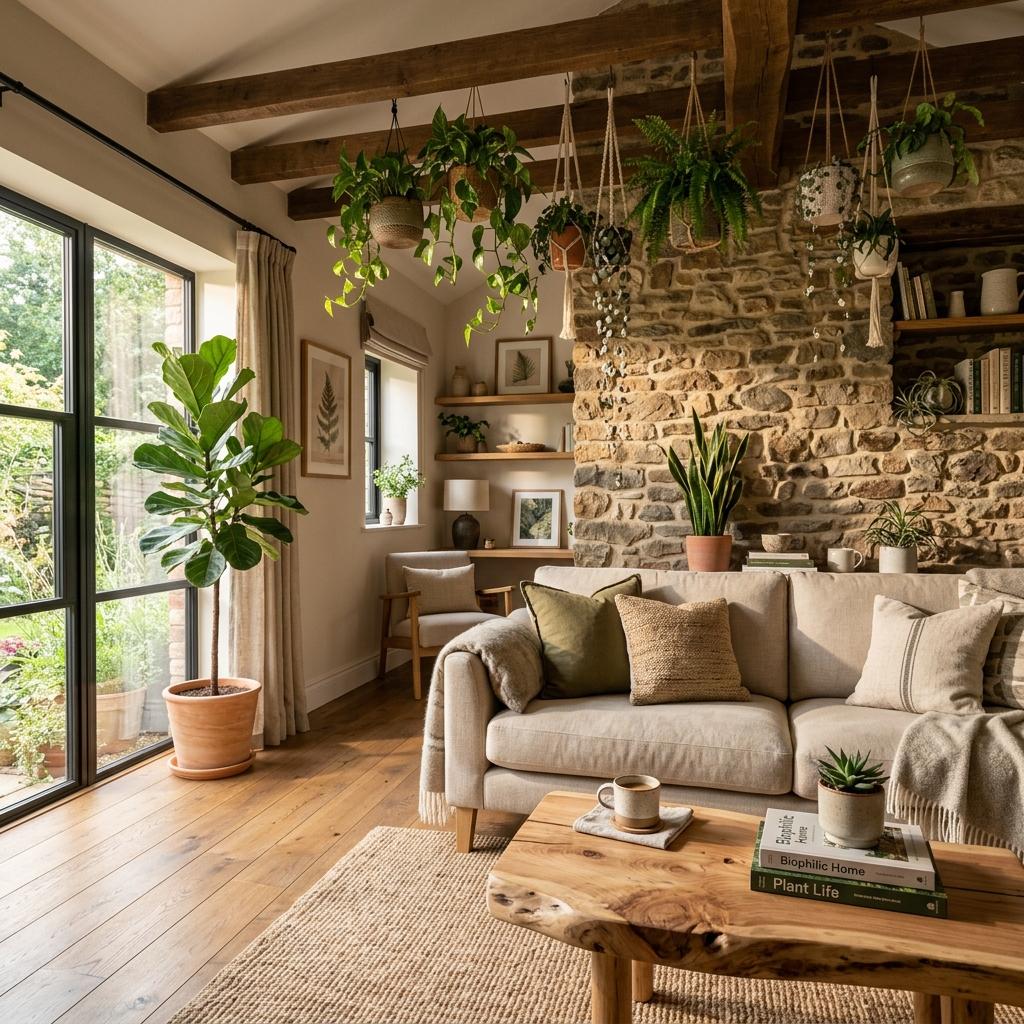
In today’s fast-paced digital world, our homes have become more than just shelters; they are essential sanctuaries for mental and emotional restoration. At the core of modern interior design trends is a growing desire to reconnect with nature, a concept known as biophilia. Transforming your main gathering area using a biophilic living room design is one of the most effective ways to reduce stress, improve cognitive function, and enhance overall mental wellness. By integrating natural light, organic materials, and living plants, you can create a harmonious environment that supports your well-being. This guide offers a comprehensive, step-by-step roadmap to styling a stunning and cozy nature-infused space.
What is Biophilic Living Room Design?
The term “biophilia” refers to the innate human tendency to seek connections with nature and other forms of life. A successful biophilic living room design goes far beyond simply placing a few potted plants on a bookshelf. It represents a holistic approach to design that incorporates direct experiences of nature (like plants, water features, and fresh air), indirect experiences of nature (such as natural materials, organic shapes, and earthy colors), and spatial configurations that mimic natural landscapes. By intentionally bringing these natural elements indoors, a biophilic living room design bridges the gap between modern indoor living and the restorative power of the wild outdoors, offering deep physiological and mental benefits.
1. Maximize and Optimize Natural Daylight
Lighting is the foundation of any wellness-focused interior. Natural daylight regulates our circadian rhythms, which in turn improves sleep quality, balances hormones, and boosts mood. When planning your biophilic living room design, make natural light the central focus of the space. Start by removing heavy, dark drapery that blocks precious sunrays. Instead, opt for lightweight, semi-sheer linen curtains that diffuse light gently while maintaining privacy. Arrange your furniture to maximize views of the outdoors, placing reading chairs and sofas near windows. To enhance the natural daylight even further, place large wall mirrors opposite windows to reflect light deep into the room, making the space feel open, airy, and intrinsically connected to the external weather and daylight patterns.
2. Choose Raw, Organic Materials
To establish a sensory connection with nature, your furniture and decor choices should feature organic materials in their most natural states. Synthetic plastics and high-gloss laminates disconnect us from the physical world, whereas raw textures ground us. When selecting items for your biophilic living room design, look for sustainably sourced woods, rough-hewn stone, matte clay, and organic textiles. A coffee table made from a solid slab of cedar with its live edge intact brings the tactile sensation of the forest directly into your seating arrangement. Complement this with a natural stone accent wall or a fireplace hearth crafted from stacked slate. For upholstery, select soft, natural fabrics like organic cotton, wool, hemp, and linen. These materials not only feel premium but also invite touch, creating a grounded sense of security and peace.
3. Curate a Multi-Layered Indoor Plant Landscape
Plants are the most visible and dynamic element of a natural home. They actively purify the air by absorbing toxins and releasing fresh oxygen, while their visual presence reduces mental fatigue. To create an immersive plant landscape in your biophilic living room design, aim for variety in height, leaf texture, and placement. Begin with a large statement tree, such as a fiddle leaf fig, an olive tree, or a dramatic monstera, positioned in a corner to draw the eyes upward. Next, place medium-sized plants like snake plants, ZZ plants, or bird of paradise on low stools and side tables. Finally, introduce cascading elements by placing trailing English ivy or pothos on high shelves, allowing their leafy vines to drape down naturally. Using raw, handmade terracotta or ceramic pots completes the natural look, adding soft, earthy textures to your plant styling.
4. Incorporate the Soothing Sound of Water
The gentle sound of flowing water has been scientifically proven to lower heart rates, reduce anxiety levels, and mask intrusive external noises. Incorporating a small, modern water feature is a highly sophisticated way to elevate your biophilic living room design. Choose a quiet, tabletop fountain made from natural slate or volcanic rock, where water trickles smoothly over smooth river stones. The subtle, rhythmic sound of running water creates a peaceful background hum, turning your living room into a quiet meditation space. If a water fountain isn’t practical for your layout, you can evoke the essence of water visually. Use soft blue-green color accents, fluid artwork depicting calm oceans, or decorative glass vessels that catch and bend the sunlight, mirroring the shimmering quality of a natural stream.
5. Embrace the Natural Color Palette
The colors we surround ourselves with have a profound impact on our psychological state. A thoughtful biophilic living room design avoids sterile whites or jarring neon colors, opting instead for a palette directly inspired by the natural landscape. Paint your walls in soft, plaster-like tones such as mushroom, warm clay, sand, or light sage green. These colors mimic the earth, immediately lowering stress levels upon entering the room. Introduce deeper accents through furnishings and textiles, utilizing rich forest greens, warm ochres, deep terracottas, and soft sky blues. By wrapping the room in these natural color stories, you create a seamless visual transition between your indoor living space and the outdoor garden, enhancing the feeling of a unified, natural ecosystem.
6. Staging and Layout: Proportions and Patterns
A natural flow is essential for a peaceful environment. In a cozy biophilic living room design, avoid rigid, boxy furniture arrangements. Instead, arrange your seating in circular or semi-circular layouts to encourage open communication and connection. Look for furniture with soft curves and rounded corners, which reflect the organic shapes found in nature. Besides, introduce natural patterns, such as wood grains, botanical textile prints, and woven baskets. These patterns, known as fractal patterns, are visually soothing to the human brain because they mirror the organic structures found in leaves, branches, and shells. By incorporating subtle, repeating natural motifs, you can create a visually relaxing space that feels organic and balanced.
Summary: The Cozy Biophilic Design Checklist
Transforming your home into a natural wellness oasis is simple when you focus on key natural pillars. Use this handy checklist to stage your dream space:
| Design Element | Biophilic Staging Choice | Mental Wellness Benefit |
|---|---|---|
| Daylight & Air | Sheer linen drapery, open windows, wall mirrors | Regulates circadian rhythm and boosts daytime energy |
| Textural Layering | Live-edge wood, raw slate, matte clay, wool rugs | Provides grounding tactile experiences to reduce stress |
| Living Flora | Monstera, bird of paradise, snake plants, trailing pothos | Purifies indoor air and reduces visual mental fatigue |
| Soundscape | Tabletop stone water fountain | Calms the nervous system and blocks stressful outdoor noises |
| Color Scheme | Sage green, warm mushroom, terracotta, sky blue | Creates a soothing environment that fosters emotional balance |
Ultimately, a successful biophilic living room design is not about achieving perfect minimalism, but rather about inviting the beautiful imperfection of the natural world into your daily life. By centering your design around light, natural materials, plants, and flowing water, you create a cozy home that actively supports your mental and physical health.
To learn more about optimizing your space, explore our guide on Mid-Century Modern Living Room Decor.
For additional tips on creating a beautiful home, read our article about Scandinavian Modern Living Room Decor.
If you are planning a renovation, you might also find our ideas on Japandi Living Room Decor helpful.
To discover more sustainable choices, check out our tips on Tuscan Style Living Room Decor.
Enhance your living space further by exploring our recommendations for Best Durable Rugs for Homes with Pets.