
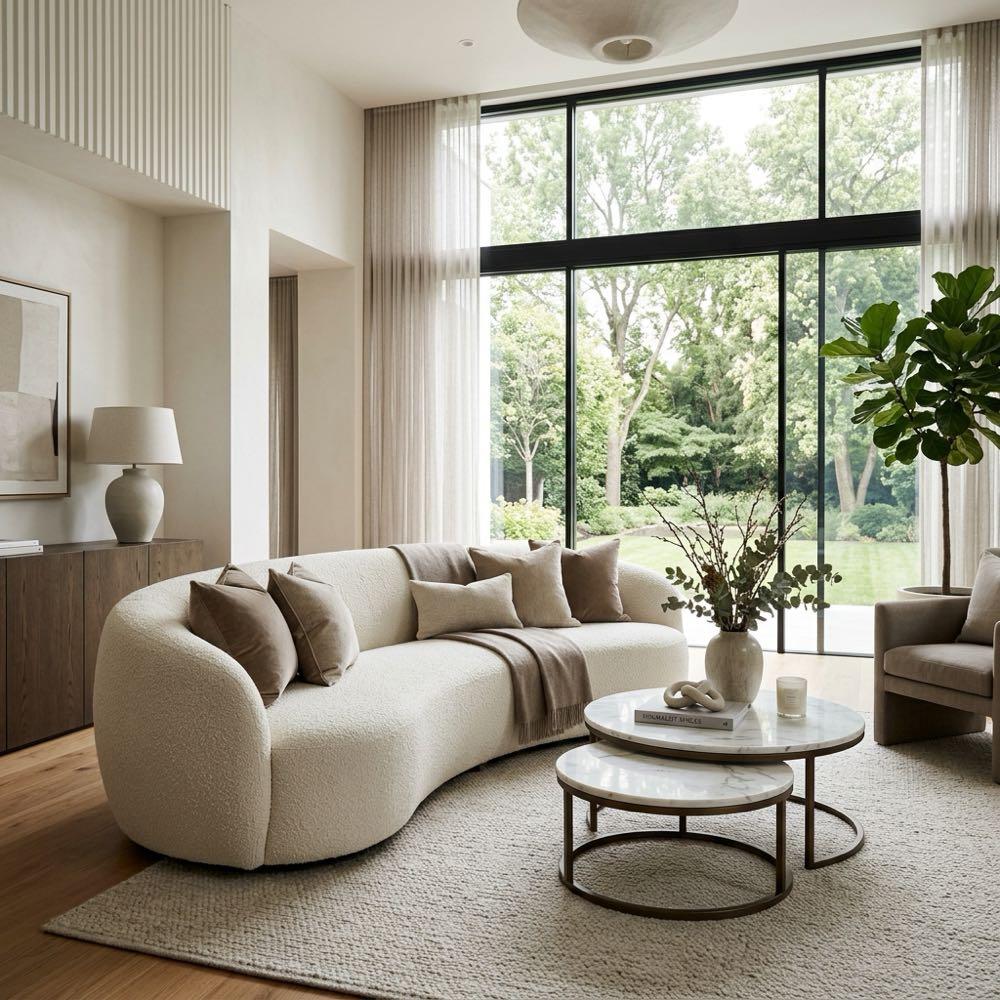
In the evolving landscape of contemporary interior design, the straight, boxy silhouettes that dominated the early 2010s are making way for a softer, more fluid approach to space planning. Homeowners are increasingly prioritizing comfort, flow, and visual interest in their gathering spaces. The absolute biggest design shift in 2026 is the return of curvilinear furniture. By exploring creative curved sofa styling ideas, you can introduce a sense of organic luxury and soft geometry to your living room that instantly makes the space feel collected, sophisticated, and inviting.
What is a Curved Sofa?
A curved sofa (often referred to as a crescent or conversation sofa) is a seating piece designed with a sweeping, rounded frame rather than a traditional rectangular silhouette. Originating from the glamorous Art Deco and mid-century modern design eras, these rounded sofas are built to foster human connection. Unlike flat sectionals that force people to sit side-by-side, the gentle arc of a curved sofa naturally angles guests toward one another, making socializing feel effortless. Typically upholstered in high-texture fabrics like bouclé, chenille, or plush velvet, these statement pieces act as sculptural art, bringing movement and architectural interest to any standard drywall living space.
1. Assess Room Scale and Visual Weight
Before buying a curved sofa, you must carefully measure your living room’s floor plan. Because of their arched backs and rounded ends, curved sofas occupy more physical and visual space than standard rectangular couches. They cannot be pushed flat against a wall without creating awkward, unused triangular gaps. When researching curved sofa styling ideas, scale is the most important factor to analyze. A curved sofa looks best when floating in the center of a room, allowing people to walk entirely around its perimeter. This requires a spacious layout where the furniture can breathe, preventing the room from looking cramped.
2. Position the Sofa to Float in Your Layout
The golden rule of styling a curved sofa is to let it float. Placing a rounded couch against a flat wall hides its beautiful sculptural profile. Instead, position the sofa in the center of the room, facing your main focal point, such as a fireplace, a view window, or a media wall. This floating placement creates a dynamic pathway around the seating area, encouraging natural foot traffic. To anchor the floating layout, place a large circular or custom-shaped organic rug under the entire seating group. This visually frames the zone, making the floating arrangement feel intentional and grounded rather than disjointed.
3. Pair with Round and Organic Accent Tables
A curved sofa introduces a strong, fluid line to your living room, which means your surrounding coffee and side tables must match this geometry. A rectangular coffee table in front of a curved sofa looks mismatched and restricts legroom. Instead, a popular recommendation in curved sofa styling ideas is pairing the sofa with a nest of circular coffee tables or a single large stone table with soft, rounded edges. Travertine, raw concrete, or warm oak coffee tables work beautifully. The repeating circular shapes create a harmonious layout that feels balanced, modern, and easy to navigate.
4. Choose the Right High-Texture Upholstery
Because curved sofas are highly sculptural, they look best in solid, highly textured fabrics that catch the light and highlight the furniture’s contours. Bouclé remains the top textile choice for 2026, offering a cozy, knobby surface that feels warm and organic. If you prefer a richer look, choose a heavy chenille, brushed linen, or a matte nubuck leather. Avoid busy patterned fabrics like stripes or florals; patterns get distorted across the curved seams of the sofa, making the furniture look messy. Stick to solid, earthy neutrals like cream, sand, warm taupe, or olive green to emphasize the form.
5. Balance the Curves with Linear Elements
While repeating curves creates harmony, too many rounded shapes can make your living room look like a cartoon. To prevent this, you must balance the soft lines of your sofa with sharp, linear architectural elements. Many modern curved sofa styling ideas feature a low-profile, long rectangular travertine console table behind the sofa, or a flat-paneled slatted accent wall in the background. You can also hang large rectangular artwork with clean, thin frames on the surrounding walls. This juxtaposition of soft curves and rigid lines creates a sophisticated layout that feels balanced and professionally curated.
6. Arrange Complementary Accent Seating
When adding extra chairs to your curved sofa layout, choose pieces that complement rather than compete with the main sofa. Do not pair a curved sofa with another large curved couch, or the room will feel chaotic. Instead, stage the area with two low-profile, linear lounge chairs directly opposite the arc of the sofa. Armchairs with clean oak frames, leather webbing, or simple metal legs provide a nice architectural contrast. Position the chairs at a slight angle to complete the conversational circle, ensuring guests can easily chat without having to turn their bodies awkwardly.
7. Maintain and Clean Sculptural Upholstery
Textured fabrics like bouclé and chenille are prone to trapping dust, pet hair, and crumbs within their woven fibers. To keep your sofa looking fresh, vacuum it weekly using a soft upholstery brush attachment, moving in circular motions to lift dust from the weave. If you spill liquid on the fabric, blot it immediately with a clean, dry microfiber cloth—never rub, as rubbing pushes the stain deeper into the fibers. For deep cleaning, use a mild, water-based fabric cleaner, or hire a professional upholstery cleaner annually to preserve the texture and protect your investment.
8. Professional Sourcing and Delivery Advice
Curved sofas are typically constructed as a single, solid frame, meaning they do not disassemble into smaller boxes like modular sectionals. Before ordering, you must measure every doorway, hallway, elevator, and stairwell in your home to ensure the delivery team can maneuver the arched frame into your living space. Next, because the frame is curved, ensure the internal support system utilizes high-quality sinuous springs or webbed suspensions coupled with high-density foam cushions. This ensures the rounded edges maintain their shape and comfort for years without sagging.
Summary: Curved Sofa Design Checklist
Design your sculptural seating zone successfully using this checklist compiled from our curved sofa styling ideas:
| Design Element | Recommended Layout Choice | Interior Design Purpose |
|---|---|---|
| Sofa Fabric | Solid cream bouclé, warm taupe chenille, or matte olive velvet | Highlights the sculptural curves of the frame without visual distraction |
| Coffee Table | Nesting circular travertine or rounded organic wooden tables | Aligns with the sofa’s arc and allows easy legroom and walking flow |
| Sofa Placement | Floated in the center of the room, anchored by a large circular rug | Showcases the rounded profile and encourages foot traffic circulation |
| Linear Balance | Long rectangular media console or vertical wood slat accent wall | Softens the curved shapes with grounding architectural lines |
| Accent Chairs | Two low-profile, clean-lined wooden or metal frame armchairs | Provides architectural contrast and completes the conversation zone |
To summarize, by using these curved sofa styling ideas, you can transform your living room into a sophisticated, welcoming sanctuary. Floating your sofa in the center of the layout, pairing it with rounded travertine tables, and choosing tactile, solid neutral fabrics will establish a gorgeous visual anchor in your home. Take the time to measure your space, balance the curves with clean linear details, and enjoy the cozy, social atmosphere of your beautifully styled living room.
To learn more about optimizing your space, explore our guide on Mid-Century Modern Living Room Decor.
For additional tips on creating a beautiful home, read our article about Scandinavian Modern Living Room Decor.
If you are planning a renovation, you might also find our ideas on Japandi Living Room Decor helpful.
To discover more sustainable choices, check out our tips on Tuscan Style Living Room Decor.