
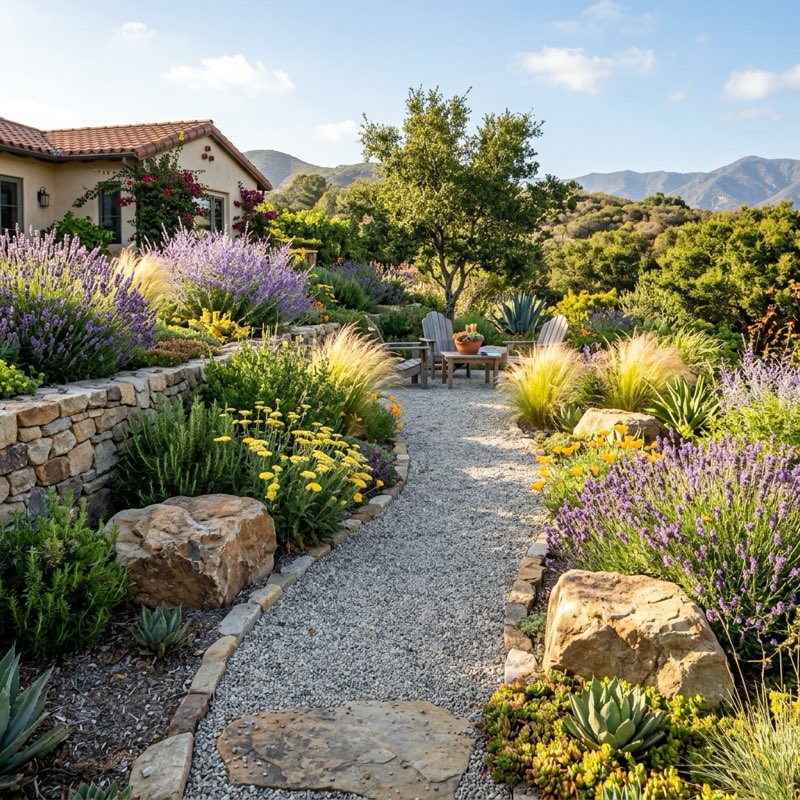
Designing a beautiful backyard doesn’t have to require a massive watering bill or hours of weekly maintenance. As summers become hotter and water costs rise, traditional lawns are being replaced by sustainable, water-wise gardens. Adopting creative drought tolerant landscaping ideas is one of the most effective ways to design a sustainable garden that thrives with minimal water. This landscaping style, often called xeriscaping, combines native plants, decorative stone, and smart irrigation to create a lush, low-maintenance outdoor space. In this comprehensive guide, we explore the best design trends and plant selections to build a drought-resistant yard.
What is Drought-Tolerant Landscaping?
Xeriscaping is the practice of designing landscapes that minimize or eliminate the need for supplemental watering. Exploring various drought tolerant landscaping ideas will help you see that a water-wise yard is not just about rocks and cactus. Instead, modern xeriscaping focuses on selecting region-specific plants, building healthy soil that retains moisture, and using hardscaping elements like gravel paths and stone retaining walls to structure the garden. This creates a balanced, self-sustaining ecosystem that looks lush and beautiful year-round while conserving water.
1. Replace Lawn Areas with Permeable Hardscapes
Standard grass lawns require a massive amount of water and fertilizer to stay green. One of the most effective drought tolerant landscaping ideas is to reduce the size of your lawn and replace it with permeable hardscaping. Create stone patios, gravel paths, and seating areas using natural flagstone, cobblestone, or decomposed granite. These materials are permeable, allowing rainwater to filter naturally into the soil rather than running off into storm drains. This design structures your yard, creates cozy outdoor living areas, and completely eliminates the need for mowing and watering.
2. Cluster Plants in Hydrozones
Grouping plants based on their water needs is a key concept in efficient garden design. Placing a thirsty plant next to a drought-resistant plant can lead to overwatering or plant death. When planning your garden layout, research drought tolerant landscaping ideas that utilize hydrozoning. Divide your yard into zones based on water needs: place your highest-water plants in a small zone close to the house, and arrange low-water native plants in outer zones. This zoning ensures that each plant receives the right amount of water without any waste, promoting healthy growth.
3. Incorporate Drought-Tolerant Native Plants
Native plants are naturally adapted to your local climate, soil, and rainfall patterns, making them highly resilient. When looking for drought tolerant landscaping ideas, prioritize native perennials, ornamental grasses, and shrubs. In dry climates, plants like lavender, Russian sage, purple coneflower, yarrow, and blue fescue grass are excellent choices. These plants produce beautiful blooms and architectural shapes, attracting local pollinators like bees and butterflies while requiring very little water once established, helping you build a healthy, biodiverse yard.
4. Apply a Thick Layer of Organic Mulch
Bare soil loses moisture quickly to evaporation, causing plant roots to dry out. To protect your plants and conserve water, keep your garden beds mulched. A simple but important tip in lists of drought tolerant landscaping ideas is to apply a 3-inch layer of organic wood mulch or bark chips around all plants. Mulch acts as a protective blanket, shading the soil to reduce evaporation by up to 70%, suppressing weed growth, and cooling plant roots. As the organic mulch breaks down over time, it enriches the soil, improving its structure and moisture-retention capabilities.
5. Create Natural Rain Gardens and dry Creeks
Managing rainwater runoff is a key part of sustainable garden design. During heavy rains, water can pool in low areas or run off dry soil. A popular choice among modern drought tolerant landscaping ideas is to build a dry creek bed or a rain garden. Line a natural slope or drainage path with river stones, gravel, and large boulders to mimic a dry stream. Plant deep-rooted native grasses and moisture-loving perennials along the edges. This dry creek slows down stormwater, allowing it to filter safely into the ground while adding a beautiful, natural water feature look to your landscape.
6. Install a Smart Drip Irrigation System
Even drought-resistant plants need water during their first growing season to establish strong roots. Standard overhead sprinklers waste water through wind drift and evaporation. Earning high marks in lists of drought tolerant landscaping ideas is the use of smart drip irrigation. Drip emitters deliver water directly to the soil at the base of each plant, minimizing evaporation. Connect your drip system to a smart irrigation controller that monitors local weather forecasts, pausing the watering schedule automatically when rain is predicted to save water.
Summary: Drought-Tolerant Landscaping Checklist
Building a beautiful, water-wise yard is simple when you focus on these essential xeriscaping choices:
| Landscaping Area | Xeriscaping Staging Choice | Water-Saving & Aesthetic Benefit |
|---|---|---|
| Lawn Replacement | Flagstone patios, gravel paths, decomposed granite | Eliminates mowing and allows rainwater to filter into soil |
| Plant Arrangement | Hydrozones (Group plants by water needs) | Prevents overwatering and ensures efficient water use |
| Plant Selections | Lavender, Russian sage, yarrow, blue fescue grass | Attracts pollinators and thrives on natural rainfall |
| Soil Cover | 3-inch organic bark mulch or wood chips | Reduces soil evaporation by 70% and suppresses weeds |
| Water Management | Dry river rock creek bed with native grasses | Manages heavy rainwater runoff and adds natural style |
In conclusion, adopting creative drought tolerant landscaping ideas allows you to build a highly sustainable, low-maintenance garden. By replacing thirsty lawns, selecting native plants, mulching beds, and installing smart drip systems, you can create a beautiful outdoor space that thrives on natural rainfall, saving you time and money while protecting local water resources.