
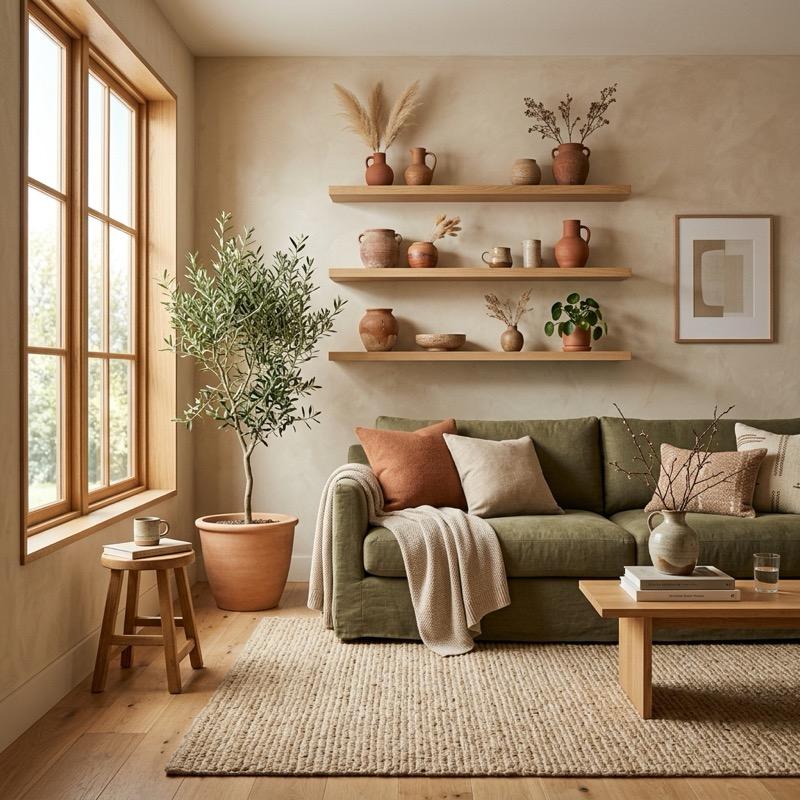
In the fast-paced, high-tech world of modern design, homeowners are increasingly seeking interior spaces that offer a sense of sanctuary, grounding, and peace. As professional interior designers and space planners, we have observed a massive shift away from cold, clinical minimalist designs toward warm, organic, and inviting spaces. One of the absolute best ways to achieve this relaxing atmosphere is by utilizing organic tones. By incorporating thoughtful earth tone living room ideas, you can transform your central gathering space into a cozy haven that celebrates the beauty and tranquility of the natural world.
Understanding the Earthy Color Palette
An earth-tone palette is far more than just a collection of browns and beiges. It is a rich, complex spectrum of colors inspired directly by nature—from the clay beneath our feet to the moss in dense forests and the warm rust of desert stones. When designing a living room, this palette brings a unique balance of warmth and neutrality. By utilizing different textures and shades, you can create a space that feels deeply connected to nature while maintaining a sophisticated, high-end look. In this guide, we will explore practical and creative ways to bring these elements together harmoniously, ensuring your home feels welcoming to everyone who enters.
1. Build Your Palette Around a Neutral Base
The foundation of any successful space design is the color of the walls. When researching earth tone living room ideas, you will find that the most successful projects begin with a soft, warm neutral base. Instead of bright, stark white paint, opt for rich shades of sand, warm beige, cream, or soft plaster finishes. These warm tones absorb natural light beautifully, casting a soft glow across the room. A warm neutral backdrop acts as a blank canvas, allowing your statement furniture and organic accent pieces to stand out without competing for attention. It also makes the room feel larger, brighter, and more open, which is essential for smaller spaces.
2. Choose Statement Seating in Moss Green or Terracotta
Once your walls are prepped, it is time to focus on the room’s main visual anchor: your primary seating. Rather than a safe beige couch, make a design statement with a low-profile sofa upholstered in a rich, nature-inspired fabric. An olive or moss green linen sofa brings the calming energy of the forest indoors, while a terracotta or rust-colored velvet couch adds a rich, sun-drenched warmth. To maintain a modern aesthetic, select seating with clean, simple lines, and pair it with organic, curved armchairs in contrasting textures like cream boucle or soft camel leather. This creates a balanced, inviting layout that naturally draws the eye and encourages conversation.
3. Layer Natural Textures for Depth and Warmth
Without proper layering, a room filled with earthy colors can quickly look flat and monotonous. As interior architects, we emphasize the importance of using contrasting textures to create visual depth. Ground your seating area with a chunky, woven jute area rug or a high-pile undyed wool rug. Introduce natural wood tones through your coffee table and side tables—rough-sawn oak, dark walnut, or reclaimed timber are excellent choices. Finish the look by styling your sofa with textured linen throw pillows and heavy waffle-knit blankets in contrasting shades of clay, forest green, and charcoal. This combination of materials provides a tactile experience that enhances comfort and adds character.
4. Integrate Organic Accent Elements and Accessories
The true character of a room lies in the details. When planning your layout, look for accessories that showcase raw, imperfect beauty. Display hand-thrown terracotta pottery on floating wood shelves, and fill sculptural ceramic vases with dried botanicals, pampas grass, or olive branches. Use stone accents, such as a travertine tray on the coffee table or soapstone coasters, to add another layer of geological texture. These small details tie the earthy theme together, ensuring the room feels carefully curated and organic rather than manufactured. They also provide excellent opportunities to showcase personal collectibles and unique vintage finds.
5. Balance Warm Earthy Elements with Cool Accents
A common pitfall when implementing earth tone living room ideas is creating a space that feels too heavy or dark. To keep the space feeling fresh, bright, and modern, it is crucial to balance the warm earthy elements with cool accents. Incorporate black metal finishes, such as a matte black iron floor lamp, a sleek fireplace screen, or thin metal frames on your wall art. These dark, clean lines add structure and contrast, preventing the warm browns and terracotta shades from muddying together and helping define the room’s spatial boundaries. You can also introduce small metal items like brass trays or copper bowls to add a touch of low-key luxury.
6. Maximize Natural Light and Layer Warm Ambience
Lighting is the key to highlighting the rich textures and subtle undertones of an earthy palette. Keep window treatments light and airy; sheer linen curtains allow sunlight to filter in gently while maintaining privacy. For evening hours, avoid harsh, cold overhead lights. Instead, layer warm ambient lighting using table lamps with ceramic bases, a tall floor lamp in a reading nook, and dimmable accent lights. Warm LED bulbs (2700K) are essential, as they enhance the natural pigments of clay plaster, timber, and warm textiles, making the room feel incredibly cozy. This careful lighting design ensures your space is functional during the day and an intimate retreat at night.
7. Maintain Architectural Symmetry and Scale
In interior architecture, the physical scale and placement of furniture are just as critical as the color choices. To ensure your earthy living room feels balanced, maintain architectural symmetry where possible. Position your primary sofa directly opposite a fireplace or a major media console, and frame it with matching end tables. Ensure that your furniture matches the scale of the room—oversized sofas in a small space will feel cramped, while tiny furniture in a large hall will feel lost. Using furniture with low profiles and raised legs can help maintain a sense of lightness and flow throughout the room, allowing natural circulation paths to remain unobstructed.
Summary: Earthy Living Room Design Checklist
Use this interior designer checklist to successfully implement earth tone living room ideas in your space:
| Design Category | Recommended Styling Choice | Interior Design Purpose |
|---|---|---|
| Wall Finishes | Warm beige, sand, or texturized plaster | Establishes a soft, bright, and light-reflective neutral background |
| Statement Seating | Moss green linen or terracotta velvet sofa | Serves as a colorful, nature-inspired visual anchor for the seating zone |
| Natural Woods | Matte white oak, walnut, or reclaimed wood tables | Brings biological warmth, character, and high-end timber grain textures |
| Textured Layering | Jute or chunky wool rugs, waffle-knit blankets, linen pillows | Adds tactile depth and physical comfort, preventing visual flatness |
| Contrast Accents | Matte black iron fixtures, hardware, and lighting frames | Adds structural definition and modern edge to soft earthy colors |
In short, styling a cozy sanctuary is simple when you focus on natural color palettes, organic textures, and warm lighting. By embracing these creative earth tone living room ideas, you can design a balanced, elegant, and peaceful room where your family and guests can unwind. Remember to start with a warm neutral foundation, layer various materials, and use black metal details to anchor the design, creating a premium living room that feels both sophisticated and deeply relaxing.
To learn more about optimizing your space, explore our guide on Mid-Century Modern Living Room Decor.
For additional tips on creating a beautiful home, read our article about Scandinavian Modern Living Room Decor.
If you are planning a renovation, you might also find our ideas on Japandi Living Room Decor helpful.
To discover more sustainable choices, check out our tips on Tuscan Style Living Room Decor.