
Introduction to Industrial Bathroom Styling
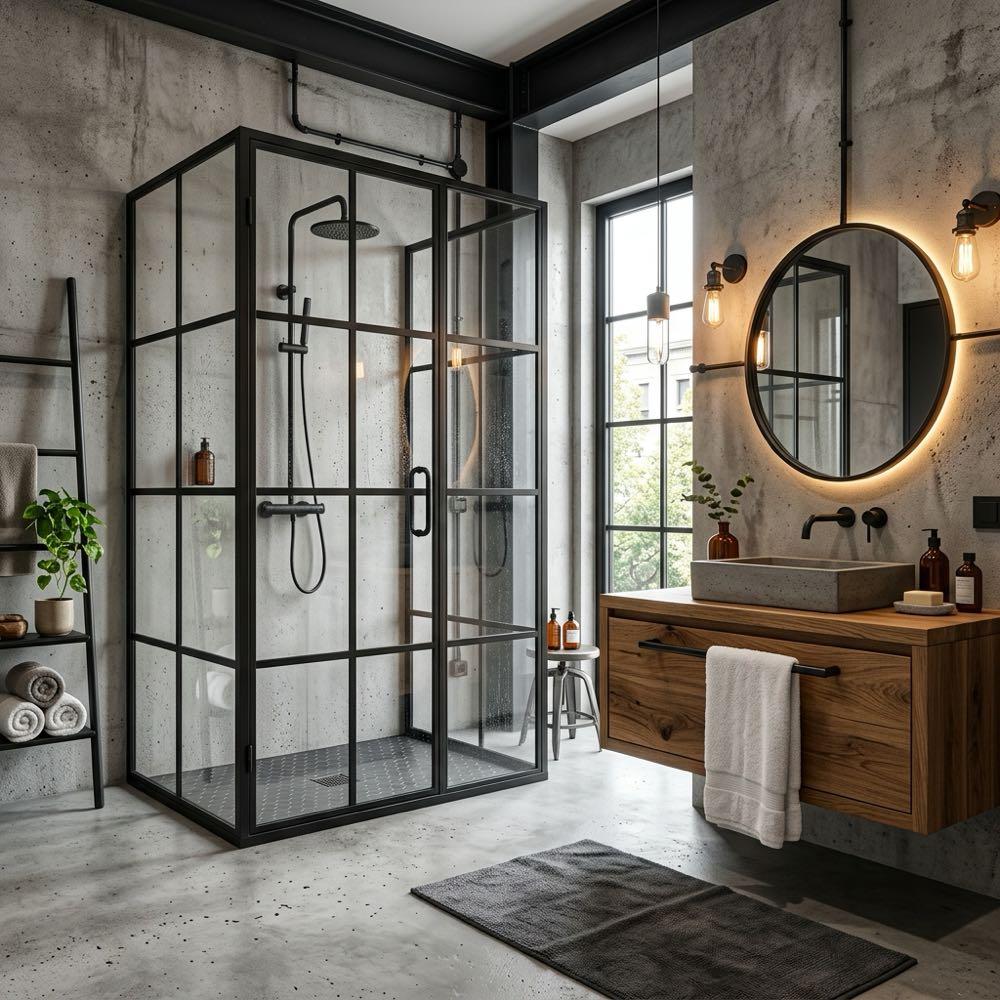
Modern home design frequently focuses on soft palettes, smooth surfaces, and hidden structural elements that can sometimes feel overly delicate. For homeowners seeking a bolder, more architectural look, incorporating raw and exposed materials is a powerful way to inject personality into your layout. In master suite renovations, executing an industrial style bathroom design has become a highly popular way to bring urban loft-style character into your home. Originating from the conversion of old factories and warehouses into residential spaces, this design aesthetic celebrates raw concrete, exposed pipes, steel frames, and distressed wood. By embracing these utilitarian details, you create a space that feels dramatic, structural, and visually striking.
The success of this design lies in its honest, unpolished feel. While standard luxury bathrooms often hide piping and prioritize glossy marble, a successful industrial style bathroom design highlights the beauty of raw structural materials. It pairs the cool, textured look of concrete and brick with the warmth of natural wood vanities and the sleek contrast of matte black steel frames. This layered mix of organic and industrial elements prevents the space from looking cold or clinical, creating a balanced washroom that is both highly functional and artistically curated, offering a unique sensory experience for your daily grooming routines.
Layout, Space, and Glass Enclosures
Before selecting plumbing fixtures or wall finishes, you must plan a layout that supports a spacious and open layout. Industrial spaces traditionally feature high ceilings and open-concept plans, so maximizing sightlines is essential. If possible, avoid heavy drywall partitions that block light and restrict movement. Instead, use glass panels with matte black steel frames to define different zones, such as separating the shower area or water closet, which keeps the visual flow open and emphasizes the raw architectural lines of the room.
When planning an industrial style bathroom design, consider using a curbless walk-in shower or a wet room layout. This design features a continuous floor that runs seamlessly into the shower zone, eliminating traditional barriers. A fixed glass panel with a black grid pattern, reminiscent of old factory windows, serves as the perfect shower enclosure. This grid design adds strong graphic lines to the room and highlights your choice of shower fixtures. Ensure the walkway is wide and the layout allows natural light to reach every corner, enhancing the spacious loft-like feel.
Concrete Walls, Exposed Pipes, and Brickwork
The walls and floors are the primary canvas for displaying raw textures. Concrete is a signature material of this aesthetic, and there are several ways to incorporate it. Poured concrete walls or floors offer a clean, seamless look, while microcement or concrete-effect plaster can be applied over existing drywall to create a textured, velvety gray surface that is completely waterproof. These concrete finishes provide an industrial backdrop that highlights your white porcelain fixtures and warm wood accents.
Exposed plumbing is another hallmark of a classic industrial style bathroom design. Instead of hiding copper pipes or metal conduits inside the walls, leave them exposed as architectural features. Polished copper or matte black pipes running vertically along a concrete wall add beautiful linear detail and historic charm. Pair this look with exposed brickwork. An accent wall of raw, red clay brick brings immediate warmth, color contrast, and organic texture to the space. Ensure the brick is sealed with a matte, non-toxic sealant to protect it from moisture in the bathroom.
Selecting the Perfect Vanity and Metal Accents
To prevent the raw concrete and metal from feeling too cold, you must introduce warm organic materials. A warm wood bathroom vanity is the perfect choice for adding this contrast. Look for vanities made of reclaimed barn wood, distressed oak, or rich walnut with visible wood grain, knots, and hardware marks. A floating vanity design keeps the floor visible, which helps maintain the open feel, while a console vanity with a black metal frame and open wood shelving below provides a utilitarian, industrial look.
Countertop selection should complement the raw theme. A thick concrete countertop with an integrated ramp sink is an excellent option, or choose a dark slate or soapstone surface. Pair your vanity with matte black or industrial-style brass faucets that feature cross-handle controls or wheel valves, resembling factory pipe fittings. Carry this metal finish onto your towel racks, toilet paper holders, and mirror frames. This consistent hardware theme binds the room together, ensuring your industrial style bathroom design feels deliberate and high-end.
Lighting, Mirrors, and Staging with Intent
Lighting is crucial for softening the raw textures and creating an inviting mood. Avoid basic recessed spotlights that wash out the architectural details. Instead, use statement light fixtures that fit the industrial theme. Pendant lights with black wire cages, vintage Edison bulbs, or metal shades are perfect for hanging over the vanity. Pair these with a large, circular mirror framed in matte black metal, or a vintage rectangular mirror with exposed mounting brackets. The soft glow of the lights creates a beautiful, moody atmosphere.
For final staging, keep accessories minimal, durable, and highly functional. Use black metal baskets to hold rolled towels, place handmade concrete soap dispensers on the vanity, and store toiletries in amber glass jars. Introduce biophilic greenery to soften the hard edges: a tall snake plant or a hanging pothos in a simple concrete pot adds organic green color and texture. By carefully curating every decor piece, you ensure the layout remains clean, uncluttered, and artistically balanced, creating a premium sanctuary that feels both historical and contemporary.
Choosing a Cohesive Neutral Color Palette
To tie all the architectural elements together, you need a cohesive color palette. The foundation of this aesthetic is rooted in neutral shades that replicate the colors of warehouse structures. Think of slate grays, charcoal, matte black, and dusty brown tones. Using a range of gray tones on your walls and floors creates a unified, moody backdrop. However, it is essential to prevent the room from feeling dark or cave-like. Introduce lighter contrasting tones, such as soft cream, warm beige, and crisp white, on your ceiling, towels, and porcelain fixtures. This contrast reflects light and makes the room feel spacious and inviting.
Textiles, Linens, and Softening the Hard Materials
Because this design style relies heavily on hard, cold surfaces like metal, concrete, and brick, you must introduce soft goods to balance the textures. High-quality linens and towels are perfect for adding comfort. Choose thick, plush cotton towels in neutral colors like charcoal gray, dark olive, or cream. Hanging these from matte black hooks or placing them in wire baskets softens the visual weight of the room. A simple, textured waffle-weave shower curtain or a heavy linen bath mat adds warmth underfoot and breaks up the smooth concrete floor, creating a balanced and comfortable retreat.
Conclusion
Creating a unique washroom does not require following standard retail trends. Designing a layout with an industrial style bathroom design offers a highly customized, bold, and modern solution for your home renovation. By focusing on raw textures like concrete and brick, leaving pipes exposed as design elements, and incorporating warm wood cabinetry and matte black fixtures, you turn a simple bathroom into a stunning architectural zone. This thoughtful addition improves your daily routines, expresses your personal style, and adds lasting design value to your property, making it a truly rewarding project.
To learn more about optimizing your space, explore our guide on Modern Master Bedroom Sitting Area Layouts.
For additional tips on creating a beautiful home, read our article about Luxury Master Bathroom Walk-In Shower.
If you are planning a renovation, you might also find our ideas on Spa Like Bathroom Design helpful.
To discover more sustainable choices, check out our tips on Modern Powder Room Design Ideas.