
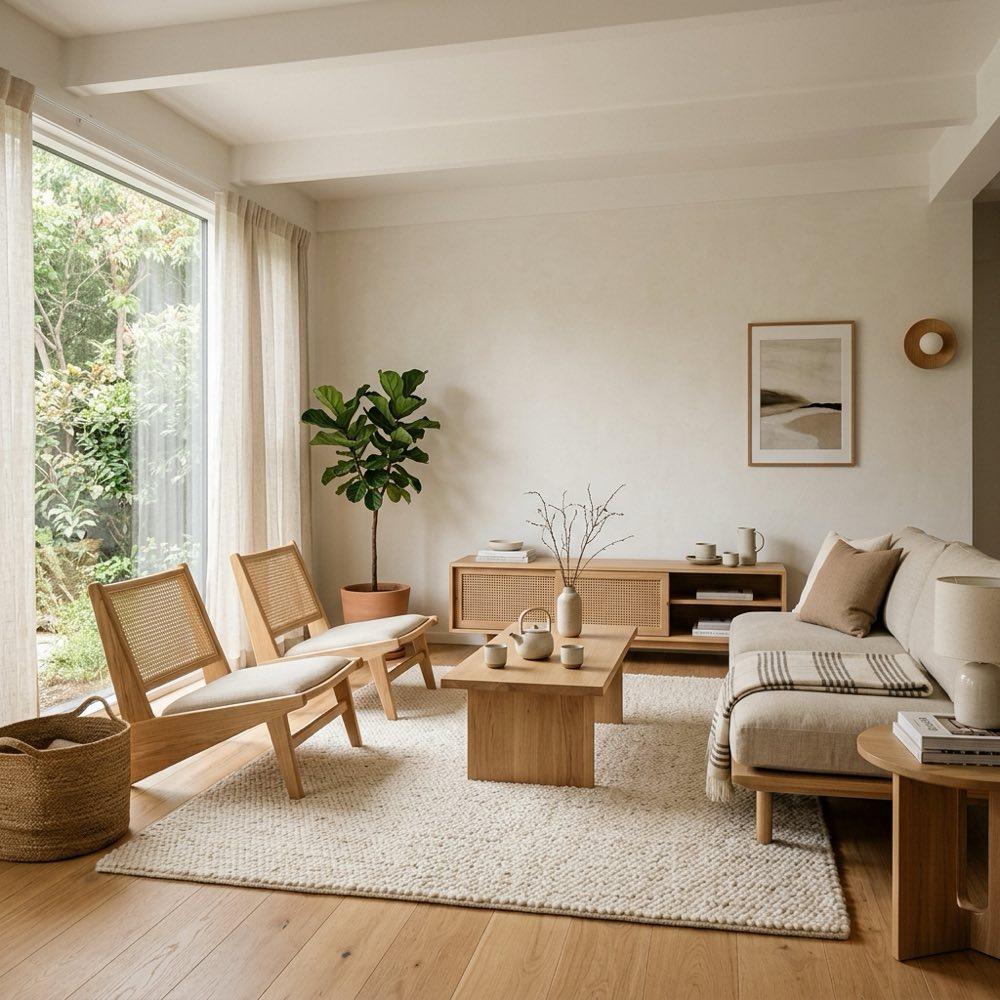
Introduction to Japandi Style
Creating a beautiful home environment requires finding a balance between style and comfort. In modern interior decoration, the concept of a japandi living room design has emerged as one of the most popular and enduring design directions. This hybrid design philosophy blends the ancient Japanese philosophy of wabi-sabi, which finds beauty in imperfection and impermanence, with the clean lines and cozy hygge lifestyle of Scandinavian design. By joining these two distinct styles, you can create a gathering space that feels incredibly calm, uncluttered, and deeply connected to nature.
The beauty of this style lies in its simplicity. Japanese interiors are known for their minimalist aesthetics, clean lines, low-profile furniture, and a deep appreciation for raw, natural materials. Scandinavian interiors complement this by introducing light wood tones, plush textiles, and an emphasis on warmth and comfort. When combined, they resolve the coldness that sometimes accompanies modern minimalism. Understanding how to execute a japandi living room design allows homeowners to enjoy the best of both design worlds: a clean, organized layout that still feels warm, cozy, and highly functional for daily life.
The Core Principles of Japandi Style
To successfully implement a japandi living room design, you must understand the foundational elements of this hybrid design. At its heart, this approach focuses on functionality, natural materials, and an appreciation for craftsmanship. Every item in the space should have a clear purpose and a reason for being there, supporting a slow and intentional way of living. Clutter is the ultimate enemy of this aesthetic, so smart storage solutions and minimalist staging are essential to keep the layout feeling open and airy.
Another core principle is the use of natural elements. This goes beyond simply placing a few house plants around the room. It involves incorporating materials like solid oak, ash, bamboo, rattan, linen, wool, and clay plaster. These raw textures bring organic warmth and visual interest to the space, eliminating the need for excessive ornamentation. In a Japandi living room layout, the natural textures themselves become the main decor, celebrating the unique grain of wood, the weave of fabric, and the subtle texture of the walls.
Choosing the Perfect Color Palette
The color palette is crucial for establishing the serene mood of this style. Scandinavian design typically relies on cool grays, bright whites, and soft blues, while Japanese design favors warm, earthy tones like brown, cream, beige, and charcoal. A successful japandi living room design blends these two approaches by using a warm neutral base. Think of soft cream, oatmeal, sand, and light taupe for the walls, which creates a cozy and welcoming foundation.
To prevent the space from looking flat or washed out, you should introduce contrasting accents. Deep charcoal, slate gray, olive green, and rich indigo are excellent options. These darker tones should be used sparingly on elements like accent cushions, ceramic vases, or metal light fixtures. By contrast, avoid bright, artificial colors that disrupt the calm visual flow. The goal is to build a harmonious, organic palette that reflects the colors of the natural world, bringing peace to your daily life.
Selecting Low-Profile and Functional Furniture
Furniture selection is where the Japanese influence truly shines. Japanese design traditionally uses low-profile furniture to create a closer connection to the earth and make ceilings feel taller. When selecting pieces for a japandi living room design, look for sofas, coffee tables, and lounge chairs that sit close to the floor. A low-profile, clean-lined sofa in a neutral textured fabric like bouclé or heavy linen serves as the perfect centerpiece for the space.
In addition to being low to the ground, the furniture must be highly functional. Avoid pieces with excessive ornamentation or shiny chrome details. Instead, choose furniture made from light-colored natural woods like white oak, ash, or beech. Scandinavian furniture is celebrated for its simple geometry, and this pairs beautifully with the sleek, dark-stained elements often found in Japanese homes. Combining light oak tables with dark charcoal dining chairs creates a balanced contrast that adds sophistication without cluttering the visual field.
Lighting and the Importance of Natural Glow
Lighting plays a massive role in how warm and cozy your space feels. In a Japandi living space, natural light is prioritized above all else. Large windows should be left uncovered or dressed with sheer linen curtains that allow soft, diffused sunlight to fill the room throughout the day. This connection to daylight enhances the organic feel of the space and boosts your overall well-being.
For artificial lighting, avoid harsh overhead fixtures. Instead, focus on layering soft, warm ambient light. Paper lanterns, particularly those inspired by traditional Japanese washi paper, are perfect for creating a warm, organic glow. Position a tall paper floor lamp beside your sofa, and place ceramic table lamps on sideboards. Use warm-toned LED bulbs (around 2700K) to replicate the cozy feel of candlelight. This layered lighting approach ensures that your home feels peaceful and relaxing during the evening hours.
Accessorizing with Intent and Wabi-Sabi Spirit
When it comes to decor, the primary rule is quality over quantity. Instead of filling shelves with mass-produced items, choose a few handmade pieces that tell a story. Hand-thrown ceramic vases, wooden bowls, and woven baskets are ideal. These items embody the wabi-sabi philosophy, celebrating tiny imperfections like asymmetrical shapes and natural color variations. These unique details add character, depth, and a sense of history to the room.
Plants are also essential, but they should be styled minimally. Instead of a crowded collection of tropical plants, choose a single, architectural branch in a large ceramic vase, or place a delicate bonsai on a sideboard. A tall, slender olive tree in a terracotta pot adds a touch of organic green without overwhelming the space. By keeping accessories minimal, you allow the beauty of each individual item to stand out, creating a space that feels curated, artistic, peaceful, and balanced.
Textiles and Layering for Ultimate Hygge
To bring the Scandinavian hygge element into the room, you need to layer cozy textiles. Start with a large, textured area rug made from natural wool or jute. A thick, plush rug in a cream or light gray color adds warmth underfoot and defines the seating area. Ensure the rug is large enough to sit under the front legs of your sofa and chairs, which helps ground the layout.
Layer the sofa with linen throw pillows and a chunky knit wool blanket. Mix different textures like flat-weave linen, soft cotton, and nubby bouclé to create depth without relying on busy patterns. Stick to solid colors within your warm neutral palette to maintain a clean aesthetic. These soft layers invite you to slow down, relax, and enjoy the quiet comfort of your home, making the living room the ultimate sanctuary for your family.
Conclusion
Designing a calm and stylish home does not require complicated solutions. By embracing the principles of a japandi living room design, you can create a space that feels balanced, peaceful, and welcoming. By focusing on low-profile furniture, a warm neutral color palette, natural materials, and intentional decor, you establish a harmonious layout that supports a mindful lifestyle. This design approach is more than just a passing trend; it is a timeless philosophy that celebrates the beauty of nature, the warmth of home, and the joy of simple living.
To learn more about optimizing your space, explore our guide on Mid-Century Modern Living Room Decor.
For additional tips on creating a beautiful home, read our article about Scandinavian Modern Living Room Decor.
If you are planning a renovation, you might also find our ideas on Tuscan Style Living Room Decor helpful.
To discover more sustainable choices, check out our tips on Best Durable Rugs for Homes with Pets.