
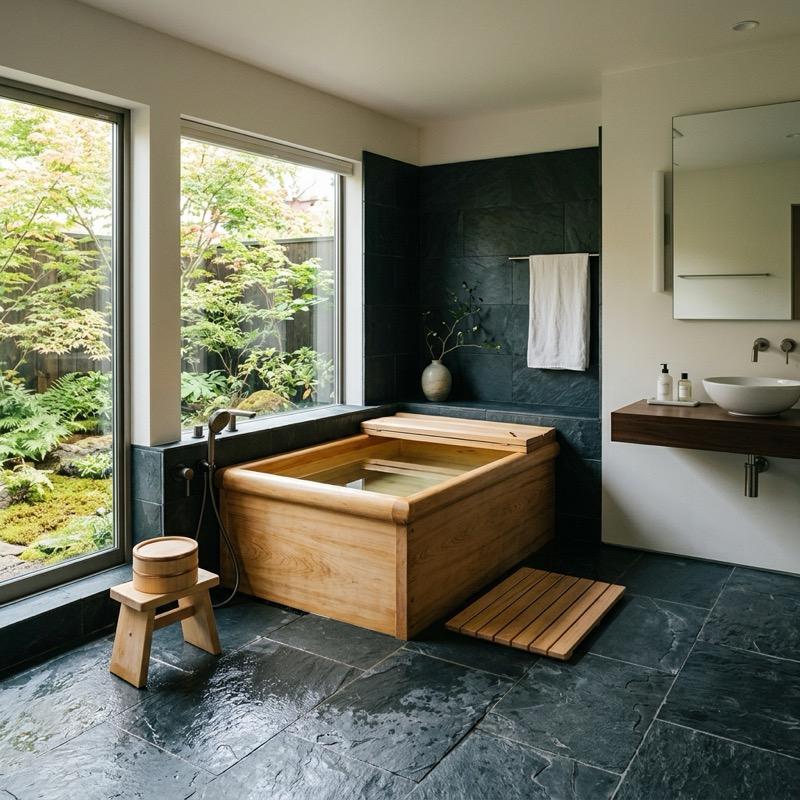
In modern bathroom architecture, the quest for a peaceful, spa-like sanctuary has led to the revival of ancient bathing rituals. At the forefront of this trend is the japanese soaking tub design, a traditional fixture that focuses on relaxation, meditation, and deep water immersion. Unlike standard Western bathtubs designed for reclining and washing, these compact, deep vessels are meant for clean bodies to sit upright and soak in steaming water. This style of bathing is rooted in the Japanese ofuro ritual, which emphasizes mental rejuvenation and physical recovery. By implementing a japanese soaking tub design in your bathroom renovation, you can transform a daily routine into a therapeutic escape that restores harmony to your mind and body.
The Philosophy of the Ofuro
The history and philosophy behind the japanese soaking tub design are centered around the concept of purification and relaxation rather than simple hygiene. In traditional Japanese culture, bathers wash and rinse themselves thoroughly before entering the tub, ensuring that the soaking water remains pristine and hot for multiple family members to use. The primary purpose of the bath is to soothe tired muscles, improve circulation, and provide a quiet space for contemplation. Modern bathrooms are adopting this layout to save floor space while creating a luxurious, spa-like experience. Incorporating this design elements requires understanding the cultural heritage and adapting it to contemporary plumbing standards. This approach encourages a slower, more mindful lifestyle.
Dimensions and Deep Seating Characteristics
A defining characteristic of these tubs is their deep, upright configuration, which allows for full chest-level water immersion while maintaining a small horizontal footprint. Standard tubs are long and shallow, requiring a large amount of bathroom floor space, whereas a japanese soaking tub design is tall and compact. Most models feature an integrated seat or bench, allowing the bather to sit comfortably upright while the water covers their shoulders. This ergonomic design is highly beneficial for small bathrooms, as it occupies less space than a standard alcove tub while providing a more luxurious and immersive soaking experience. The compact shape also helps retain water temperature for longer periods, enhancing the overall efficiency of the bath. Bathers can sit comfortably without slipping or sliding down.
Materials: Traditional Hinoki vs. Modern Acrylic
When choosing materials for your tub, you must decide between traditional woods and modern synthetic options. Traditional ofuro tubs are crafted from Hinoki wood, a species of Japanese cypress known for its fragrant aroma, smooth texture, and natural resistance to rot and insects. When filled with hot water, Hinoki wood releases therapeutic essential oils that soothe the senses. However, wood requires high maintenance to prevent mold and drying out. For a more practical option, modern manufacturers offer tubs made from acrylic, copper, stainless steel, or concrete. These materials provide excellent heat retention, are easy to clean, and fit perfectly into modern minimalist bathroom designs while referencing the classic shape. Many designers combine wood accents with modern tub bodies to create a balanced Japandi aesthetic.
Health and Therapeutic Benefits
The health and therapeutic benefits of regular soaking are well-documented, making the japanese soaking tub design a valuable addition to any wellness-focused home. The deep water immersion creates hydrostatic pressure on the body, which improves blood circulation, reduces muscle tension, and promotes lymphatic drainage. The high water temperature helps open pores, flush out toxins, and soothe sore joints, making it highly beneficial for individuals with arthritis or chronic pain. Besides, the steam from the hot water acts as a natural decongestant, clearing the respiratory system. Incorporating this ancient bathing method into your self-care routine can also reduce cortisol levels, helping to alleviate daily stress and improve sleep quality. It is a simple yet effective way to invest in your long-term physical and mental health.
Designing a Wet Room Environment
Creating a wet room is the ideal way to integrate a soaking tub into a modern home. Because the traditional bathing ritual involves showering and rinsing outside the tub, the entire area surrounding the tub should be waterproofed. Designing a wet room with non-slip tiles, a central floor drain, and a wall-mounted shower fixture allows you to wash and rinse freely before stepping into the hot water. This open-concept layout makes the bathroom feel larger and more cohesive, as there are no glass doors or curbs separating the shower from the tub. It also creates a seamless transition between the active washing area and the quiet soaking zone, enhancing the spa-like atmosphere. It is the ultimate expression of modern bathroom luxury. This creates a seamless wet area that makes your daily bathing ritual feel incredibly open and deeply relaxing.
Comparing Japanese Soaking Tub Options
| Material | Typical Dimensions | Heat Retention | Maintenance Level | Aesthetic Vibe |
|---|---|---|---|---|
| Hinoki Wood | 48″ x 30″ x 32″ | Excellent | High (regular drying/oiling) | Traditional, organic, aromatic |
| Acrylic | 45″ x 45″ x 33″ | Good | Low (standard cleaning) | Modern, clean, minimalist |
| Copper | 42″ x 42″ x 34″ | Excellent | Medium (patinas over time) | Rustic, luxurious, bold |
| Stainless Steel | 48″ x 36″ x 32″ | Medium-Good | Low (wipe dry) | Industrial, sleek, ultra-modern |
| Concrete | 50″ x 36″ x 34″ | Excellent (high thermal mass) | Medium (requires sealing) | Industrial-chic, sculptural, solid |
Structural and Plumbing Requirements
Installing a deep soaking tub requires careful consideration of structural support and plumbing configurations due to the significant weight of the water. A full tub can weigh over one thousand pounds, which may require reinforcing the floor joists, especially on upper levels. The plumbing setup must also accommodate a high-capacity water heater or a dedicated recirculating system to ensure the tub fills quickly and stays hot. Because the tub is much deeper than standard models, the drain and overflow pipe layout must be carefully aligned during the rough-in plumbing phase. Working with a structural engineer and a licensed plumber is critical to ensure a safe, leak-free, and code-compliant installation. These steps prevent costly water damage and guarantee peace of mind.
Water Conservation and Filtration Systems
Water conservation and heating efficiency are also important factors to consider when planning your new bathroom layout. While deep tubs require a significant volume of water, their compact footprint means they often use less water than large double-ended soaking tubs. To maximize efficiency, consider installing a water filtration and heating system that allows the water to be cleaned and reheated for multiple uses. This is a common practice in Japan, where the tub is covered with an insulated lid to retain heat between uses. Choosing a well-insulated acrylic or copper tub can also help maintain the water temperature, reducing the energy required to keep the water hot during long, relaxing soaking sessions. It is a smart way to enjoy the bath while keeping resource consumption low.
To finish, integrating a japanese soaking tub design into your home is an excellent way to elevate your bathroom into a tranquil sanctuary of wellness and relaxation. By selecting the right materials—whether traditional Hinoki wood or low-maintenance acrylic—and planning a dedicated wet room layout, you can enjoy the ultimate soaking experience. Pay close attention to structural floor support, plumbing capacity, and water heating systems to ensure a flawless installation. Embracing this ancient bathing philosophy allows you to escape the stresses of modern life, promote physical healing, and enjoy a peaceful, rejuvenating ritual in the comfort of your own home. It is a timeless addition that brings balance and serenity to your daily routine.
To learn more about optimizing your space, explore our guide on Modern Master Bedroom Sitting Area Layouts.
For additional tips on creating a beautiful home, read our article about Luxury Master Bathroom Walk-In Shower.
If you are planning a renovation, you might also find our ideas on Spa Like Bathroom Design helpful.
To discover more sustainable choices, check out our tips on Modern Powder Room Design Ideas.
Enhance your living space further by exploring our recommendations for Best Cooling Pillows for Side Sleepers.