
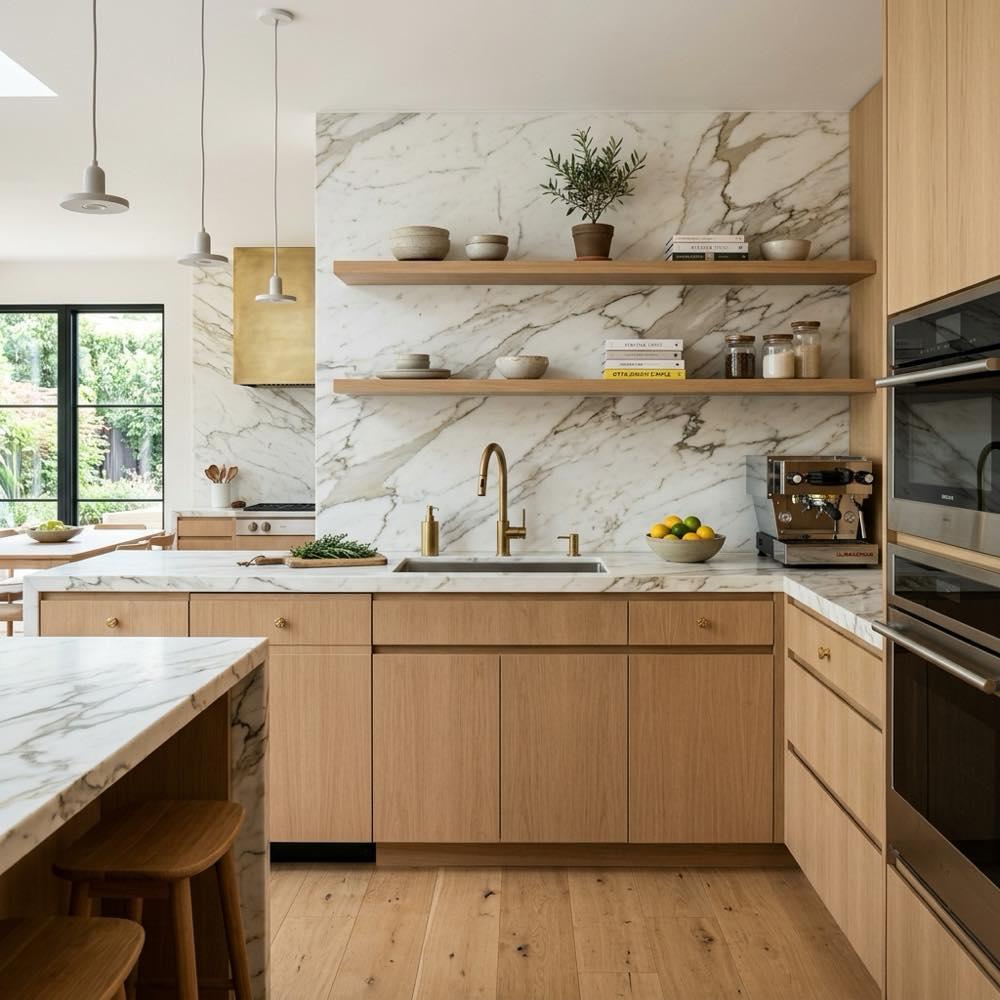
Modern kitchen architecture has shifted away from busy tile layouts and heavy grout lines toward clean, continuous surfaces. Homeowners looking to create a high-end, visual impact in their culinary space are turning to solid stone surfaces. Exploring various kitchen slab backsplash ideas is the absolute best way to design a sleek, luxury aesthetic that elevates the entire room. A slab backsplash uses a single, continuous sheet of stone, quartz, or porcelain instead of individual tiles. This design choice highlights the natural beauty of stone veining and eliminates grout lines entirely. In this ultimate guide, we explore how to choose the right materials, coordinate with your countertops, align veins for visual flow, and care for your solid surface backsplash over time.
What is a Solid Slab Backsplash?
A solid slab backsplash is a modern wall covering made from a single, large piece of stone or engineered material. When researching different kitchen slab backsplash ideas, you will find that these installations offer a level of clean-lined elegance that tiles simply cannot match. Traditionally, backsplashes have been tiled with ceramic, glass, or stone mosaics. While these options are classic, they create a grid of grout lines that can accumulate kitchen grease and dust. A slab backsplash, however, runs from the countertop up to the range hood, cabinets, or ceiling as a solid panel. This grout-free design creates a seamless visual flow, reflecting light beautifully and making even small kitchens feel larger, cleaner, and more unified.
1. Choosing the Right Stone Slab Material
The material you select determines both the visual style and the durability of your kitchen backsplash. For a classic look, marble remains the gold standard, offering rich veining and natural color variations. Quartzite is another popular option, providing the luxury appearance of marble with much greater hardness and resistance to acid etching. If you prefer low maintenance, engineered quartz is excellent because it is non-porous and never requires sealing. Porcelain slabs have also become a top choice because they can mimic exotic stones while being lightweight and highly heat-resistant. Each material brings its own unique character to the kitchen, allowing you to select a texture and finish that aligns with your design goals.
2. Seamless Countertop to Wall Transitions
To maximize the impact of this design trend, install the same stone for both the countertops and the backsplash. Utilizing unified kitchen slab backsplash ideas creates a waterfall-like effect where the stone rolls up the wall, creating a cohesive, high-end feel. This transition removes horizontal joints, drawing the eye upward and emphasizing the height of the ceiling. When the countertop and backsplash are made of the same material, the kitchen looks purposeful and custom-designed. This technique is particularly effective in open-concept layouts where the kitchen wall is visible from the living room, acting as a stunning piece of vertical art.
3. Aligning Veins for Visual Flow
If you choose a stone with strong veining, such as Calacatta marble or dramatic quartzite, proper vein matching is essential. When discussing kitchen slab backsplash ideas with your fabricator, ask about bookmatching or slip-matching the slabs. Bookmatching involves placing two matching stone slabs next to each other so that their veins mirror each other, creating a symmetric pattern. Slip-matching keeps the veins flowing in the same direction across the joint. Proper vein alignment ensures that the transition from the countertop to the vertical wall looks natural and fluid. Failing to plan the vein layout can result in a disjointed pattern that disrupts the flow and lowers the luxury feel of the installation.
4. Styling Around a Statement Slab
Because a solid stone backsplash is such a strong focal point, the surrounding decor should be kept simple and clean. Style the space with floating shelves made from natural wood, like oak or walnut, to break up the stone surface and add organic warmth. Keep countertops clear of clutter, displaying only a few curated items such as a rustic wooden cutting board, a ceramic vase with fresh green branches, or a pair of sculptural brass mills. Choosing handleless cabinets or minimalist hardware prevents the kitchen from feeling visually busy, allowing the natural details of the stone slab to remain the star of the show.
5. Fabrication and Installation Rules
Installing a solid stone slab on a vertical wall requires specialized fabrication and precise measurements. The fabricator must cut holes in the slab for electrical outlets, light switches, and wall-mounted faucets before installation. To ensure safety and a perfect fit, the drywall behind the slab must be flat, stable, and reinforced to support the heavy weight of the stone. The slab is held in place using heavy-duty construction adhesive and silicone, and is supported at the bottom by the countertop. Working with an experienced professional is critical to prevent the stone from cracking during the cutting or installation process.
6. Maintenance and Sealing Protocols
To keep your stone wall looking beautiful, you must follow a proper maintenance and sealing routine. Natural stones like marble, quartzite, and granite are porous and can absorb oils, water, and acidic liquids from cooking splatters. Applying a high-quality impregnating sealer once a year is the best way to prevent stains. For daily cleaning, avoid harsh chemical cleaners, vinegar, or abrasive scrubbers, which can dull the surface or strip away the sealer. Instead, use a mild dish soap and warm water with a microfiber cloth. Clean splatters immediately, especially acidic ingredients like tomato sauce or lemon juice, to keep the stone clean and unstained.
7. Lighting Integration to Show Detail
The right lighting is essential to showcase the texture, depth, and polished finish of your stone slab. Install under-cabinet LED strip lights to cast a warm, even glow down the face of the stone, highlighting the subtle veins and color details. Select light strips with a diffuser to avoid harsh reflections or glare on polished stone surfaces. For a dramatic look, place recessed spotlights in the ceiling close to the wall to wash light down the slab. This lighting design highlights the natural beauty of the material, making the kitchen feel cozy and inviting in the evening.
8. Cost and Budget Considerations
While a solid stone backsplash looks beautiful, it is a significant investment compared to standard tiles. The cost includes the price of the slab itself, as well as the fabrication, cutouts, and specialized installation. To get the luxury look on a budget, consider using a thinner porcelain slab, which offers the appearance of marble at a lower price point. When looking for affordable kitchen slab backsplash ideas, you can also explore alternative stone materials like granite or basalt. Alternatively, you can run the slab only halfway up the wall, finishing the top with a simple painted surface or a floating wooden shelf. Planning your budget carefully allows you to enjoy the beauty of a solid surface backsplash without overspending and keeping costs manageable.
In short, researching and implementing creative kitchen slab backsplash ideas is an excellent way to design a luxury kitchen that stands the test of time. By selecting the right stone material, matching the countertops to the wall, aligning the veins, and lighting the surface correctly, you can create a beautiful focal point. Take the time to properly seal and maintain your stone slab, and enjoy the clean, grout-free elegance of this premium design in your culinary space for years to come.
To learn more about optimizing your space, explore our guide on Modern Kitchen Appliance Garages.
For additional tips on creating a beautiful home, read our article about Sleek Double Kitchen Island Layouts.
If you are planning a renovation, you might also find our ideas on Galley Kitchen Layout Ideas helpful.
To discover more sustainable choices, check out our tips on English Country Kitchen Decor.
Enhance your living space further by exploring our recommendations for Best Smart Air Fryers for Small Kitchens.