
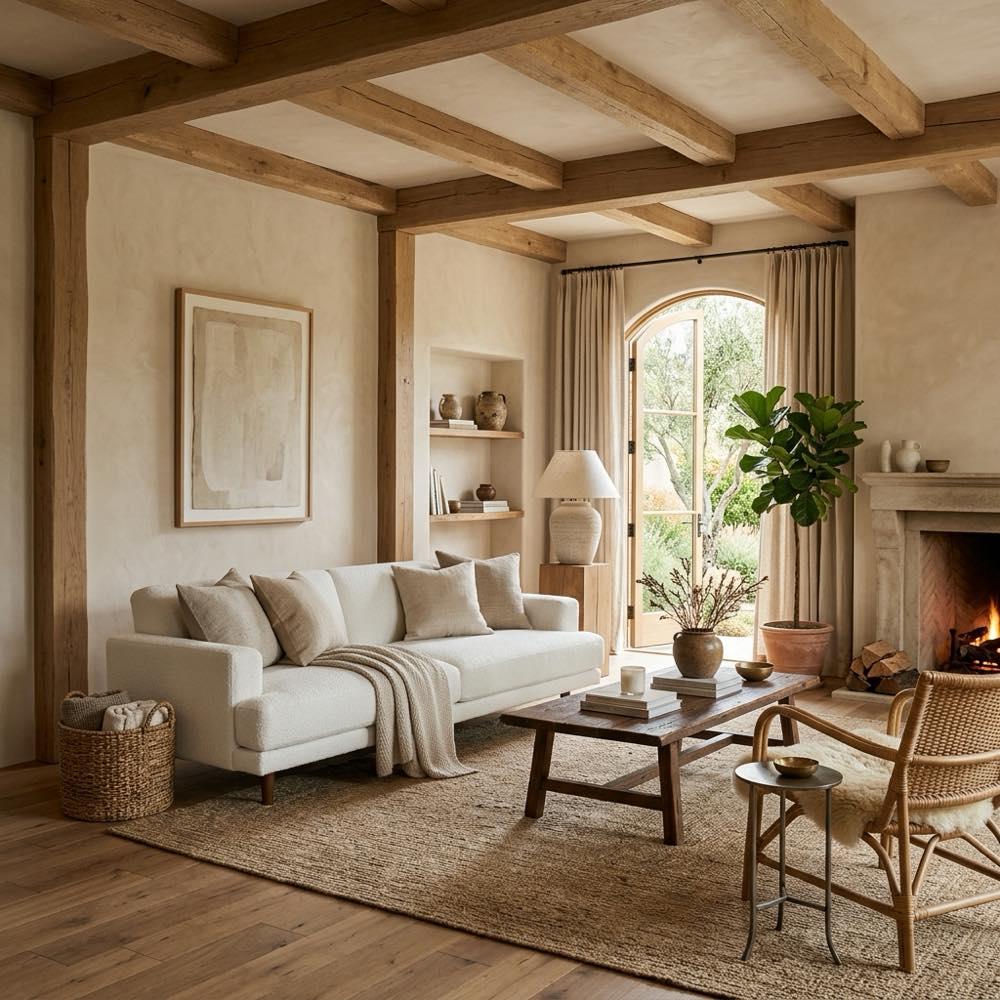
When designing a warm minimalist or modern organic space, walls should be more than just a background. Instead of flat, clinical latex paint, designers are turning to historical finishes that add soft movement and depth. Exploring a limewash paint living room design is the ultimate way to secure a textured, chalky, and suede-like finish. Limewash paint is an ancient, natural, mineral-based finish made from slaked lime, water, and natural earth pigments. When applied, it penetrates porous plaster or drywall, creating a soft, brushed appearance that reflects light beautifully. In this detailed guide, we explore how to choose colors, apply the paint using a block brush, and stage the room with organic furniture.
Why Choose Limewash for Your Living Room?
The primary benefit of choosing a limewash paint living room layout is the rich visual texture it creates. Limewash is made from slaked lime that has been aged, mixed with water, and tinted with earth pigments. Unlike standard latex or acrylic paints that create a plastic-like film over your drywall, limewash absorbs into the wall surface. As it cures, the lime reacts with carbon dioxide in the air to form calcium carbonate crystals, creating a breathable, rock-like surface. This gives the walls a glowing, mineral-rich appearance with subtle variations in color, making your living area look sophisticated, grounded, and connected to historical architectural styles.
1. The Unique Texture and Movement of Lime
The lime particles react with carbon dioxide in the air to crystallize. When planning a limewash paint living room, this crystallization process creates a unique shaded effect that mimics the look of raw stone or vintage plaster. The paint is naturally flat and matte, with no sheen, absorbing glare and diffusing natural light softly across the room. Because the lime is applied in thin, diluted layers, the unique brushstrokes remain visible, creating a soft pattern of highlights and shadows that gives the room an immediate sense of scale, cozy atmosphere, and handcrafted luxury.
2. Sourcing and Breathability Benefits
Limewash is one of the most environmentally friendly wall finishes available. It is naturally non-toxic, odorless, and contains zero volatile organic compounds (VOCs). Because it is free of petrochemicals and synthetic binders, it does not release harmful gases into your space, making it safe for children, pets, and family members with respiratory sensitivities. Besides, because it does not create a sealed film, limewash is highly breathable, allowing moisture to pass through the walls naturally. This breathability prevents trapped moisture behind the paint layer. The high pH value of lime makes it naturally resistant to mold, mildew, and bacteria, as well as discouraging dust mites, making it an excellent choice for improving indoor air quality and creating a healthy home environment.
3. Select the Right Earthy Color Palette
Lime paint looks best in quiet, neutral tones. When researching a limewash paint living room, stick to colors derived from nature, such as warm beige, soft bone, clay terracotta, olive green, or slate grey. These earthy colors highlight the shaded movement of the lime particles, creating a beautiful depth. Avoid bright, saturated, or artificial colors, as they can look flat and defeat the purpose of the mineral finish. Earthy, soft neutrals reflect natural daylight beautifully and establish a calm, grounded base that coordinates perfectly with other natural design elements in your living space.
4. Stage with Rustic Oak and Bouclé Textures
To balance the textured, matte look of limewash walls, you must style the room with contrasting textures and organic furniture. Choose a low-profile sofa upholstered in textured cream bouclé or brushed linen to provide a soft, comfortable seating area. Pair it with a coffee table made from reclaimed rustic oak or raw travertine to add warm wood grain and stone textures. Position large green houseplants in rough terracotta pots around the room, and hang simple linen curtains that drape softly to the floor, creating a cozy, biophilic space that feels peaceful and connected to the natural world.
5. Application Methods: The Block Brush Technique
Unlike modern paints applied with a roller, limewash must be applied using a large, natural-bristle block brush. To get the best look in a limewash paint living room, the brush is moved in sweeping, overlapping cross-hatch strokes (X-patterns). This random movement distributes the lime pigments unevenly, creating the signature shaded movement. Apply two to three thin, diluted coats, allowing the paint to dry completely between layers. Dampening the wall slightly with water before painting helps the limewash bond to the substrate, preventing the paint from drying too quickly and cracking.
6. Sealants and Durability Considerations
Raw limewash is porous and can absorb oils, water, and dirt, making it susceptible to staining. While it is highly durable on walls, it can be difficult to wipe clean compared to standard scrubbable latex paints. To protect high-traffic areas, apply a specialized, breathable mineral sealer or sealer wax over the cured paint. When choosing a protective finish, look for a liquid mineral sealer that chemically bonds with the calcium carbonate in the limewash. This type of sealer does not form a shiny layer on top, preserving the organic texture and flat matte finish. It prevents fingerprints and water spots from staining the lower sections of the wall. This protective sealer protects the walls from smudges and stains without blocking the breathability or altering the beautiful matte texture. If a wall gets scuffed, you can simply brush a small amount of diluted limewash over the spot to touch it up easily and restore the original look.
7. Substrate Preparation Rules
For limewash to bond correctly, the substrate must be porous. If you are applying it over standard painted drywall, you must first apply a specialized mineral primer. This primer contains fine quartz sand that creates a textured, porous surface for the limewash to grip. Ensure the drywall is completely smooth, patched, and clean before priming, as any imperfections or texture differences will be highlighted by the shaded lime paint. Applying the primer with a brush rather than a roller helps to distribute the quartz sand particles randomly, creating a natural background for the limewash. Taking the time to properly prime your walls ensures a flat, consistent, and beautiful finish that will last for years to come.
8. Lighting Integration to Highlight Texture
The beauty of lime paint is how it interacts with light. To highlight the three-dimensional depth of your walls, design your lighting carefully. Direct, bright overhead lighting unfortunately washes out the beautiful texture, making the mineral plaster look flat and uninteresting. Instead, install warm ambient lighting, such as recessed spotlights close to the wall to wash light down the surface, or tall floor lamps that cast soft light upward. During the day, allow natural sunlight to filter through sheer linen curtains, casting soft shadows that emphasize the organic movement and hand-brushed quality of the mineral paint.
To finish, styling a limewash paint living room is an outstanding way to elevate your home design with texture and organic warmth. By choosing the right block brush, applying thin coats in sweeping cross-hatch patterns, and pairing the walls with cozy bouclé and rustic oak furniture, you can create a beautiful, healthy sanctuary. Take the time to properly prime your drywall, layer your lighting to highlight the mineral crystals, and enjoy the peaceful, stone-like beauty of your handcrafted space.
To learn more about optimizing your space, explore our guide on Mid-Century Modern Living Room Decor.
For additional tips on creating a beautiful home, read our article about Scandinavian Modern Living Room Decor.
If you are planning a renovation, you might also find our ideas on Japandi Living Room Decor helpful.
To discover more sustainable choices, check out our tips on Tuscan Style Living Room Decor.