
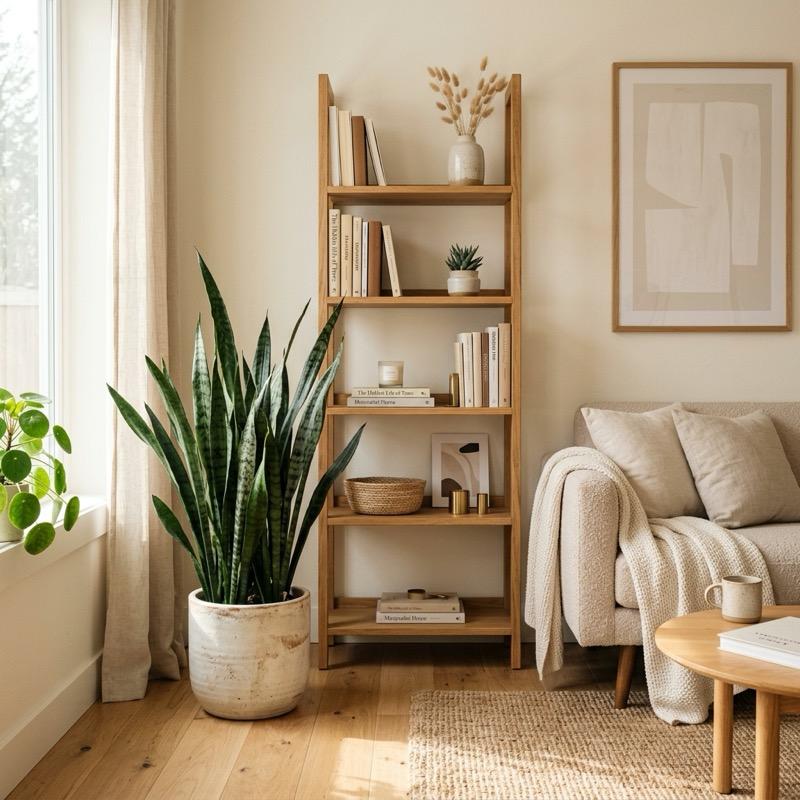
Bringing nature indoors is one of the most effective ways to make a contemporary living space feel warm, fresh, and inviting. Staging houseplants is not just about placing pots randomly on floor corners; it requires a mindful design process. Focusing on a strategic living room plant styling project allows homeowners to balance room scales, fill awkward blank spaces, and improve indoor air quality. By carefully selecting foliage shapes, pot styles, and placement heights, you can transform flat drywall into a layered, biophilic gallery. In this comprehensive guide, we discuss tall specimen trees, shelving configurations, shelf displays, trailing accents, soil drainage, and weekly care guidelines. Let us explore how to style your home with plants today.
1. Integrating Vertical Scale with Large Specimen Plants
To create a professional and high-end look, every living room plant styling project needs a strong vertical anchor. Positioning tall specimen plants, such as a fiddle-leaf fig or a hardy snake plant, next to large furniture pieces immediately draws the eye upward. This technique makes standard ceilings feel much taller and breaks up long, empty wall expanses. For the best visual results, select a mature plant that reaches at least five to six feet in height and plant it in a heavy ceramic or terracotta pot that matches the room’s main color scheme. Placing these large plants near windows ensures they receive sufficient natural light while framing the view beautifully.
2. Selecting Pots and Planters for Design Continuity
The containers you select for your indoor garden are just as important as the plants themselves when styling a cohesive home. Avoid using mismatched plastic nursery pots; instead, invest in high-quality materials like matte concrete, glazed stoneware, or woven seagrass baskets. Keeping your planter colors within a curated palette—such as warm beige, charcoal grey, and earthy terracotta—ensures that the display looks organized rather than cluttered. Also, always select pots with drainage holes and saucers to protect your hardwood floors and wooden furniture from potential water damage.
3. Grouping Plants for Balance and Scale
A common mistake in home design is spacing small plants evenly across the room, which often looks scattered and busy. Instead, focus your living room plant styling efforts on creating distinct, staggered clusters using the interior design rule of three. Group a tall, upright plant, a medium bushy plant, and a trailing vine together on a wooden stand or side table. This variety in height, leaf shape, and texture creates a dynamic, multi-dimensional composition that looks organic and balanced. Staggering the pots also allows each plant to receive adequate light and air circulation.
4. Organizing Shelves and Plant Stands
Utilizing open bookshelves, floating shelves, and multi-tiered plant stands is an excellent way to display smaller houseplants without occupying valuable floor space. When styling a plant shelf, alternate between leafy green plants and non-living decorative items like design books, ceramic vases, and framed art. This combination prevents the shelf from looking like a crowded greenhouse and highlights the unique shape of each plant. For floating shelves, select trailing plants like pothos or heartleaf philodendron, allowing their leafy vines to cascade down the sides of the shelves.
5. Leaf Patterns, Colors, and Textures
Layering different foliage textures and leaf patterns is the secret to making your living room plant styling display look lush and professionally designed. Pair the broad, glossy leaves of a rubber tree with the delicate, feathery fronds of a parlor palm or the striped patterns of a calathea. This contrast in leaf shapes prevents the plant groupings from blending into a single green mass. If your living room has a neutral color palette, consider adding plants with colorful foliage, such as the deep purple leaves of a wandering dude or the pink veins of a nerve plant, for a subtle pop of organic color.
6. Standard Plant Specifications and Care Guide
| Plant Name | Light Requirement | Watering Frequency | Best Placement | Design Function |
|---|---|---|---|---|
| Fiddle-Leaf Fig | Bright, indirect light | Every 7 – 10 days | Near east-facing window | Tall vertical statement anchor |
| Snake Plant | Low to bright light | Every 2 – 3 weeks | Empty room corners | Sculptural structural height |
| Golden Pothos | Low to medium light | Every 7 – 14 days | High shelves or mantels | Cascading trailing accent lines |
| ZZ Plant | Low, indirect light | Every 3 – 4 weeks | Dim sideboards or shelves | Glossy textured low-care leaf fillers |
| Monstera Deliciosa | Bright, indirect light | Every 7 – 10 days | Spacious floor areas | Bold tropical focal statement |
7. Staging Plants to Highlight Architectural Features
Staging your indoor garden is an excellent way to emphasize the unique architectural details of your home. You can direct attention to a beautiful fireplace mantel or a custom window seat by placing potted trailing vines along the ledge. If you are starting a new living room plant styling layout, use plant stands of varying heights to frame your main sofa or armchair. This framing technique creates a comfortable, cocoon-like feeling that makes the seating area feel grounded and secure, improving the room’s overall flow and comfort.
8. Soil Health, Watering, and Maintenance
Maintaining the health of your houseplants is essential to keeping your styled displays looking vibrant and clean. Always use a high-quality, well-draining potting mix that allows oxygen to reach the plant roots, preventing root rot. Dust the leaves of your large plants monthly with a damp microfiber cloth to ensure they can photosynthesize efficiently and stay free of dust. Also, trim away any yellow or dead leaves regularly to keep the plant’s shape neat, clean, and professional.
To finish, planning a custom living room plant styling layout is an exceptional way to add color, texture, and organic warmth to your home. By selecting statement specimen trees, choosing planters in consistent materials, stagger-grouping pots, and caring for your plants regularly, you can design a beautiful biophilic environment. Take the time to align your plant layouts with your lighting conditions to ensure long-term health and growth. Enjoy the peaceful, artistic comfort that this fresh design brings to your daily home life. when arranging your home design makeover it is crucial to focus on natural textures and cohesive color palettes that elevate the visual appeal of every room in your house ensuring the layout remains comfortable and cozy for daily living for the entire family to enjoy while retaining practical utility and long term durability and aesthetic value over many years of use with proper care and thoughtful attention to details which makes a huge difference in the overall ambiance and style when arranging your home design makeover it is crucial to focus on natural textures and cohesive color palettes that elevate the visual appeal of every room in your house ensuring the layout remains comfortable and cozy for daily living for the entire family to enjoy while retaining practical utility and long term durability and aesthetic value over many years of use with proper care and thoughtful attention to details which makes a huge difference in the overall ambiance and style when arranging your home design makeover it is crucial to focus on natural textures and cohesive color palettes that elevate the visual appeal of every room in your house ensuring the layout remains comfortable and cozy for daily living for the entire family to enjoy while retaining practical utility and long term durability and aesthetic value over many years of use with proper care and thoughtful
To learn more about optimizing your space, explore our guide on Mid-Century Modern Living Room Decor.
For additional tips on creating a beautiful home, read our article about Scandinavian Modern Living Room Decor.
If you are planning a renovation, you might also find our ideas on Japandi Living Room Decor helpful.
To discover more sustainable choices, check out our tips on Tuscan Style Living Room Decor.