
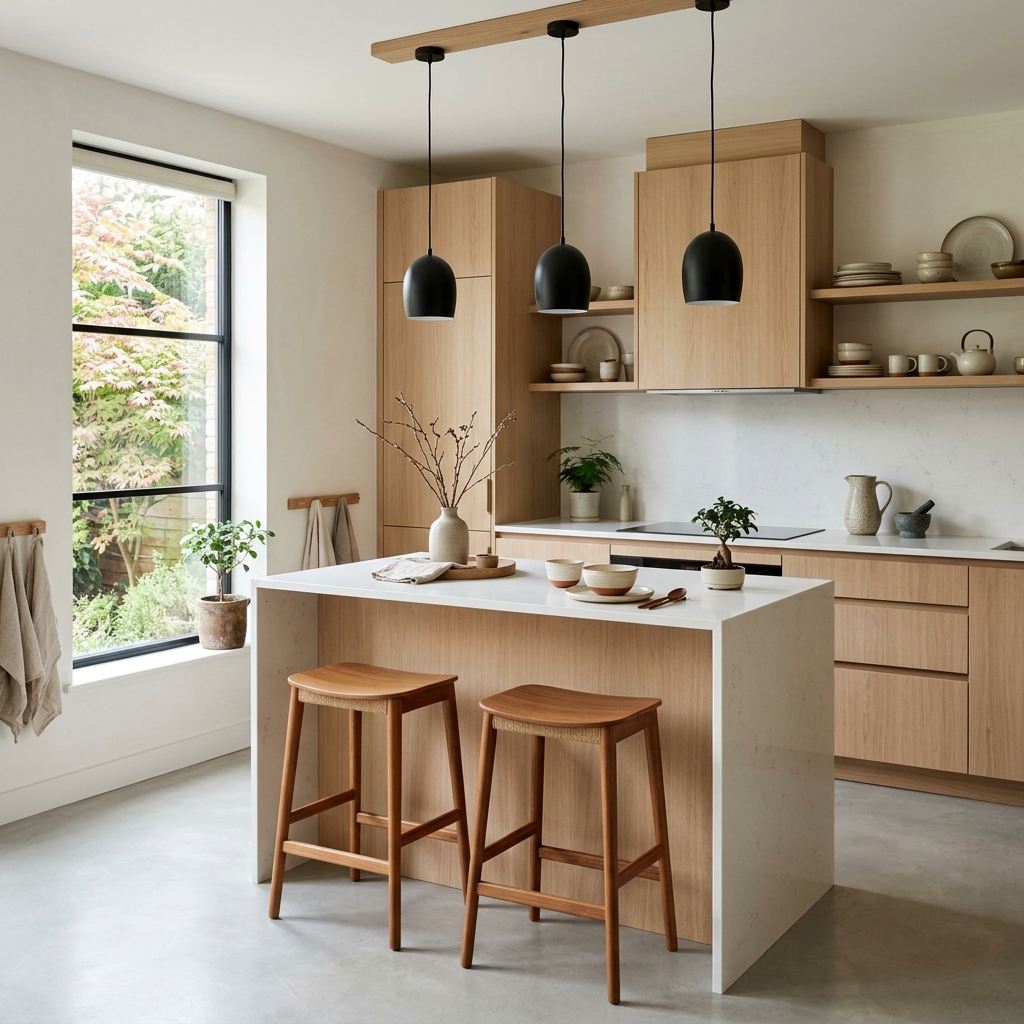
In the world of modern kitchen design, two powerful aesthetics have merged to create a timeless, highly popular trend: Japandi. Blending the cozy functionality of Scandinavian design (hygge) with the elegant, rustic minimalism of Japanese design (wabi-sabi), this style offers a calm and highly organized culinary workspace. If you want to remodel or stage your kitchen, incorporating japandi kitchen design ideas will help you create a warm, clutter-free environment that is both beautiful and practical. In this comprehensive guide, we explore the core principles of Japandi style and how to implement it in your home.
What is a Japandi Kitchen?
At its heart, a Japandi kitchen is a celebration of simplicity, natural materials, and high-quality craftsmanship. It avoids the cold, clinical feel of modern ultra-minimalism by introducing warm wood tones, natural stone, and handmade elements. By exploring various japandi kitchen design ideas, you will notice that this style focuses on removing visual noise while retaining essential comforts. The result is a highly functional space where everything has a purpose and a place, fostering a sense of peace and mindfulness during meal preparation and family gatherings.
1. Embrace a Natural and Warm Color Palette
The color palette of a Japandi kitchen is soft, earthy, and grounded in nature. Scandinavian style often relies on crisp whites and cool grays, but Japanese influence warms this up with creamy off-whites, beige, sand, and light taupe. When researching japandi kitchen design ideas, color contrast is key. Pair light plaster walls with warm oak cabinetry, and ground the room with dark charcoal or olive green accents. This balanced contrast prevents the kitchen from looking flat or sterile. The natural wood grain of oak, ash, or walnut cabinets should be visible, acting as the primary source of color and texture in the room.
2. Choose Flat-Panel Cabinetry with Concealed Storage
Clutter is the enemy of calm, and in Japandi design, clean lines are essential. Standard shaker cabinets can sometimes feel too traditional or detailed. Instead, look for flat-panel (slab) cabinet doors with clean, hardware-free profiles. Many modern japandi kitchen design ideas suggest using push-to-open latch systems or integrated J-pull handles to maintain a continuous, uninterrupted flat surface. Store small appliances like blenders, toasters, and coffee makers inside a dedicated appliance garage to keep the countertops completely clear. This focus on hidden, organized storage creates a clean, calm look that is central to the Japandi aesthetic.
3. Invest in High-Quality, Organic Countertops and Backsplashes
Because Japandi kitchens rely on very few decorative items, the surface materials you choose must carry the design. Replace synthetic laminate countertops with natural, organic alternatives. Matte quartz, honed quartzite, travertine, or light-colored soapstone are excellent choices featured in top japandi kitchen design ideas. Choose a honed or matte finish over high-gloss polished surfaces to keep the look soft and natural. For the backsplash, consider handmade zellige ceramic tiles. The organic, uneven surfaces of zellige tiles reflect light in a soft, undulating way, celebrating the Japanese philosophy of wabi-sabi (finding beauty in imperfection) while adding tactile warmth to the space.
4. Integrate Minimalist and Functional Lighting
Lighting in a Japandi kitchen should be both highly functional for tasks and warm and inviting for dining. Avoid sterile, bright white LED downlights. Instead, mix different layers of light to create a cozy atmosphere. For task lighting, install warm under-cabinet LED strips that illuminate the countertops without being visible. For ambient lighting, hang minimalist pendant lights over the kitchen island. Look for designs featuring paper lantern shades, spun-wool textures, or matte black metal cones, which are common in japandi kitchen design ideas. These pendant lights serve as beautiful focal points, blending Scandi utility with Japanese artistic simplicity.
5. Stage with Handmade Ceramics and Natural Textiles
Staging a Japandi kitchen requires a thoughtful “less is more” approach. Avoid mass-produced plastic kitchen tools or bright, colorful accessories. Instead, display a curated selection of functional items that double as decor. Key japandi kitchen design ideas for staging include placing a handmade ceramic pitcher on the counter, using wooden cutting boards of varying heights, and storing dry ingredients in clear glass jars with wooden lids. Swap synthetic dish towels for organic, textured linen cloths in soft neutral shades like oatmeal or charcoal. These subtle details bring texture and warmth to the kitchen, making it feel lived-in yet beautifully organized.
6. Select Sleek, Low-Profile Seating
If your kitchen features an island or a breakfast bar, the seating you choose will have a major impact on the visual flow of the room. Heavy, highly detailed barstools can disrupt the clean lines of your cabinetry. When looking at barstool options, seek out low-profile, clean-lined wooden stools. Stools made from light oak with woven paper-cord seats are classic examples found in many japandi kitchen design ideas. The woven seats add a beautiful handmade element, while the low backs keep the stools neatly tucked under the counter, maintaining clean sightlines across the kitchen.
Summary: The Japandi Kitchen Staging Checklist
Recreating this warm, functional look in your home is easy when you focus on these key design choices:
| Design Component | Japandi Design Staging Choice | Aesthetic & Functional Purpose |
|---|---|---|
| Cabinetry Style | Flat-panel oak cabinets with integrated handles | Creates clean, uninterrupted lines and hides clutter |
| Countertops | Honed quartzite or matte white quartz | Offers a natural, durable surface without shiny glare |
| Backsplash Tile | Handmade off-white zellige ceramic tiles | Introduces wabi-sabi textured variation and warmth |
| Island Lighting | Minimalist paper or matte black metal pendants | Acts as a warm focal point blending design styles |
| Counter Stools | Light wood stools with woven paper-cord seats | Adds organic texture while keeping sightlines clear |
In conclusion, incorporating japandi kitchen design ideas allows you to design a kitchen that is highly efficient, cozy, and visually calm. By choosing flat-panel wooden cabinets, matte countertops, and handmade accents, you create a beautiful space that supports mindfulness and family connection, making daily meal prep a relaxing, joyful experience.