
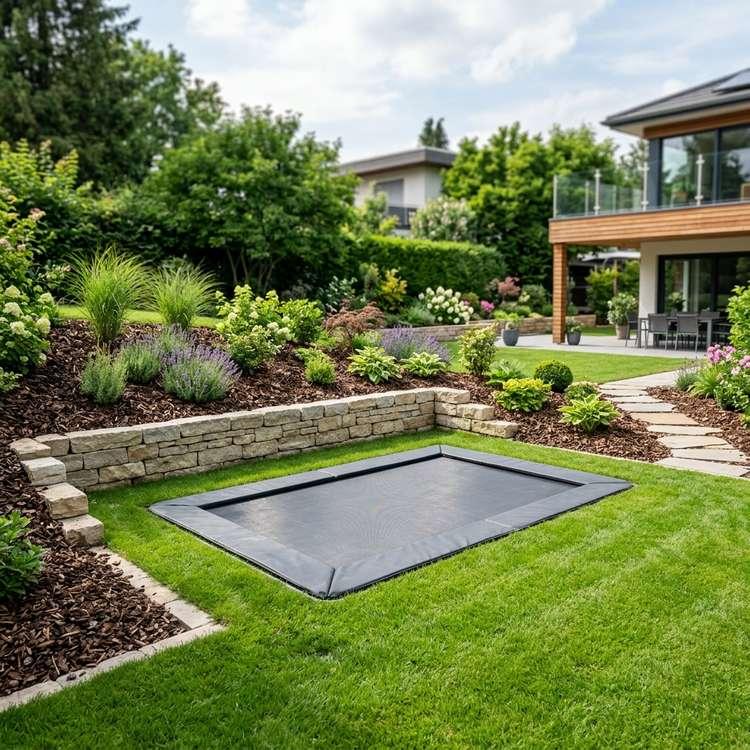
For families who love outdoor activity, a trampoline is one of the best backyard additions. However, traditional above-ground trampolines can be a major challenge in modern landscape design. They can block beautiful views of your yard, cast dark shadows on lawn grass, and present safety hazards for young children. A sleek alternative in landscape planning is the use of a flush-to-lawn setup. Reviewing modern backyard inground trampoline setups represents an excellent way to combine child safety, sleek landscaping, and active play. By lowering the trampoline frame flush with the ground, you can keep your sightlines open, reduce wind hazards, and create a clean, modern yard that looks beautiful.
The Benefits of Inground Trampolines
Inground trampolines offer substantial safety and aesthetic advantages over standard models. Because the jumping mat is flush with the ground, there is no risk of children falling off a high frame, which is a common cause of trampoline injuries. Aesthetically, it removes a bulky, industrial metal frame from your view, allowing your lawn and landscaping to remain the focus of your yard. It also prevents the trampoline from blowing over during high summer storms, protecting your fences and property from damage.
5 Safety and Design Tips for Inground Trampolines
1. Proper Excavation and Retaining Walls
Setting up an inground trampoline requires careful excavation work. You must dig a bowl-shaped pit beneath the trampoline frame, typically reaching a depth of thirty-six inches in the center to prevent jumpers from hitting the dirt bottom. To prevent the surrounding soil from collapsing into the pit over time, install a durable retaining wall around the perimeter of the hole. Capped plastic or metal retaining panels designed for inground trampolines are the most durable and simple solution.
2. Install a Dedicated Drainage System
The biggest challenge with any hole in the ground is water accumulation. Without proper drainage, your trampoline pit can easily flood during heavy rains, damaging the frame and creating a breeding ground for mosquitoes. If you have sandy, well-draining soil, a thick gravel base at the bottom of the pit may be sufficient. However, if you have clay soil, install a perforated drain pipe or a low-profile sump pump connected to a drainage line to pump water out automatically.
3. Maintain Airflow Gaps for Better Bounce
When a jumper lands on a trampoline, the air underneath must escape. If you seal the frame flush with the lawn without airflow venting, the air will be trapped, creating air resistance that dampens the bounce. To prevent this, use specialized safety pads with integrated mesh vents, or leave a small one-inch gap between the trampoline frame and the surrounding retaining wall. Proper ventilation ensures a safe, high-performance bounce.
4. Landscape with Wood Bark or Rubber Mulch Borders
To integrate the trampoline into your yard design, surround the frame with a wide border of soft materials. Avoid placing concrete pavers or stone pathways directly against the edge. Instead, create a two-foot border of cedar wood bark mulch, engineered wood fiber, or rubber mulch. This soft border provides a safe landing zone for jumpers, prevents grass weeds from growing near the frame, and makes lawn mowing clean and easy.
5. Choose High-Quality Rust-Resistant Materials
Because the trampoline frame and springs are buried in a damp underground pit, selecting high-quality materials is critical. Choose a frame made from double-galvanized steel with a thick powder-coated finish to resist rust. Ensure the springs are heavy-duty and rust-resistant, and inspect the jumping mat regularly for UV damage. Investing in premium materials ensures your setup remains safe and durable for years.
Comparison: Above-Ground vs. Inground Trampolines
| Feature | Above-Ground Trampoline | Modern Inground Trampoline |
|---|---|---|
| Safety Risk | High (risk of falling from 3-foot height) | Low (flush with ground; safe landing zone) |
| Visual Weight | Heavy (blocks yard views and lawn light) | Low (seamlessly blends with the lawn surface) |
| Installation Work | Low (assemble frame in 1 to 2 hours) | High (requires excavation, retaining walls, & drainage) |
| Storm Safety | Can blow over in high winds, causing damage | Safe (buried in ground; cannot blow away) |
Routine Maintenance and Safety Checks
Regular maintenance checks are essential for keeping your inground trampoline safe. Once a year, remove the safety pads and vacuum out any leaves, dirt, or debris that have accumulated in the pit. Inspect the springs for tension loss and rust, and verify that the drainage system is clear of blockages. By performing these simple safety checks, you can ensure your modern backyard inground trampoline setups remain a safe, fun, and beautiful addition to your home for many play seasons.
To learn more about optimizing your space, explore our guide on Modern Backyard Office Pod Layouts.
For additional tips on creating a beautiful home, read our article about Raised Bed Gardening Guide.
If you are planning a renovation, you might also find our ideas on Garden Soil Preparation helpful.
To discover more sustainable choices, check out our tips on Best Solar Outdoor String Lights for Patio.
Enhance your living space further by exploring our recommendations for Modern Backyard Deck Designs.