
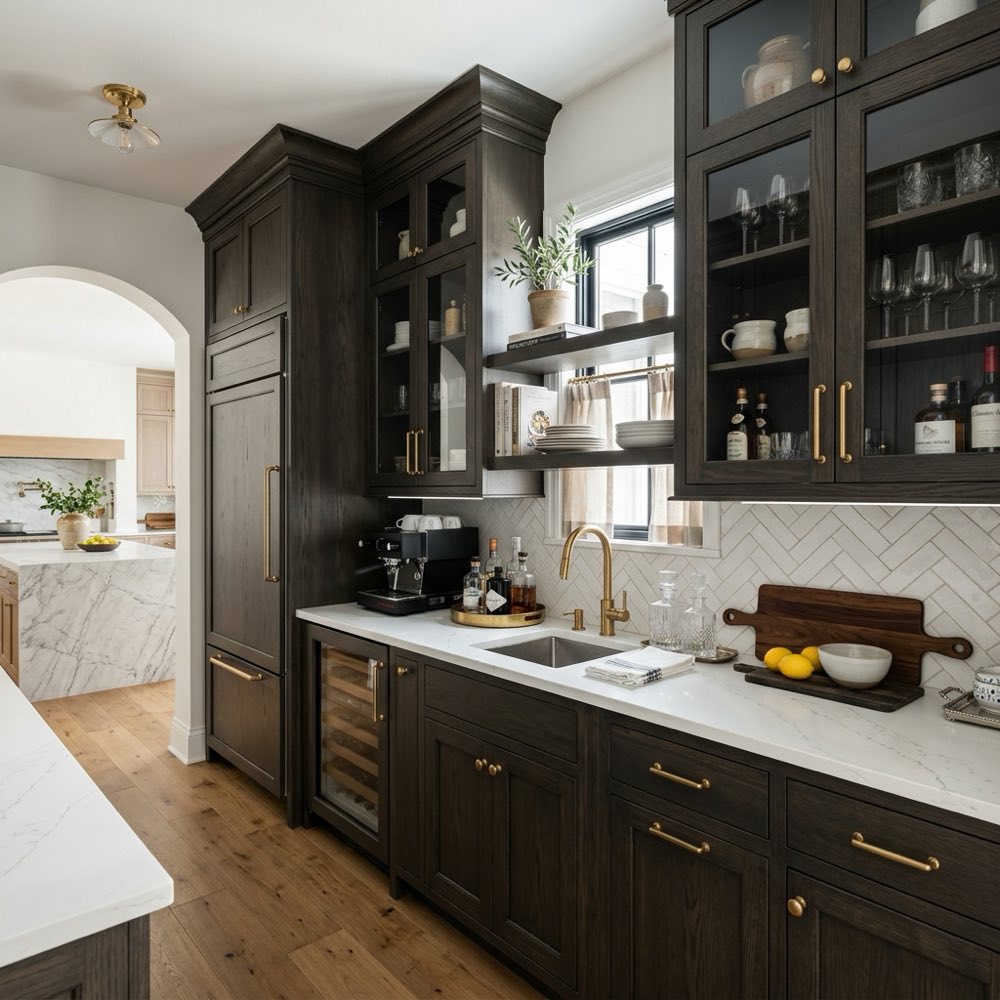
Introduction to the Modern Butler Pantry
Modern kitchens are the heart of the home, serving as spaces for cooking, dining, socializing, and working. With the rise of open-concept living, the demand for secondary preparation spaces has increased dramatically. Among these solutions, a modern butler pantry design has become one of the most highly sought-after features in premium home renovations. Traditionally used in historic estates as a transition space between the kitchen and dining room to store silver and china, this secondary pantry has evolved. Today, it serves as a highly functional scullery, storage hub, and beverage station that keeps the main kitchen clutter-free.
The success of this space depends on how well it integrates with the rest of your home. A successful modern butler pantry design should complement the main kitchen’s style while offering specialized functions. Whether you are staging a small alcove or dedicating a walk-in room behind a hidden cabinet door, this prep zone can handle heavy-duty tasks like housing secondary appliances, prepping food, and washing dishes. By moving these activities behind closed doors, you can maintain a clean, organized, and welcoming atmosphere in your main kitchen, which is ideal when entertaining guests.
The Benefits of a Secondary Prep Zone
To justify dedicating valuable square footage to this feature, it is helpful to explore the functional benefits of a modern butler pantry design. First, it offers an incredible amount of extra storage. Modern kitchens often struggle to hide small appliances like coffee makers, toasters, blenders, and air fryers. By creating a dedicated appliance garage in the pantry, you can keep your main kitchen countertops completely bare, which enhances the clean, minimalist look that defines high-end design.
In addition to storage, a secondary prep zone serves as an excellent staging area for entertaining. When hosting dinner parties, the main kitchen countertops quickly become cluttered with dirty dishes, food scraps, and prep tools. Having a secondary space allows you to hide the mess away from your guests’ sight. You can prepare drinks, plate appetizers, and stack used plates in the pantry, keeping the main kitchen clean and inviting. This functional separation makes entertaining much more relaxing and enjoyable for the host.
Designing the Layout and Flow
Before selecting cabinets or countertops, you must plan the layout to ensure a smooth work flow. Depending on your home’s architecture, this space can take several shapes. A galley layout, featuring parallel countertops, is one of the most efficient options for narrow rooms. It allows you to maximize counter space on one side while placing tall storage cabinets and appliances on the other. Alternatively, an L-shaped layout works beautifully for corner spaces, providing a natural transition between the kitchen and dining areas.
When planning a modern butler pantry design, consider the concept of the work triangle: the path between your sink, refrigerator, and prep counter. Even in a compact space, arranging these elements logically will save time and energy. If your pantry is located between the kitchen and dining room, ensure the walkway is wide enough (at least 36 inches) for comfortable movement. This keeps the transition smooth and prevents traffic jams when multiple family members are preparing food at the same time.
Cabinetry, Storage, and Organization
Cabinet selection sets the visual tone for this space. Since the pantry is separate from the main kitchen, you can experiment with bolder styles. If your main kitchen is bright and white, consider using rich, dark stained wood cabinets in the pantry to create a sophisticated, jewel-box effect. Deep navy, forest green, or charcoal gray cabinets paired with unlacquered brass hardware look exceptionally premium and create a beautiful sense of depth and surprise.
For storage, a mix of closed cabinets and open shelving is ideal. Use closed cabinets to hide messy items like food packaging, trash bins, and cleaning supplies. Open shelves, on the other hand, are perfect for showing off your best glassware, cookbooks, and ceramic plates. Glass-front cabinet doors are another excellent option, offering the airy look of open shelves while protecting your tableware from dust. Incorporate pull-out drawers, spice racks, and custom dividers to keep every item organized and easy to reach.
Countertops and Backsplashes with Style
Because this space is heavily used for food preparation and dishwashing, durable surfaces are essential. Quartz is a top choice for a modern butler pantry design, offering a grout-free, stain-resistant surface that replicates the look of natural marble. A thick quartz countertop with soft gray veining brings instant luxury to the room. For the backsplash, a seamless slab that matches the countertop creates a sleek, contemporary look that is incredibly easy to clean.
If you prefer a tiled look, handmade zellige tiles are a fantastic alternative. These Moroccan clay tiles have tiny imperfections and color variations that catch the light beautifully, adding organic texture and character to the walls. Keep the grout lines thin and match the grout color to the tile to maintain a clean, modern aesthetic. Whether you choose a seamless stone slab or textured tiles, ensure the materials harmonize with the cabinet finish to create a cohesive look.
Adding Secondary Appliances and Sinks
To maximize the utility of the pantry, incorporate secondary appliances. A small under-counter beverage fridge is highly convenient, allowing guests to grab drinks without entering the main cooking zone. If you are a coffee lover, you can set up a complete espresso bar with a built-in grinder and espresso machine. Other popular appliance additions include a drawer microwave, a wine cooler, and a secondary dishwasher to handle heavy cleanup after parties.
A secondary sink is another essential feature. A deep undermount sink made of stainless steel or composite granite allows you to wash vegetables, fill pots, and soak dirty pans out of sight. Pair it with a high-end gooseneck faucet in a finish that matches your cabinet hardware, such as brushed gold or matte black. This water access turns the pantry into a fully functional workspace, making food preparation and cleanup significantly more efficient.
Staging and Lighting for Premium Appeal
Lighting is key to making this secondary space feel welcoming instead of dark and cramped. Since many pantries lack windows, you must design a smart artificial lighting plan. Start with under-cabinet LED strip lights to illuminate your work surfaces. This task lighting is essential for safe food prep. Next, add ambient lighting, such as a sleek pendant light or a pair of plaster wall sconces, to create a warm, inviting glow.
For final staging, keep the decor minimal and sophisticated. Place a wooden cutting board against the backsplash, set out a bowl of fresh lemons, and stack ceramic bowls on the shelves. Avoid overcrowding the countertops; keep them mostly bare to emphasize the sense of space and cleanliness. By combining functional lighting with curated decor, you create a beautiful prep zone that is both highly useful and visually stunning, elevating your home’s design.
Conclusion
Investing in your home’s layout is the best way to improve your daily life. A modern butler pantry design offers the perfect balance of luxury and practicality, providing crucial storage and prep space that keeps your main kitchen looking its best. By planning a functional layout, choosing durable and beautiful materials, and incorporating smart appliances, you turn a simple storage room into a premium culinary zone. This thoughtful addition enhances your home’s organization, simplifies entertaining, and adds lasting value to your property.