
Introduction to Modern Farmhouse Styling
The kitchen has always been the functional center of the home, serving as a zone for cooking, dining, and family gatherings. Over the past decade, interior design trends have shifted toward styles that combine clean, contemporary lines with warm, rustic character. Among these, implementing a modern farmhouse kitchen design has become one of the most popular ways to create a welcoming and highly functional space. This highly versatile, hybrid design philosophy blends the simple charm of traditional rural American farmhouses with the sleek finishes and industrial details of modern urban design. By combining these styles, you create a cookspace that feels both nostalgic and fresh.
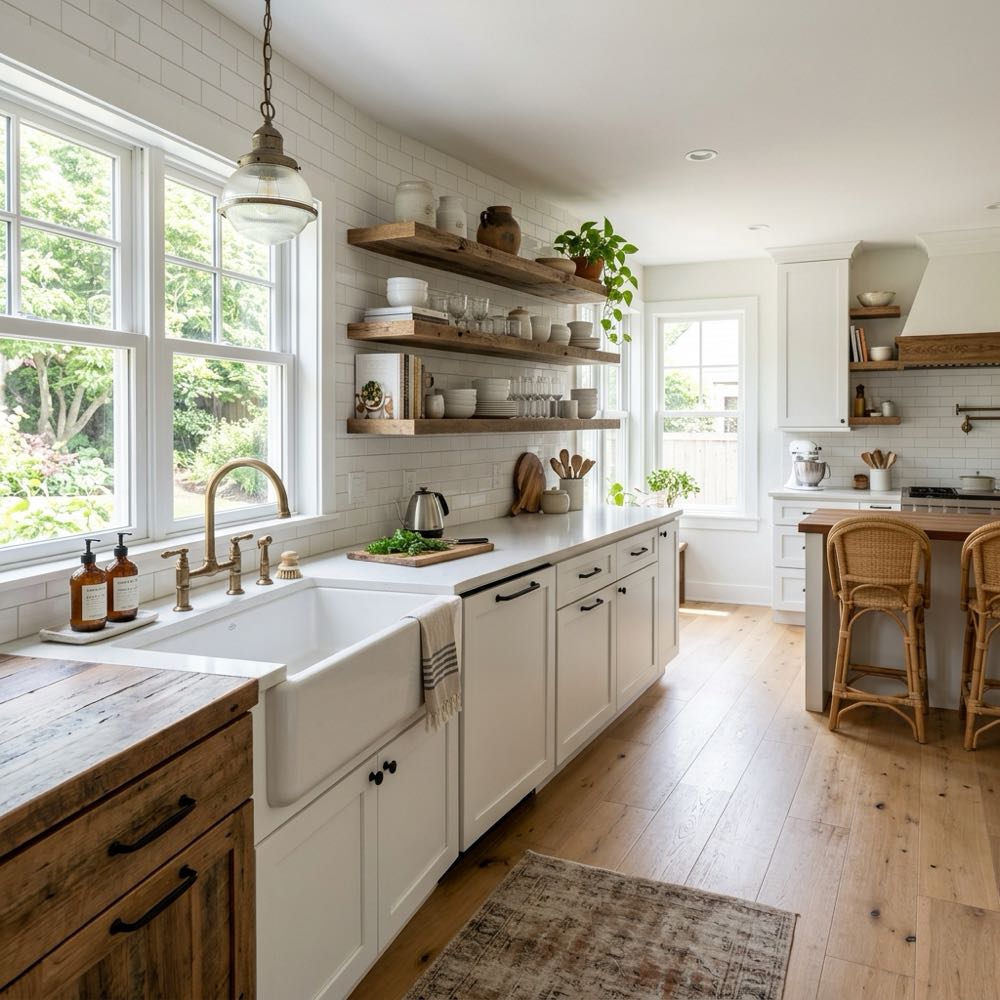
The success of this design lies in its balanced contrast. While traditional farmhouse kitchens can sometimes feel overly cluttered, rustic, or dated, a successful modern farmhouse kitchen design focuses on clean geometry and open space. Think of bright white walls, sleek shaker-style cabinets, and high-end stainless steel appliances paired with raw, heavily textured elements like rustic reclaimed wood, unlacquered brass, and hand-formed glazed tiles. This unique combination of styles ensures your kitchen never feels too industrial or too rural. This mix of smooth and rough textures gives the kitchen a layered, lived-in feel that is cozy and warm, serving as the ultimate gathering hub for your family and guests.
The Essential Layout and Flow
Before selecting cabinet finishes or countertops, you must plan a layout that supports an efficient workflow. The heart of any functional kitchen is the work triangle, which connects the sink, refrigerator, and range. In a farmhouse layout, this workflow is often anchored by a large central island. The central island serves as a multi-functional hub for daily food preparation, casual family dining, and deep drawer storage. Ensure there are wide walkways (at least 42 to 48 inches) around the island to allow for comfortable movement when multiple family members are cooking.
When designing a modern farmhouse kitchen design, consider how the kitchen connects to surrounding living zones. An open-concept layout that flows naturally into the dining area or living room is ideal for creating an inviting social environment. One of the most popular layouts is the L-shaped kitchen, which creates a natural and efficient workflow. If you have the additional space, adding a walk-in pantry or a custom coffee station behind a sliding barn door is a fantastic, luxurious feature. This keeps your main countertops clean, allowing you to showcase your selected cabinet finishes, open shelving, and high-end fixtures without visual clutter.
Cabinetry, Colors, and Open Shelving
Cabinetry is the most dominant visual element in the kitchen, setting the tone for the entire room. Shaker-style cabinets are a staple of this aesthetic, featuring a simple, recessed center panel that looks clean and classic. For the color palette, white is the traditional choice, but modern designs often introduce deeper colors for contrast. Painting your perimeter cabinets in a soft off-white or cream and using a rich, dark color like forest green, navy blue, or charcoal gray on the island adds beautiful depth.
To enhance the airy feel of the space, replace some of your upper cabinets with open shelving. Reclaimed wood shelves supported by black iron brackets are perfect for showing off your best stoneware plates, glass jars, and cookbooks. This open display breaks up heavy runs of cabinetry, making the kitchen look larger and more inviting. To maintain a clean look, only display items that you use daily to prevent dust buildup, and stick to a cohesive color palette for your dinnerware, keeping the shelves organized.
Choosing the Perfect Apron Sink and Fixtures
No farmhouse kitchen is complete without a classic apron-front sink, also known as a Belfast or farmhouse sink. These sinks feature a deep bowl and an exposed front panel that sits flush with the cabinetry. White fireclay or porcelain is the traditional material, offering a durable, scratch-resistant surface that looks clean and timeless. For a more contemporary twist, consider a dark soapstone, copper, or stainless steel apron sink, which adds industrial character to the food preparation zone.
Pair your deep sink with a high-end gooseneck faucet. To successfully complete a modern farmhouse kitchen design, select fixtures in finishes that add warmth and contrast, such as matte black, brushed gold, or unlacquered brass. A pull-down sprayer faucet adds modern utility, making it easy to wash vegetables and rinse large pots. Carry this hardware finish onto your cabinet pulls and drawer slides. Combining cup pulls on drawers with simple knobs on cabinet doors creates a classic look that feels carefully curated over time.
Durable Countertops and Backsplashes with Character
Because the kitchen is a high-traffic workspace, durable countertops are essential. Quartz is a top choice for modern renovations, offering a non-porous, stain-resistant surface that can replicate the look of natural marble. When designing a modern farmhouse kitchen design, choosing a quartz countertop with soft gray or gold veining brings instant luxury to the room. For the kitchen island, a thick butcher block countertop made of edge-grain maple or walnut adds organic warmth and serves as a beautiful prep station.
For the backsplash, look for materials that add texture. White subway tile is a classic, but choosing a tile with a handmade, wavy surface like Moroccan zellige adds organic character. These tiles have subtle glaze variations that catch the light, adding depth to the walls. Install the tiles in a classic running bond pattern with matching light grout to keep the look clean and bright. Alternatively, running your quartz countertop up the wall as a seamless slab backsplash creates a modern look that is incredibly easy to clean.
Staging with Warm Lighting and Rustic Accents
Lighting is key to making your kitchen feel warm and welcoming. Start by layering your light sources. Install under-cabinet LED strip lights to illuminate your prep counters. For the island, hang a pair of large dome pendants made of woven rattan, hammered copper, or matte black metal. These statement lights serve as beautiful design elements and define the dining zone. Finish the lighting plan with dimmable recessed ceiling lights and warm wall sconces on either side of the window.
For final staging, keep the decor minimal and functional. Place a large wooden cutting board against the backsplash, set out a bowl of fresh green apples on the island, and display fresh herbs in terracotta pots. Avoid cluttering the counters; keep them mostly bare to emphasize the sense of space and cleanliness. By combining functional lighting with curated, organic decor, you create a beautiful cookspace that is both highly useful and visually stunning, elevating your home’s overall design and value.
Conclusion
Investing in your kitchen’s layout is the best way to improve your daily home life. A modern farmhouse kitchen design offers the perfect balance of cozy warmth and contemporary practicality, providing crucial storage and prep space that makes cooking a joy. It is a space where your family can share stories, enjoy delicious meals, and create lifelong memories. By planning a functional layout, choosing classic cabinetry and durable countertops, and incorporating warm rustic accents, you turn a simple kitchen into a premium culinary zone. This thoughtful addition enhances your home’s organization, simplifies family gatherings, and adds lasting value to your property, making it one of the most rewarding home improvement projects you will ever undertake.