
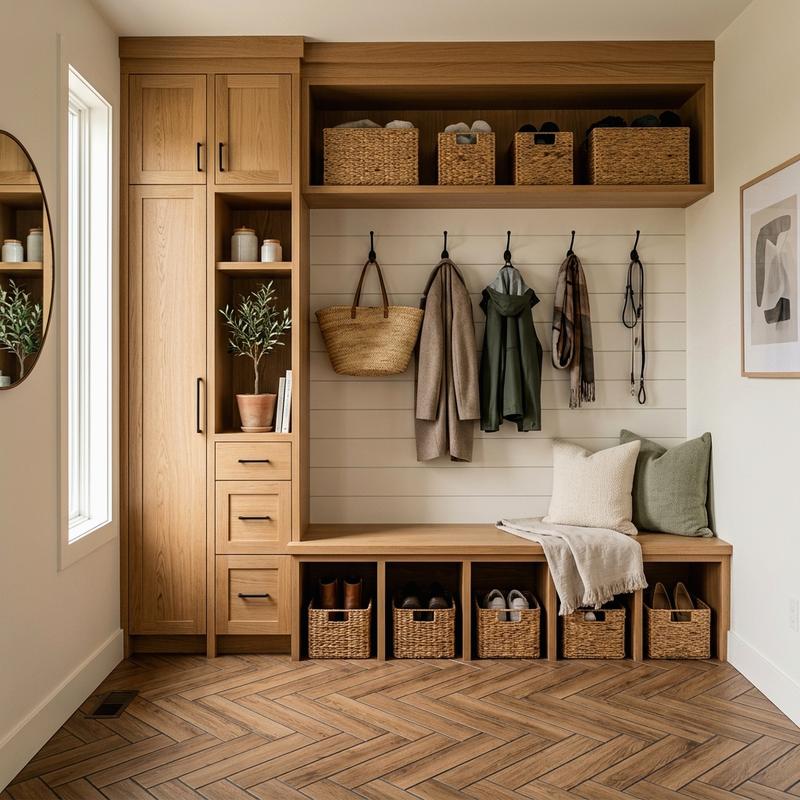
Mudroom Design and Storage Ideas: Custom Built-Ins, Durable Finishes, and Smart Layouts
Our team at HomeTunez frequently collaborates with busy families who are exhausted by the daily battle against clutter at their threshold. In my interior architecture practice, I always design the mudroom as the home’s primary defensive line against exterior elements. This highly functional space serves as the transitional filter where coats, muddy boots, sports gear, and backpacks are organized before entering the main house. Standard entryways often become overwhelmed by shoes and bags, creating visual clutter and stress. By designing custom built-in storage cabinets, selecting durable finishes, and creating smart layouts, you transform this utility zone into an organized, beautiful space.
The success of a mudroom depends on matching its storage capacity and layout with your family’s unique daily routines. An effective plan maps the flow of foot traffic, ensuring every item has a dedicated landing spot when entering the house. A poorly configured mudroom leads to bottlenecks, where coats pile up on the floor and drawers become cluttered with unorganized accessories. Conversely, a space that integrates lockers, bench seating, deep drawers, and smart charging stations creates a calm, organized transition. Treat this utility room with the same architectural attention as a kitchen to ensure it remains durable, efficient, and visually appealing.
For homes with limited floor space, converting a standard closet or utilizing an empty corner is an excellent way to create a functional landing zone. Maximizing vertical space with tall cabinets, upper cubbies, and dual hooks allows you to store off-season items out of sight while keeping daily essentials within easy reach. Natural materials like slate, brick, and oak add texture and warmth, making this entry area feel like a welcoming introduction to the home. Broad benches provide a comfortable place to sit and remove shoes, which is essential for encouraging family members and guests to keep the house clean. Incorporating low-profile benches with integrated shoe dividers underneath provides double the utility without footprint expansion. You can also paint the backdrop wainscoting in a high-contrast hue to create depth, making a narrow back corridor feel significantly wider. Setting up these small storage details ensures that even a tiny corner functions efficiently as a complete mudroom zone, allowing every household member to have a dedicated spot for their keys, mail, and accessories. These deliberate space-saving enhancements prevent entryways from feeling claustrophobic.
To keep this entry zone secure and monitor who is coming and going, integrating smart home security is highly recommended. Placing one of the best smart indoor security cameras for home above your locker wall allows you to see when your kids return from school or check on pets resting in their crates. Modern cameras offer wide-angle views that capture the entire space without disrupting your wainscoting or cabinetry. Combining secure physical storage with smart monitoring ensures your mudroom is both functional and safe. A secure entryway gives you peace of mind, knowing your home’s main threshold is monitored at all times.
Material Science and Durability in Mudrooms
The materials you select for your mudroom must withstand moisture, dirt, and heavy impact while retaining their premium look. Floors are subjected to wet boots, melting snow, and scratched heels, which will quickly ruin standard hardwood or carpet. We recommend high-density slate tile, porcelain tile, or herringbone brick laid with dark, mold-resistant grout. These materials are waterproof, easy to sweep, and practically indestructible. Travertine and slate are especially favored for their natural slip-resistance, which helps prevent slips and falls when coming in from the rain. Cabinets should be built using high-grade plywood or medium-density fiberboard (MDF) core with hardwood veneers, as solid softwood doors will warp when exposed to wet coats. Utilizing marine-grade plywood for backing panels provides an extra layer of protection against rotting, ensuring the cabinetry survives damp environments without structural degradation.
Painting mudroom cabinetry requires tough, scuff-resistant coatings that stand up to daily cleanings and fingernail scratches. We recommend painting your built-in lockers and wainscoting with premium satin and eggshell paints from Farrow & Ball. Their water-based formulations deliver rich depth of color while providing a washable finish that shrugs off scuffs. If you incorporate natural wood elements like a white oak bench top, seal the timber with durable, water-based finishes from Bona. Using their specialized floor and wood cleaners protects the grain from moisture and prevents the wood from darkening from mud stains.
For bench cushions, floor mats, and storage baskets, using high-performance textiles is essential to resist odors, stains, and moisture. Standard upholstery fabrics will absorb water, grow mold, and tear under heavy use. We specify solution-dyed acrylic fabrics from Sunbrella for mudroom bench cushions, as they are fade-resistant and easy to clean. If your bench is located next to a pet washing station or wet boot tray, choosing stain-resistant barrier fabrics from Crypton ensures that mud and water do not soak into the inner foam. These fabrics feature a permanent moisture barrier that prevents liquids from penetrating.
Keeping mudroom surfaces clean and free of bacteria requires routine cleaning with gentle, chemical-free sprays. Cabinet doors and hardware will accumulate hand oils, dirt, and dust over time. We recommend cleaning these surfaces with biodegradable, plant-derived multi-surface sprays from Method. Their plant-based cleaners dissolve dirt and grime without damaging your paint’s protective coats or tarnishing your metal hooks. Using eco-friendly products also keeps your indoor air quality clean and free of harsh chemical fumes, protecting the health of your family and pets.
Choosing clean, sustainable materials for your utility spaces is part of a broader commitment to a healthy, eco-friendly home environment. The products you select for your entryway transitions should align with your overall design philosophy. If you have researched sustainable bedroom design ideas to create a non-toxic, chemical-free sleeping sanctuary, you understand the value of avoiding synthetic chemicals. Extending this eco-conscious approach to your mudroom by selecting natural stone, low-VOC paints, and plant-derived cleaning products creates a healthier transition zone for your home, protecting your family’s wellness.
Built-In Integrations and Styling
Integrating custom built-in cabinets and modern styling elements into your mudroom maximizes organization while matching your home’s architecture. Lockers are the most popular option, providing each family member with a dedicated space for their coat, backpack, and shoes. You can install open cubbies for younger children to make access easy, and closed cabinets for adults to hide clutter. Installing deep drawers at the base of your lockers is perfect for storing winter gloves, hats, and scarves out of sight, keeping the space looking neat and organized.
Adding modern utility integrations like boot dryers, charging drawers, and pet washing stations can greatly improve your daily routine. A built-in dog wash station with a elevated tile basin and hand shower makes cleaning muddy paws easy before your pet runs inside. In these utility areas, you will also be washing dog towels and fabric mudroom rugs. When washing these textiles, using the best eco-friendly laundry detergent sheets helps remove odors and dirt without leaving behind synthetic fragrances that irritate pets. These biodegradable sheets dissolve fully in cold water, making laundry simple and eco-friendly.
Incorporating smart home technology into your mudroom layout will also elevate your organization. You can install automated lighting sensors that turn on when you enter with your hands full of groceries, or smart locks on the door. When connecting these electronic elements, choosing the correct smart home protocols (Zigbee, Z-Wave, Wi-Fi) is crucial for maintaining a reliable connection. Low-power protocols like Zigbee are excellent for door and motion sensors, as they communicate efficiently with your smart hub without overloading your home network. This keeps your mudroom lights and security working smoothly.
Styling your mudroom involves selecting hardware, hooks, and baskets that complement your home’s interior design language. For a traditional home, choosing double coat hooks in oil-rubbed bronze or antiqued brass creates a classic look. Modern mudrooms benefit from sleek, matte black hardware with clean, square angles. Heavy-duty brass or steel hooks should be mounted at different heights: high hooks for adult coats, and low hooks for children’s backpacks. Woven baskets placed in open cubbies add organic texture and hide loose items like dog leashes and sports gear.
Finally, ensure your mudroom styling coordinates with the adjoining rooms in your home. The transition from the utility space to the kitchen or living room should feel natural and intentional. You can paint the mudroom cabinets a complementary shade to your kitchen island, or use similar hardware styles to connect the spaces. Just as you would design a comfortable foyer using budget-friendly modern living room decor ideas to balance function and style, your mudroom should rely on a few high-quality styling details to remain elegant, organized, and welcoming.
Comparing Mudroom Storage Solutions
To help you evaluate the best organization options for your home, our team has compiled a detailed comparison of mudroom storage solutions. Each system has unique benefits, average installation costs, and storage capacity that you should consider based on your home’s layout and family size. Comparing these systems will help you choose a solution that fits your budget and home layout.
| Mudroom System | Average Installed Cost | Storage Capacity | Durability Rating | Maintenance Level | Best Floor Plan Fit |
|---|---|---|---|---|---|
| Custom Built-In Locker Wall | $2,500 – $6,000 | Maximum (Lockers, drawers, cubbies) | Outstanding (25+ Years) | Low (Wipe clean monthly) | Large utility rooms, back hallways |
| Built-In Bench with Hook Rail | $800 – $1,800 | High (Open bench, overhead rail) | Very Good (15-20 Years) | Medium (Duster needed for open shelves) | Narrow hallways, transitional spaces |
| Corner Wardrobe Unit | $500 – $1,200 | Medium (Slim cabinet, corner shelves) | Good (10-15 Years) | Low (Closed doors hide dust) | Small entryways, garage entries |
| Utility Closet Conversion | $1,000 – $2,500 | High (Built-in shelves inside closet) | Very Good (20+ Years) | Low (Doors close to hide mess) | Foyers, hallways, kitchen pantries |
| Built-In Pet Washing Station | $1,500 – $3,500 | Low (Dedicated to washing/drying) | Outstanding (Tile and stone finish) | High (Requires rinsing after use) | Large mudrooms, laundry rooms |
Selecting the right mudroom system depends on your home’s layout and storage needs. For large families, custom built-in lockers offer the highest capacity and durability, ensuring every child has their own space. If your entryway is narrow, a built-in bench with a wall-mounted hook rail provides utility without blocking traffic. Combining different storage options ensures that your mudroom remains organized and functional through every season, protecting your home’s interior from clutter.
Step-by-Step DIY Implementation Guide
Building a custom built-in mudroom bench with integrated shoe cubbies is a highly rewarding DIY project that improves organization and adds value to your home. By using quality oak and cabinet-grade plywood, you can build a bench that looks like a professional installation. Below is our detailed, step-by-step guide to constructing and mounting a custom mudroom bench.
Step 1: Measuring, Planning, and Layout Mapping
Begin by measuring the width and depth of the space where you plan to build the bench. A standard mudroom bench is 18 inches high and 18 to 22 inches deep, which provides comfortable seating for adults and children alike. Measure the distance from the nearest door casing to ensure the bench does not block pathways. Mark the locations of wall studs along the back wall using a stud finder, as the bench must be anchored securely to support heavy weight. Draw a detailed sketch of the bench frame, planning for three to four shoe cubbies beneath the seating platform to maximize your storage capacity, noting all wood thicknesses in your drawing.
Step 2: Building the Base Platform
Construct a solid base platform using 2×4 lumber. Cut two long boards for the front and back rails, and four shorter cross-supports. Secure these pieces together using 3-inch wood screws to create a rectangular ladder frame. Lay the frame on the floor in its mounting location, and use wood shims to ensure the platform is perfectly level. Anchor the base frame to the wall studs using heavy-duty lag screws, ensuring a stable foundation that will not shift.
Step 3: Building the Cabinet Box and Dividers
Cut the bench top, bottom, and side panels from 3/4-inch cabinet-grade plywood. Cut vertical dividers to create your shoe cubbies. Double-check your cuts to ensure the dividers are exactly uniform in height, preventing any wobbling. Drill pocket holes on the top and bottom edges of the dividers. Apply wood glue to the joints and secure the dividers to the bottom panel using pocket screws, checking that all corners are perfectly square with a framing square. Mount the side panels to the bottom panel to complete the main cabinet box, wiping away any excess wood glue immediately to ensure paint adhesion.
Step 4: Mounting the Bench and Top Seating
Place your cabinet box assembly onto the 2×4 base platform. Secure the cabinet bottom to the base using 1-1/2 inch wood screws. Next, install a solid oak or maple top panel onto the cabinet box to serve as your bench seat. Secure the top panel from underneath using pocket screws to hide the fasteners. Apply solid wood edge banding to all exposed plywood edges using a hot iron, then trim and sand it flat to create a smooth, seamless finish.
Step 5: Sanding, Painting, and Trim Work
Sand the entire bench assembly thoroughly, starting with 120-grit and finishing with 220-grit sandpaper to remove any rough spots. Install baseboard trim around the bottom of the bench to match your room’s existing trim. If you plan to paint the bench, apply a coat of wood primer followed by two coats of low-VOC paint from Farrow & Ball. If you prefer a stained oak top, apply a pet-safe stain followed by a durable water-based polyurethane sealer. Allow the finish to dry completely before use.
Frequently Asked Questions
What is the best flooring material for a mudroom?
Natural slate tile, porcelain tile, and herringbone brick are the best flooring materials because they are waterproof and scratch-resistant. These materials stand up to wet boots, melting snow, and heavy traffic without showing wear. Avoid standard hardwood, laminate, or carpet, which absorb moisture, warp, and grow mold when exposed to wet outdoor gear. Natural stone and tile are easy to clean and maintain.
How high should a mudroom bench seat be?
A standard mudroom bench seat should be 18 inches high, which is the comfortable height for adults and children to sit and tie their shoes. The depth of the bench should be between 18 and 22 inches. Benches that are shallower than 16 inches feel cramped, while benches deeper than 24 inches make it difficult to sit upright comfortably and reach the floor.
Is open or closed storage better for a mudroom?
A combination of both is ideal. Open storage like shoe cubbies and coat hooks makes daily access quick and easy, encouraging kids to hang up their bags. Closed storage like cabinets and drawers is perfect for hiding seasonal items, dog accessories, and sports gear, keeping the space looking neat and clutter-free. Tailor the storage mix to your family’s routines.
What are the standard dimensions for mudroom lockers?
A standard mudroom locker should be 18 to 24 inches wide, 18 to 22 inches deep, and 72 to 84 inches tall. This size provides ample vertical space to hang long coats and store backpacks. If you have a large family, designing individual lockers for each person prevents coats from piling up on a single hook, maintaining order and flow.
How do I prevent my mudroom from smelling like damp coats?
Prevent odors by ensuring the room is well-ventilated. Install a bathroom exhaust fan to pull moisture out, or keep a window cracked when coats are drying. Utilizing built-in boot dryers and drying racks ensures wet gear dries quickly. Avoid piling damp coats on top of each other, hanging them instead on individual hooks with spacing to allow air circulation.
Can I add a pet wash station to my mudroom?
Yes, you can install a pet washing station in a mudroom if you have access to plumbing lines. A raised tile basin with a hand shower head makes cleaning muddy paws easy before your dog enters the house. Ensure the basin is finished with waterproof tile and dark grout, and install a drain trap to catch pet hair, preventing clogged pipes.
What hooks are best for heavy backpacks?
Choose heavy-duty double-pronged metal hooks made from brass, cast iron, or forged steel. Mount the hooks directly into wall studs or a solid wood backing board using long screws. Avoid mounting hooks into drywall with plastic anchors, as the weight of heavy backpacks will quickly pull the hooks out of the wall, damaging your drywall.
How can I design a mudroom in a small home?
Create a small mudroom by converting an existing entryway closet. Remove the closet doors, install a custom bench with shoe storage beneath, and mount a hook rail along the back wall. This conversion utilizes existing square footage without encroaching on your hallway. Use light paint colors and install a wall mirror to make the small space feel larger.
Should I install floor heating in my mudroom?
Electric floor heating under tile flooring is an excellent addition to a mudroom. The gentle heat warms cold stone floors and helps dry wet boots and melting snow quickly. This speeds up evaporation, reducing the risk of mold growth and bad odors. Heated floors add a touch of luxury and comfort, making the entry feel warm and welcoming.
How do I clean mudroom cabinets without damaging the paint?
Clean mudroom cabinets using a soft microfiber cloth and a gentle, plant-derived cleaner. Avoid using abrasive scrubbing pads, bleach, or harsh chemical solvents, which will dull and scratch your paint’s finish. Wipe away wet spills and mud splatters immediately to prevent moisture from soaking into cabinet seams, ensuring your custom woodwork remains pristine for years.
Design Summary
Designing a high-quality mudroom is a smart investment that keeps your home organized, clean, and visually beautiful. By replacing unorganized entryways with custom built-in lockers, comfortable benches, and durable slate tile floors, you create a functional buffer zone built to last. Using scuff-resistant paint from Farrow & Ball and sealing wood benches with Bona finishes ensures your woodwork remains beautiful despite heavy use. These structural details turn a simple back entryway into a premium transition zone.
Integrating these functional mudroom features also complements your wider home layout. Just as you can utilize budget-friendly modern living room decor ideas to design comfortable, inviting reception rooms, building a custom mudroom bench and locker system provides a dedicated landing zone that prevents clutter from spreading. Combining organized physical storage with smart security cameras and lighting sensors creates a safe, modern space. Ultimately, investing in a well-designed mudroom ensures your home remains organized, welcoming, and elegant through every season.
To learn more about optimizing your space, explore our guide on Smart Home Tech for Seniors.