
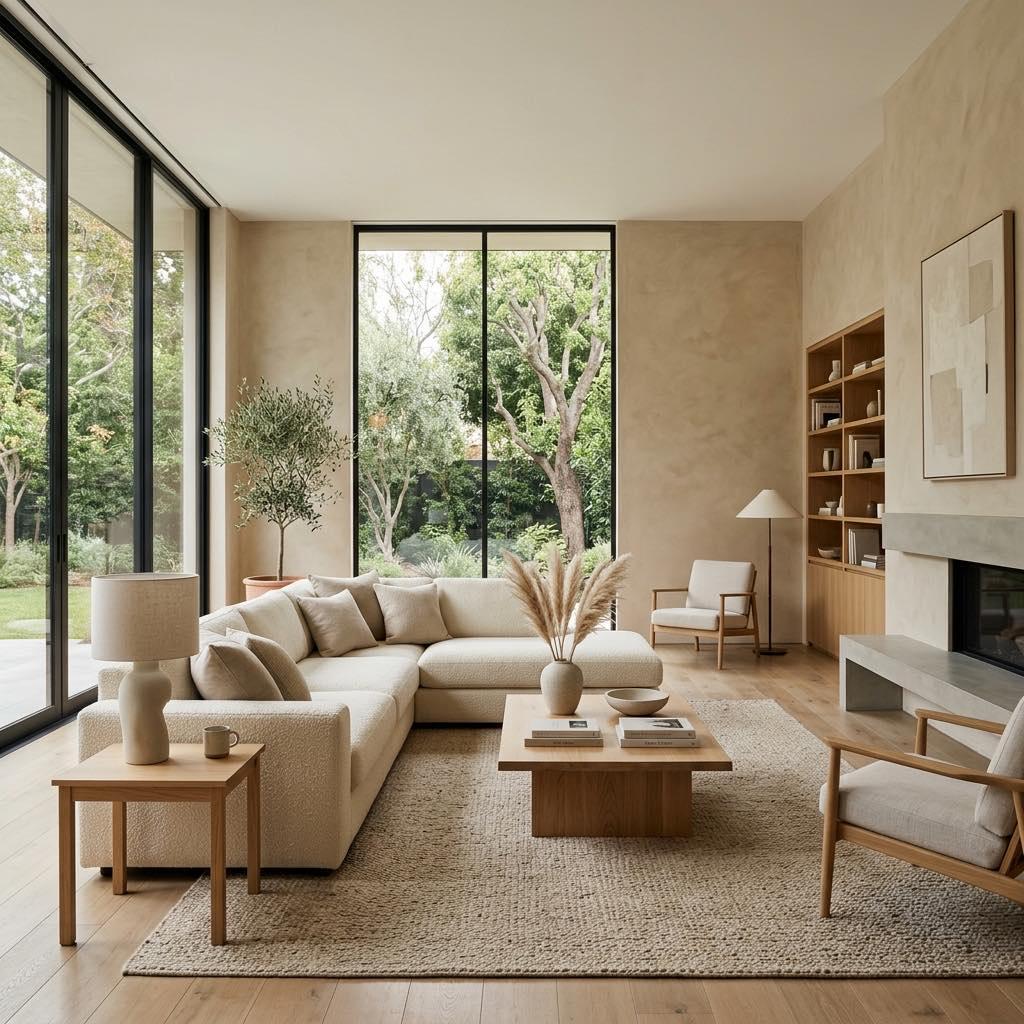
Designing a home that feels peaceful, clutter-free, and inviting requires balancing simplicity with warmth. The traditional approach to minimalism often relied on stark white walls, sharp angles, and cold metal accents, which could make a home feel sterile or unlivable. Today, a modern shift toward a neutral minimalist living room layout offers the perfect compromise, blending clean lines with soft, earthy colors and rich natural textures. By focusing on essential, high-quality furniture and introducing organic elements like timber, linen, and clay, you can create a cozy gathering space that promotes relaxation and mindfulness. In this comprehensive interior styling guide, we share the core principles of designing a warm and functional neutral living area.
The Core Elements of Neutral Minimalism
At its heart, the modern neutral minimalist living room is defined by restraint, intentionality, and a focus on comfort. This approach does not mean leaving your walls completely bare or removing all decor; rather, it means choosing pieces that serve a purpose or bring joy. By reducing visual noise, you allow the mind to rest, turning your living room into a sanctuary from the busy outside world. The key to making this design style feel cozy rather than cold is the careful curation of warm under-toned colors, tactile fabrics, and natural materials that bring character and history into the space without adding unnecessary clutter.
1. Curating a Warm Earthy Color Palette
The foundation of any successful neutral space is the color palette. Instead of cool grays and pure whites, choose warm neutrals that reflect the colors of the natural world. Think soft sand, warm beige, light taupe, oatmeal, and terracotta. These hues contain yellow, red, or brown undertones, which instantly make a large room feel cozy and inviting. You can paint the walls in a soft, chalky lime wash or a matte finish to add subtle texture. Keep the base of the room neutral, and then layer slightly darker tones, such as warm oak, charcoal, or wheat, through furniture, curtains, and rugs to create visual depth and prevent the space from looking flat.
2. Selecting Low-Profile Furniture and Seating
Furniture in a minimalist space should have clean lines, simple silhouettes, and a low profile. A low-profile sofa sits closer to the floor, which makes the ceilings feel taller and creates a more relaxed, lounge-like atmosphere. When staging a neutral minimalist living room, the sofa should serve as the main anchor point. Choose a sofa upholstered in a durable, textured fabric like flat-weave linen, cotton canvas, or a soft bouclé in a cream or oatmeal shade. Pair it with a simple, solid wood coffee table, such as white oak or walnut, featuring rounded edges or a organic curved shape to soften the clean lines of the room.
3. Layering Rich Natural Textiles for Coziness
Without vibrant colors, texture becomes the primary tool for creating visual interest and warmth in a neutral minimalist living room layout. Layering different textiles prevents a monochrome space from feeling flat and uninviting. Start from the ground up with a large, textured area rug made from natural fibers like wool, jute, or sisal. A thick, high-pile wool rug in a soft cream shade adds warmth underfoot and softens the acoustics of the room. Drape a chunky knit throw blanket over the sofa, and mix in linen and cotton throw pillows in varying shades of sand and taupe. The mix of rough, smooth, soft, and woven fabrics creates a rich sensory experience.
4. Integrating Organic and Wood Accents
To keep a neutral room from looking too artificial, you must bring in organic elements that connect the indoors with nature. Wood accents are perfect for this, as the natural grain adds warmth and unique character. Choose furniture and decor made from light-colored hardwoods like oak, ash, or maple, and keep the finish natural or matte rather than shiny and varnished. You can introduce wood through the legs of chairs, side tables, picture frames, or a simple decorative bowl on the coffee table. Next, add a few carefully selected indoor plants, such as a potted olive tree or a fiddle leaf fig in a handmade clay pot, to bring life and a pop of green to the room.
5. Intentional Lighting and Negative Space
Lighting plays a critical role in highlighting the textures and colors of a neutral room. Maximize natural light during the day by using sheer, lightweight linen curtains that diffuse the sunlight without blocking it. In the evening, avoid harsh overhead lights and instead use layered ambient lighting. Place a sculptural floor lamp next to the reading chair, and add a warm-toned table lamp on a side table to create soft, inviting pools of light. Equally important is the concept of negative space—the empty areas around your furniture. Leaving space around a chair or leaving a portion of a wall bare allows the eye to rest and makes the pieces you do display feel more special.
6. Staging and Clutter-Free Organization Rules
Keeping a neutral room looking beautiful requires maintaining a clutter-free environment. Clutter is highly visible in a minimalist space and instantly disrupts the peaceful atmosphere. When organizing a neutral minimalist living room, implement smart, hidden storage solutions. Use coffee tables with drawers, a wooden media console with closed cabinets, or beautiful woven baskets to store remote controls, chargers, books, and toys out of sight. Keep surfaces mostly clear, choosing to display only a few meaningful items, such as a single ceramic vase with dried branches, a couple of art books, or a handmade clay sculpture that adds personal style.
7. The Importance of Quality Over Quantity
One of the most important rules of minimalist design is investing in quality over quantity. Instead of filling your room with cheap, mass-produced furniture and decor that will quickly wear out, focus on sourcing well-made, durable pieces that will last for years. A solid wood coffee table, a hand-woven wool rug, and a high-quality sofa may cost more initially, but their durability, comfort, and timeless aesthetic make them a far better investment. These pieces develop a beautiful patina over time, adding character and warmth to your home without needing to be replaced, which supports a sustainable lifestyle.
8. Personalizing a Minimalist Space
Minimalism should never mean stripping away your personality. To make the space truly feel like home, incorporate personal touches that reflect your life and interests. Display a piece of art that you love, a few travel souvenirs, or a collection of family photos in simple matching frames. The key is to display these items intentionally. For example, instead of hanging a gallery wall of small frames, choose one large, high-impact painting or photograph that serves as a focal point. This maintains the clean, uncluttered feel of the room while still making it personal and unique to you.
To finish, styling a cozy neutral minimalist living room is about embracing simplicity, warmth, and natural beauty. By carefully curating a warm earthy color palette, choosing comfortable low-profile furniture, layering rich textures, and incorporating organic elements, you can design a space that feels both modern and deeply comforting. Prioritize negative space and hidden storage to maintain a clutter-free environment, and invest in high-quality, durable pieces that stand the test of time. Enjoy the peaceful, mindful sanctuary you have created, and live comfortably in a home designed for modern, sustainable relaxation.
To learn more about optimizing your space, explore our guide on Mid-Century Modern Living Room Decor.
For additional tips on creating a beautiful home, read our article about Scandinavian Modern Living Room Decor.
If you are planning a renovation, you might also find our ideas on Japandi Living Room Decor helpful.
To discover more sustainable choices, check out our tips on Tuscan Style Living Room Decor.