
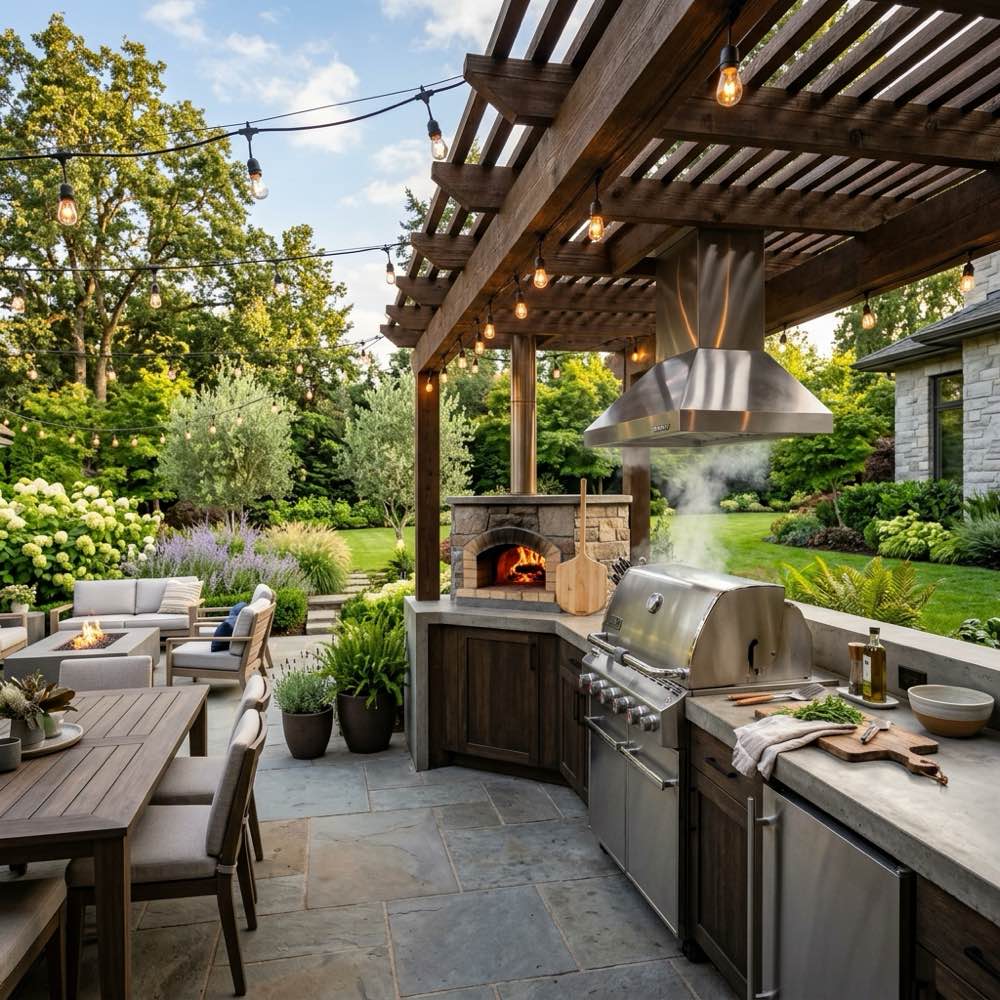
As the boundaries between indoor and outdoor living continue to dissolve in modern architecture, homeowners are looking for ways to extend their culinary and entertainment spaces into the open air. A simple freestanding charcoal grill is no longer enough to satisfy those who love hosting. The absolute biggest trend in landscaping for 2026 is the creation of fully equipped, high-end outdoor cooking zones. By applying these clever outdoor kitchen design ideas, you can build a premium, weather-resistant backyard retreat that enhances your cooking capabilities, boosts your home’s value, and serves as the perfect setting for summer entertaining.
What is an Outdoor Kitchen?
An outdoor kitchen is a custom-built, open-air cooking area that replicates the functionality of an indoor kitchen in an outdoor setting. Unlike a simple barbecue setup, a complete outdoor kitchen includes built-in cabinetry, durable countertops, plumbing for a sink, electrical connections, and specialized appliances such as refrigerators, side burners, and wood-fired pizza ovens. Constructed from weather-proof materials like stone, concrete, and marine-grade polymers, these culinary zones are designed to withstand year-round exposure to sun, rain, and snow, serving as an integrated extension of your home’s main living area.
1. Plan the Ideal Layout Zone: L-Shape, U-Shape, or Linear
The layout of your outdoor cooking zone should be dictated by the size of your patio and how you intend to use the space. A linear, straight-run kitchen is the top choice for smaller patios, as it hugs the house or a boundary wall, saving valuable floor space. For larger yards, an L-shape or U-shape layout is highly recommended, as it establishes a clear separation between the hot cooking zone and the cold food prep zone. When researching various outdoor kitchen design ideas, layout planning is the first step in creating a natural, safe foot traffic flow that keeps guests close to the action without crowding the chef.
2. Select High-Performance Countertop Materials (Concrete, Quartzite)
Outdoor countertops must be incredibly durable, as they face constant UV rays, heat, and moisture. Avoid using dark, polished granite, which can absorb solar heat and become hot enough to burn your skin on summer afternoons. Instead, choose light-colored concrete or natural quartzite countertops with a honed or textured finish. Concrete brings a modern, industrial-chic aesthetic and can be poured in place for a seamless look. Quartzite is highly resistant to scratching, staining, and UV damage, providing a smooth, durable surface that is easy to wipe down and stays cool under the sun.
3. Choose Weatherproof, Eco-Friendly Cabinets
Your outdoor kitchen cabinets must be constructed of materials that will not rot, warp, or rust when exposed to moisture. A core recommendation of outdoor kitchen design ideas is choosing marine-grade polymer or HDPE (High-Density Polyethylene) cabinets. HDPE is an eco-friendly material made from recycled plastics that is completely waterproof, UV-stable, and does not require sealing or painting. If you prefer a natural wood look, select sustainably sourced teak or redwood. Both woods contain natural oils that resist insects and moisture, though they require annual oiling to maintain their golden color.
4. Stage with Premium Stainless Steel Appliances and Pizza Ovens
The appliances you choose will determine the versatility of your outdoor kitchen. A high-quality built-in grill made from 304-grade stainless steel is the foundation of the space. To elevate your outdoor cooking experience, consider adding a built-in wood-fired pizza oven or a kamado-style ceramic smoker. Staging the cooking island with an under-counter outdoor refrigerator keeps drinks cold and prevents constant trips inside to the main kitchen. Ensure all electrical lines are installed by a professional electrician and utilize outdoor-rated outlets for safety.
5. Construct a Protective Overhead Pergola or Pavilion
To ensure you can use your outdoor kitchen even during mid-day heat or unexpected summer showers, you must install an overhead shelter. Many modern outdoor kitchen design ideas incorporate a timber or metal pergola styled with string lights. A pergola with adjustable louvers is an outstanding choice, as it allows you to control the amount of sunlight and ventilation. For complete weather protection, build a solid-roof pavilion that matches the architectural style of your main house. This shelter protects your appliances and cabinetry from direct exposure, extending their lifespan.
6. Layer Ambient and Task Outdoor Lighting
To keep the cooking area functional after the sun goes down, lighting design is critical. Direct, bright spotlights will wash out the space and create harsh glare. Instead, layer your lighting. Install bright, waterproof LED task lighting directly above the grill and food prep areas so you can see what you are cooking. Add soft, warm ambient lighting—such as string lights, hanging lanterns, and recessed base lights under the bar counter—to create a cozy, inviting atmosphere. This lighting transition is perfect for hosting long evening dinners.
7. Protect and Seal Countertops and Surfaces
Even the most durable outdoor countertops are porous and can absorb oils, acidic juices, red wine, and greasy food drippings, leading to permanent stains and discoloration. To protect your investment, you must apply a high-quality, penetrating outdoor stone sealer shortly after installation. The sealer penetrates deep into the stone pores, creating an invisible, water-repellent, and stain-resistant barrier. Re-apply this sealer annually to maintain maximum protection against harsh winter weather. For daily cleaning, avoid abrasive chemical sprays that can strip the sealer. Instead, wipe the counters down with a damp microfiber cloth and a mild dish soap.
8. Sourcing Materials, Plumbing, and Site Leveling Tips
Before beginning construction, you must prepare a perfectly level site. An outdoor kitchen is extremely heavy; a concrete or stone structure can weigh thousands of pounds. If the patio is uneven, the structure will settle and crack. Excavate the area, lay down a thick gravel base, and pour a reinforced concrete pad. If you are adding a sink, hire a professional plumber to install supply and drain lines that can be easily winterized. In colder climates, ensure the plumbing lines can be completely blown out with compressed air to prevent freeze damage.
Summary: Outdoor Kitchen Design Checklist
Design your backyard culinary oasis successfully using this checklist compiled from our outdoor kitchen design ideas:
| Design Component | Recommended Choice | Staging Purpose |
|---|---|---|
| Countertop | Honed light quartzite or poured-in-place concrete | Stays cool under the sun and resists UV scratching and staining |
| Cabinetry | Marine-grade HDPE polymer or sustainably sourced teak | Provides completely waterproof storage that will not warp or rot |
| Overhead Cover | Adjustable louvered metal pergola or a solid-roof pavilion | Provides shade from direct heat and protects appliances from rain |
| Lighting Style | LED task lighting over prep zone and warm string lights overhead | Balances cooking safety with a cozy, inviting dining atmosphere |
| Layout Choice | L-shape or U-shape with a dedicated dining bar overhang | Separates hot cooking zones from cold prep and welcomes guests |
In conclusion, by utilizing these outdoor kitchen design ideas, you can design a beautiful, high-functioning culinary retreat in your backyard. By planning the ideal layout, choosing durable quartzite or concrete countertops, selecting waterproof HDPE cabinets, and adding a protective pergola and layered lighting, you create a space that feels like a natural extension of your indoor home. Plan your layout steps carefully, prepare your concrete foundation pad, and enjoy the daily luxury of outdoor cooking and dining with your family for years to come.