
In the modern era of smart homes, lighting is no longer just about toggling a switch to illuminate a dark room. Instead, it has evolved into a key tool for managing our health, sleep quality, and productivity. Circadian lighting systems represent one of the most significant wellness developments in home design. By following a comprehensive smart circadian lighting guide, you can configure your home’s lights to mimic the natural progression of the sun, aligning your body’s internal clock with its natural rhythms. In this article, we explain how circadian lighting works and how you can easily implement it in your smart home.
What is Circadian Lighting?
The human body operates on a natural 24-hour internal clock known as the circadian rhythm. This rhythm is heavily influenced by external light signals. Sunlight contains high levels of blue light in the morning, which signals our brain to wake up and feel energized. As evening approaches, the sun’s light transitions to warmer, amber tones, triggering the release of melatonin, the hormone that promotes sleep. Our modern reliance on bright, cool white indoor lights at night disrupts this biological cycle, leading to fatigue and poor sleep. Implementing a smart circadian lighting guide helps correct this, adjusting color temperatures dynamically throughout the day to support your natural cycle.
1. Invest in Dynamic Tunable White LED Bulbs
To establish a proper circadian lighting system, you need light bulbs that can adjust both their brightness and color temperature. Standard dimmable bulbs only change brightness, which is not enough. When planning your layout, look for tunable white smart LED bulbs. A primary recommendation in any smart circadian lighting guide is to choose bulbs that cover a spectrum from 2200K (warm amber candle glow) up to 6500K (crisp, blue-sky daylight). Popular smart systems like Philips Hue, LIFX, or Nanoleaf offer excellent tunable white bulbs that integrate seamlessly with major smart home platforms, allowing for automatic, gradual color transitions.
2. Configure Automated Color Temperature Transitions
The true magic of circadian lighting lies in automation. You shouldn’t have to manually adjust your lights throughout the day. Your automation system should do it for you. According to this smart circadian lighting guide, your transitions should follow a natural daily schedule:
- Morning (7:00 AM – 9:00 AM): Transition lights to a bright, cool white (5000K) to stimulate alertness and stop melatonin production.
- Midday (9:00 AM – 4:00 PM): Maintain a crisp daylight temperature (5500K – 6000K) to support concentration, focus, and energy.
- Late Afternoon (4:00 PM – 7:00 PM): Slowly warm the lights to a soft white (3000K), signaling to your body that the workday is ending.
- Evening (7:00 PM – 10:00 PM): Drop the color temperature to a warm, cozy amber (2200K) and reduce brightness, encouraging melatonin release.
3. Place Smart LED Strips for Indirect Accent Lighting
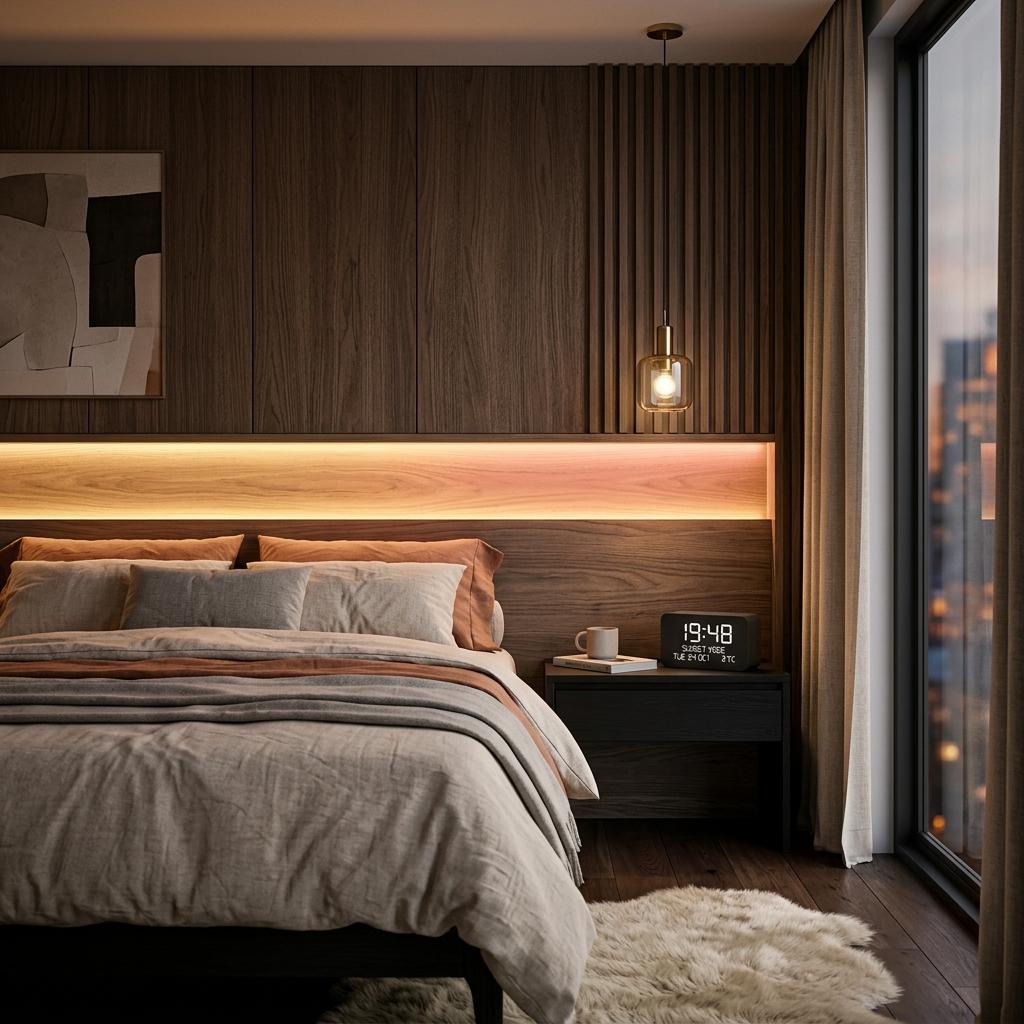
Direct overhead lighting can be harsh, especially during the morning and evening hours. To create a comfortable, glare-free environment, use indirect accent lighting. Install smart LED strips behind your bed headboard, under kitchen cabinets, or along the base of bathroom vanities. Following the advice of this smart circadian lighting guide, configure these accent strips to glow in warm amber tones at night. Indirect lighting provides enough visibility to navigate your home safely without shining harsh blue light directly into your eyes, helping you unwind and prepare for a restful sleep.
4. Set Up Smart Sensors and Bedside Control Displays
To make your circadian lighting system easy to use, integrate smart motion sensors and bedside controls. During the night, standard motion sensors might turn on bright lights if you get up, which instantly wakes you up. To avoid this, set up smart motion sensors to trigger a dim, warm nightlight mode (1000K – 2000K at 5% brightness) between 10:00 PM and 6:00 AM. As outlined in this smart circadian lighting guide, placing a small smart display or physical smart button on your nightstand allows you to easily override the schedule if you want to read, or quickly turn off all lights without using a phone app.
5. Create a Sunset and Sunrise Wake-Up Routine
Waking up to a loud alarm clock in a dark room can leave you feeling groggy. A circadian lighting system allows you to wake up gently using a simulated sunrise. A key tip in our smart circadian lighting guide is to schedule your bedroom lights to begin glowing at 1% brightness in a deep orange tone about 30 minutes before your wake-up time. Over the course of 30 minutes, the light should gradually increase in brightness and shift to a bright, crisp daylight tone. This simulated sunrise slowly wakes your brain, making you feel refreshed and energized as you start your morning.
6. Choose Light Fixtures that Diffuse Light Evenly
The fixtures you choose for your smart bulbs play an important role in how light is distributed. Exposed bulbs can create bright glare and harsh shadows, which can cause eye strain. When setting up your lights, choose fixtures with frosted glass, fabric shades, or paper shades. These diffusers spread the light evenly throughout the room, creating soft, natural illumination that mirrors daylight. By combining smart bulbs with frosted diffusers, you create a soft, inviting environment that aligns with the wellness goals of this smart circadian lighting guide.
Summary: Circadian Lighting Configuration Checklist
Setting up a health-focused smart lighting system in your home is simple when you focus on these essential components:
| System Element | Circadian Staging Choice | Health & Practical Benefit |
|---|---|---|
| Bulb Capability | Tunable white smart LED bulbs (2200K – 6500K) | Allows for complete color temperature and brightness control |
| Automation Schedule | Cool light during midday, warm amber light at night | Supports focus during the day and melatonin release at night |
| Accent Light Placement | Smart LED strips behind headboard and under cabinets | Provides soft, indirect illumination without harsh glare |
| Sensor Configuration | Smart motion sensors set to dim nightlight mode after hours | Allows safe night navigation without disrupting sleep cycles |
| Morning Alarm | 30-minute sunrise simulation starting with deep orange | Promotes a gentle wake-up routine and reduces morning grogginess |
Looking ahead, following a smart circadian lighting guide helps you turn your home lighting into a tool for wellness. By investing in tunable white bulbs, setting up automatic transitions, and using soft, indirect light, you can create a beautiful home that supports your natural rhythms, leading to better focus, improved sleep quality, and a healthier lifestyle.
To learn more about optimizing your space, explore our guide on Smart Mirror Workout Home Gym Tech.
For additional tips on creating a beautiful home, read our article about Smart Home Wall Mount Control Panel Ideas.
If you are planning a renovation, you might also find our ideas on Smart Home Lighting Ideas helpful.
To discover more sustainable choices, check out our tips on Smart Home Protocols Explained.
Enhance your living space further by exploring our recommendations for Best Smart Indoor Security Cameras for Home.