
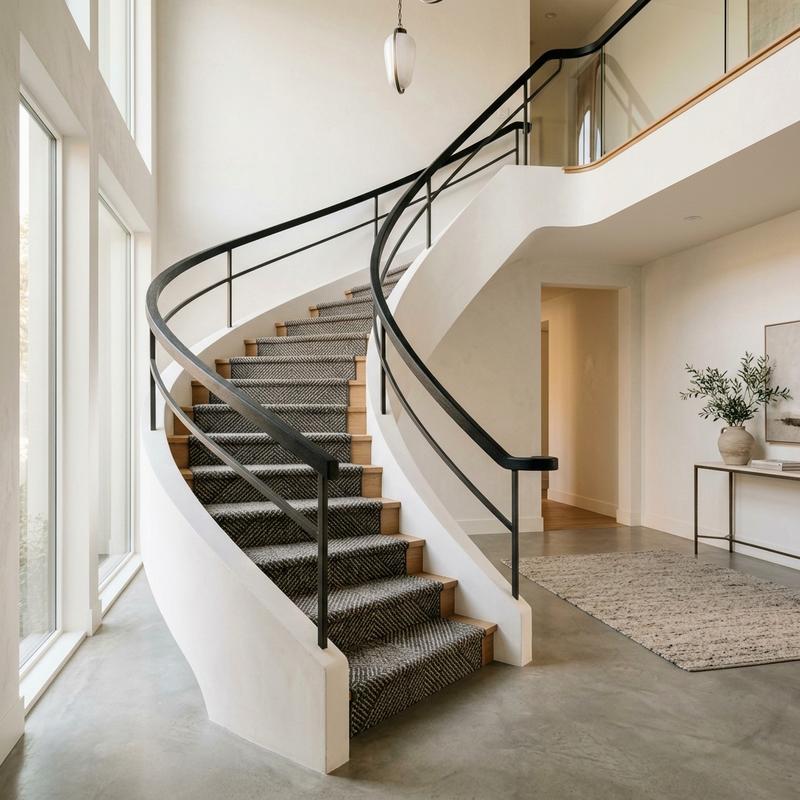
Staircase Decor and Runner Ideas: Premium Materials, Sculptural Railings, and Textile Guides
Our team at HomeTunez frequently speaks with homeowners who overlook the design potential of their staircases, treating them as simple functional connections between floors. In my interior architecture practice, I always emphasize that the staircase is one of the most important structural centerpieces in a home. It is a high-visibility architectural feature that sets the tone for your entryway and living spaces. By integrating premium runner textiles, sculptural railings, and smart built-in lighting, you can transform a basic set of steps into a stunning design statement. This approach balances safety and comfort with high-end aesthetic appeal.
Designing a premium staircase requires understanding how different materials and structures interact to create visual flow. The transition from wood treads to soft carpeting should feel seamless and intentional. Standard builders-grade staircases often feature basic balusters and plain drywall borders that fail to capture the eye. Replacing these elements with custom steel railings, floating oak treads, or a beautifully patterned runner rug elevates the entire space. A well-designed staircase acts as an anchor for your home’s layout, drawing the eye upward and creating a welcoming transition between different levels of your house.
Safety is another crucial consideration when designing a staircase, especially in homes with active children or elderly family members. Bare wood treads can be slippery and cold, posing a tripping hazard. Installing a high-quality carpet runner provides essential traction and cushions underfoot, reducing the risk of slips. The runner also absorbs the sound of foot traffic, quietening the transition between floors. Selecting durable materials and secure mounting hardware ensures your staircase is both safe and beautiful. These functional details work together to create a secure, comfortable, and stylish environment for your entire family.
To enhance security and visibility on your stairs, you can integrate smart monitoring and lighting systems. Placing the best smart indoor security cameras for home near the top or bottom landing allows you to keep an eye on traffic and ensure safety. These cameras can detect motion, alerting you if a child or pet approaches the stairs unsupervised. Modern security cameras are compact and can be mounted discreetly on adjacent walls or tucked into shelving. This combination of physical safety and digital surveillance provides peace of mind, ensuring your home’s central transition remains monitored and secure.
Ultimately, a successful staircase design depends on selecting the right combination of textiles, wood finishes, and metal hardware. The runner style should complement the architecture of your home, whether you choose a classic stripe or a modern solid color. You should also coordinate your railing finishes with the lighting fixtures and door hardware in your entryway. By investing in quality craftsmanship and high-end materials, you create a staircase that stands up to daily wear while serving as a beautiful architectural highlight, enhancing the beauty and value of your home for years to come.
Material Science and Durability in Staircase Design
Selecting the right materials for your staircase runner and treads is essential for ensuring durability and longevity. Staircases are high-traffic zones that experience heavy daily impact, which means inferior textiles will quickly show signs of wear and staining. We recommend using natural wool for staircase runners because of its outstanding durability and resilience. Wool fibers possess a natural crimp that resists crushing underfoot, allowing the carpet to maintain its pile height. Wool also contains natural lanolin oils that repel dirt and moisture, making it easier to clean than synthetic alternatives.
If you prefer a synthetic runner, high-performance nylon is an excellent choice for active households. Nylon is highly resistant to abrasion and can be treated with stain-resistant coatings to protect against spills. When selecting wood for your stair treads, choose hard, dense timbers like white oak, maple, or walnut. These wood species resist scratching and denting from claws and heavy footwear. If you choose to paint your risers or spindles, apply a durable, water-based enamel paint from Farrow & Ball. Their paints provide a tough, wipeable finish that stands up to scuffs and kicks, keeping your woodwork looking pristine.
To protect the finish of your wooden treads and keep them slip-resistant, you must clean them with the right products. Standard wood cleaners can leave behind slippery waxes or chemical residues that make stairs dangerous. We suggest maintaining your wood treads and handrails using premium wood care products from Bona. Their pH-neutral cleaners dissolve dirt and grease without damaging the polyurethane sealer, preserving the wood’s natural grip and beauty. Regular cleaning with gentle products prevents dirt from scratching the wood, ensuring your staircase remains safe and beautiful for your family.
Keeping your runner clean and free of spots is equally important for maintaining a premium look. Spills and muddy footprints will happen on busy staircases. You should spot-clean your carpet runners using gentle, plant-derived cleaners from Method. Their biodegradable cleaners dissolve organic stains and dirt without using harsh chemicals that can strip the dyes from wool or nylon fibers. Using non-toxic cleaning products protects your indoor air quality and ensures no chemical residue remains on the carpet, keeping the runner safe for children and pets who touch the surface.
For staircase runners placed near outdoor entries or high-moisture mudrooms, choosing outdoor-grade performance fibers can provide maximum protection. High-performance textiles from Sunbrella are excellent for custom stair landing rugs or cushions, as their solution-dyed acrylic fibers resist fading and moisture. If your staircase opens into an indoor lounge, using stain-resistant fabrics from Crypton on adjacent seating ensures that dirt isn’t transferred to your stairs. These textiles feature a permanent moisture barrier that prevents spills from soaking into the fibers. This high level of durability keeps your transitional seating looking clean and fresh.
Selecting clean, sustainable materials for your staircase is part of a broader commitment to creating a non-toxic home. The choices you make in your entryways should reflect the same standards of wellness that you apply to other rooms. If you have researched sustainable bedroom design ideas to reduce synthetic chemicals where you sleep, it makes sense to extend those principles to your staircase. Using natural wool runners, low-VOC finishes, and eco-friendly wood cleaners protects your indoor air quality, ensuring a healthy environment for your family and pets.
Built-In Integrations and Styling
Integrating sculptural railings and built-in lighting into your staircase design requires careful planning to match your home’s architecture. For modern homes, a sculptural steel or iron railing provides a clean, industrial look that opens up the space. Combining thin metal spindles with a warm wood handrail creates a beautiful contrast, bringing warmth to the structure. If you prefer a minimalist look, clear glass railing panels mounted in stainless steel clamps offer a floating appearance. This design allows light to flow freely through your entryway, making the entire area feel larger and more open.
Adding built-in step lighting is an excellent way to improve safety and highlight the architectural details of your stairs. You can install low-profile recessed LED lights in the drywall along the side of the stairs, or mount flexible LED strip lights under the nose of each tread. These lights illuminate the path clearly, reducing the risk of trips at night. Connecting these fixtures to motion sensors allows them to turn on automatically when someone approaches the stairs. This built-in lighting creates a high-end, modern look while ensuring the walkway is always illuminated safely.
Managing your staircase lighting with smart controls can enhance your daily routine. You can install smart dimmers that adjust the brightness of your step lights throughout the day, keeping them dim late at night. When setting up these systems, choosing compatible smart home protocols (Zigbee, Z-Wave, Wi-Fi) is essential for ensuring smooth integration. Low-power protocols like Zigbee and Z-Wave are ideal for wireless motion sensors, as they communicate efficiently and don’t slow down your Wi-Fi network. This setup allows your step lights to dim late at night or turn off when the stairs are empty.
Keeping the cleaning cloths and mats used on your staircase clean is an important part of your home maintenance routine. Spot-cleaning runners and wiping down metal railings requires soft, clean cotton cloths that won’t leave lint behind. When washing these cleaning cloths, using the best eco-friendly laundry detergent sheets helps remove trapped dirt and grease without leaving chemical residues. These sheets dissolve completely in water, protecting the environment while ensuring your cleaning cloths remain soft and effective. This simple step helps maintain the quality of your runner fibers, ensuring your staircase looks clean and inviting.
When styling your staircase, you should also consider how the entryway flows into your main living spaces. The runner style, railing finishes, and wall colors you choose should match the adjacent rooms. If you are looking for design ideas, you can find inspiration in budget-friendly modern living room decor ideas to help you style your entryway. Selecting an affordable runner and painting your risers in a contrasting color can create a high-end look without a large investment. This cohesive design approach ensures that your staircase feels like an intentional, stylish extension of your main living areas.
To complete the styling of your staircase, pay attention to the details of the runner installation. Use metal stair rods in finishes like brass or bronze to hold the runner in place, adding classic elegance. Ensure the runner width leaves 3 to 4 inches of exposed wood on each side of the tread, creating a framed look. Add rubber underlay pads beneath the carpet to cushion your steps and prevent the runner from shifting underfoot. These small details show a high level of craftsmanship, resulting in a staircase that feels secure, comfortable, and beautifully designed, making your entryway feel complete.
Comparing Staircase Runner Materials
To help you select the perfect runner for your staircase, we have evaluated the most common carpet materials used in modern homes. Each textile has unique benefits, average costs per linear foot, durability ratings, and comfort levels. Analyzing these details will help you choose a material that aligns with your household needs and budget, ensuring your stairs remain safe, quiet, and beautiful.
| Runner Material | Average Cost per Foot | Durability Rating | Stain Resistance | Comfort Underfoot | Best Location & Use |
|---|---|---|---|---|---|
| Natural Wool | $15 – $40 | Outstanding (15+ Years) | Very Good (Natural oils) | High (Soft & warm) | Main entryways, family staircases |
| Premium Nylon | $10 – $25 | Excellent (10-15 Years) | Excellent (Treated fibers) | Medium (Resilient pile) | Active homes, pet zones |
| Natural Sisal | $8 – $18 | Very Good (Wear resistant) | Low (Absorbs spills quickly) | Low (Coarse & textured) | Minimalist & Coastal homes |
| Polypropylene | $5 – $12 | Good (5-8 Years) | Outstanding (Water resistant) | Medium (Synthetic feel) | Basement stairs, mudroom entryways |
| Cotton Blend | $6 – $15 | Medium (3-5 Years, crushes) | Medium (Washable but stains) | High (Lightweight & soft) | Low-traffic hallways, guest lofts |
Selecting the right runner depends on your budget and how much traffic your staircase receives. For main stairs in a busy home, natural wool and premium nylon offer the best durability and comfort. If you are decorating a low-traffic guest loft, a cotton blend or sisal runner can provide a beautiful texture at a lower cost. In the next section, we will provide a step-by-step guide to help you install a carpet runner on your staircase, ensuring a secure and professional finish.
Step-by-Step Staircase Runner Installation Guide
Installing a staircase runner is a satisfying DIY project that requires patience, precision, and the right tools. By preparing your treads, using high-quality underlay pads, and securing the carpet tightly, you can create a safe, quiet, and beautiful runner. Below is our detailed guide to help you install a runner on your staircase.
Step 1: Measuring and Planning
Begin the installation process by measuring the width and depth of your stair treads and risers. Determine the width of the runner, leaving 3 to 4 inches of exposed wood on each side to create a framed look. Measure the height of the riser and the depth of the tread, including any nose overhang. Multiply this total by the number of steps, and add 12 inches for waste. Mark the center of each step using a pencil, and draw guidelines on each side to help you align the runner as you install it. This step is critical to ensure the carpet remains centered and straight throughout the installation process, preventing uneven margins. Use a story stick to quickly mark centerlines and guidelines on every tread without repeating measurements.
Step 2: Preparing Treads and Risers
Before installing the runner, ensure your wood treads and risers are clean and in good condition. Tighten any loose boards using finish screws to prevent squeaking when walked on. Wipe down the wood surfaces with a dry microfiber cloth to remove dust and dirt. If you plan to paint or stain the stairs, complete this step and allow the finish to dry completely. A clean, smooth surface is essential to ensure the carpet tack strips and underlay pads adhere securely to the steps, preventing shifting. Take time to inspect each tread for protruding nails or splinters that could puncture the carpet backing. Repair any damaged wood edges to ensure a smooth transition under the runner pad.
Step 3: Installing Carpet Tack Strips and Underlay Pads
Cut carpet tack strips to a length that is 1 inch shorter than the width of your runner. Nail a tack strip onto each crotch where the tread meets the riser, keeping the strip 1/4 inch away from the corner. Next, cut rubber underlay pads to fit the depth of the tread and wrap slightly over the nose. Staple the pads securely to the treads using a staple gun. The pads cushion your steps, reduce noise, and prevent the runner from wearing out quickly. Ensure the pads do not cover the tack strips, leaving the tacks exposed to grip the carpet backing securely during installation. Use high-density rubber pads to provide the best support and prolong the runner’s lifespan.
Step 4: Laying and Stapling the Runner
Start at the top of the staircase. Align the runner with your center guidelines and push the carpet end into the tack strip under the top landing. Staple the carpet to the riser directly under the landing nose, placing staples every 3 inches. Pull the runner down over the first tread, ensuring it is tight. Use a carpet bolster to push the carpet into the crotch between the tread and riser, and staple it securely. Repeat this process for each step, checking alignment with your guidelines. Stretching the carpet tightly prevents sagging and ensures a secure fit that resists heavy daily use. Use a knee kicker to stretch the carpet tight over the treads before driving staples into the crotch.
Step 5: Finishing the Thresholds
When you reach the bottom of the stairs, pull the runner tight against the final riser. Cut the carpet, leaving 1 inch of excess material. Fold this excess under to create a clean, finished edge. Push this folded edge into the bottom tack strip and staple it securely to the base of the riser. Use a hammer to flatten any visible staples into the pile, ensuring they are hidden. Clean the staircase one last time, leaving your runner looking professional and ready for use. This final check ensures that your transition space feels like a completed architectural gallery, ready to welcome your family. Ensure the folded edge is completely flat against the floor to prevent any tripping hazards at the landing.
Frequently Asked Questions
How much wood should be exposed on the sides of a stair runner?
The standard guideline is to leave 3 to 4 inches of exposed wood on each side of the stair runner. This creates a framed look that highlights the natural beauty of your wood treads. If you have a very narrow staircase, you can reduce this exposure to 2 inches. Maintaining consistent margins on both sides of the runner is essential to ensure a balanced, symmetric appearance.
Can I install a stair runner on winding stairs?
Yes, you can install a runner on winding stairs, but it requires a technique called piecing. On pie-shaped winders, the runner must be folded and stapled into the crotch of the step to accommodate the turn. The carpet must be kept straight on the outer edge, while the excess material is tucked and secured on the inner edge. This process requires patience and precision to ensure a neat finish.
Is a wool runner suitable for a home with pets?
Natural wool is a great option for pet owners because its fibers contain lanolin, a natural oil that resists dirt and repels moisture. This makes it easier to clean muddy paw prints and pet stains. Wool is also highly resilient and resists crushing underfoot. However, keep your pet’s claws trimmed, as long nails can snag the looped pile of woven runners, causing fraying over time.
How do I stop my staircase runner from shifting?
Stop shifting by installing high-quality rubber underlay pads beneath the runner, which grip the wood and absorb shear forces. You should also ensure the carpet is stretched tight and secured with heavy-duty carpet staples every 3 inches along the risers and treads. Loose runners are a major safety hazard, so verify that all points are fastened securely to the subfloor during installation.
What is the difference between waterfall and cap-and-band installation?
A waterfall installation sweeps the carpet straight down over the stair nose to the next tread without wrapping tightly under the nose, creating a modern, flowing look. A cap-and-band installation wraps the carpet tightly around the nose of the tread, securing it to the riser before dropping down, which highlights the stair’s profile. This traditional method requires more staples and precision during installation.
How do I quiet squeaky stairs before installing a runner?
Quiet squeaky stairs by driving long wood screws through the top of the tread into the underlying stringer or riser. You should do this before installing the runner. If you have access to the underside of the stairs, you can tap wood wedges into the gaps between the treads and stringers, securing them with wood glue. Stopping squeaks first ensures your staircase remains quiet after carpet installation.
Are metal stair rods necessary, or are they just decorative?
Modern metal stair rods are purely decorative and are not designed to hold the runner in place. The runner must be secured to the wood stairs using carpet staples and tack strips. Stair rods are installed in the crotch of each step over the carpet, adding visual interest. They come in finishes like brass and bronze, providing a classic, high-end look to your staircase.
How do I clean a spill on a wool stair runner?
Clean a spill on a wool runner by blotting the area immediately with a clean, dry paper towel. Never scrub the carpet, as this can damage the fibers and spread the stain. Apply a small amount of warm water and mild, pH-neutral soap, blotting from the outside of the spill inward. Blot dry with a clean towel, ensuring the area dries completely to prevent mold growth.
Can I install a stair runner myself, or should I hire a professional?
You can install a stair runner yourself if you have basic DIY skills, a staple gun, and a carpet bolster. Straight staircases are relatively easy to complete in a weekend. However, if your staircase has winders, landings, or complex turns, hiring a professional carpet installer is recommended. Professionals have the tools and experience to stretch the carpet and make seamless cuts around complex angles.
How do I choose the right pattern for my staircase runner?
Choose a pattern that complements your entryway’s scale and design. Vertical stripes can make a staircase look longer and draw the eye upward, while small geometric patterns hide dirt and wear well in high-traffic zones. If your entryway features bold wallpaper, choose a solid runner to avoid visual clutter. Aligning the pattern with the center of each step ensures a neat and balanced installation.
Design Summary
Designing a premium, safe, and visually beautiful staircase is an excellent way to elevate your home’s central entryway. By combining durable runner materials like natural wool or premium nylon with sculptural steel or glass railings, you transform a basic structure into a centerpiece. Integrating subtle LED step lights enhances safety while highlighting the architectural lines of your treads. Preparing your stairs, securing the runner with underlay pads, and matching your metal hardware ensures a long-lasting installation. This design approach creates a welcoming, comfortable transition that connects the levels of your home beautifully. Making these architectural improvements increases the functionality of your home while creating a stunning visual impact for anyone entering your front door.
This design philosophy also coordinates with how you style the surrounding rooms of your house. Just as you can use budget-friendly modern living room decor ideas to update your main seating spaces for family life, a stair runner can be selected and installed as a budget-friendly project that delivers high-end appeal. Integrating these elements with smart sensors and security cameras creates a safe, modern, and connected home environment. Ultimately, combining premium textiles and precise craftsmanship on your stairs shows that safety and style go hand-in-hand, making your staircase a beautiful architectural highlight. Establishing this visual rhythm on your stairs helps tie your upstairs and downstairs decors together into a single, cohesive aesthetic.
To learn more about optimizing your space, explore our guide on Smart Home Tech for Seniors.
For additional tips on creating a beautiful home, read our article about Non-Slip Flooring Solutions.
If you are planning a renovation, you might also find our ideas on Wheelchair Accessible Bathroom Design helpful.