
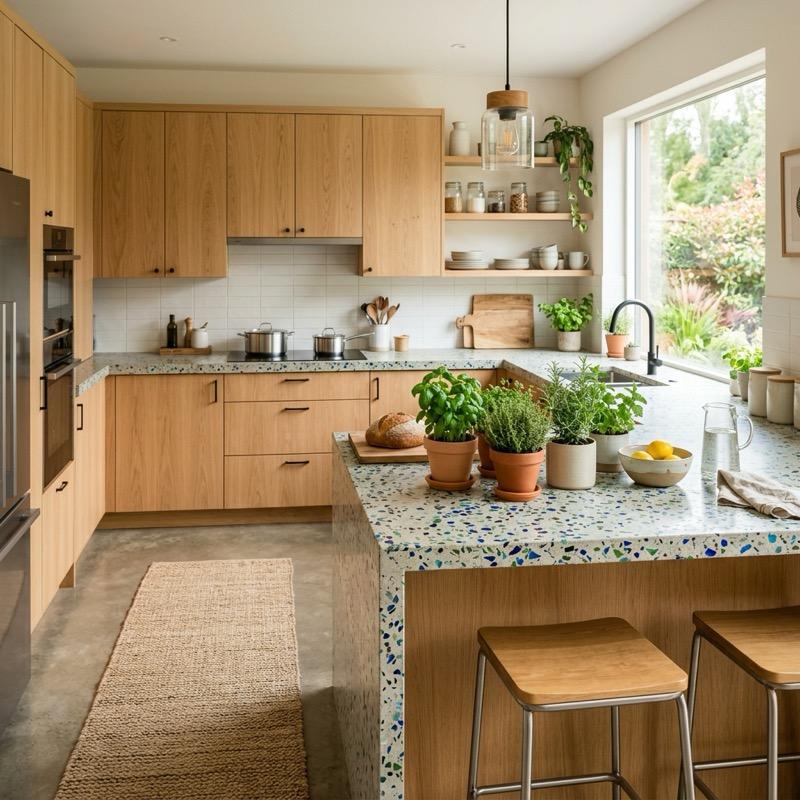
As modern homeowners increasingly prioritize eco-conscious living, remodeling projects are shifting focus toward materials that minimize environmental impact. The heart of the home, the kitchen, presents an excellent opportunity to implement green building practices, starting with the selection of a sustainable kitchen countertops design. Choosing the right surface involves balancing aesthetic appeal, everyday durability, and the ecological footprint of the material. Traditional surfaces like granite and quartz require carbon-heavy quarrying and shipping, whereas these green alternatives utilize recycled, organic, or rapidly renewable ingredients. By selecting these innovative surfaces, you can create a beautiful kitchen that respects the earth without sacrificing utility. Choosing these green countertops is a great way to start.
Understanding the Ecological Impact of Countertops
To understand why a sustainable kitchen countertops design is gaining so much traction, it is helpful to look at the life cycle of standard kitchen surfaces. Quarrying natural stone requires massive energy inputs, destroys local ecosystems, and releases large quantities of carbon dioxide. Engineered quartz, while durable, relies on synthetic resins made from petroleum products. In contrast, green countertops focus on reducing waste, preserving resources, and utilizing non-toxic binders. Many modern options are certified by third-party organizations like the Forest Stewardship Council or Cradle to Cradle, ensuring that they are produced responsibly and do not emit volatile organic compounds into your home. Choosing these products supports a circular economy and reduces the demand for raw virgin resources. This shift is crucial for preserving our planet’s ecosystems and reducing residential carbon output.
Recycled Glass Countertops: Bright and Modern
Recycled glass countertops are among the most visually striking options available for modern kitchens. These surfaces are made by embedding crushed post-consumer and post-industrial glass in a binder of cement or non-toxic resin. The result is a mosaic-like surface that reflects light beautifully, adding depth and color to your space. Because they contain up to eighty-five percent recycled glass, they redirect tons of waste from landfills. They are highly durable, heat-resistant, and non-porous when sealed properly, making them resistant to staining and bacterial growth. Whether you prefer a bold terrazzo style or a subtle monochromatic look, recycled glass offers a durable solution for any modern kitchen design. Many homeowners love how these countertops catch the sunlight during the day, creating a dynamic visual effect in the cooking space. This mosaic adds artistic flair to the cooking space.
Paper Composite Countertops: Surprisingly Tough
Paper composite countertops may sound delicate, but they are actually incredibly dense and resilient. These surfaces are made by layering sheets of FSC-certified paper or recycled paperboard, saturating them with water-based phenolic resin, and compressing them under intense heat and pressure. The resulting material has a warm, matte texture that feels similar to soapstone. It is highly resistant to heat, scratches, and impacts, and it patinas beautifully over time, developing a rich character. It can be cut and installed using standard woodworking tools, making it a favorite for custom designs. By selecting a sustainable kitchen countertops design made from paper, you are choosing a surface that is both durable and exceptionally low-impact. This material represents a brilliant repurposing of organic wood fibers.
Reclaimed Wood and Bamboo Options
For homeowners who love the natural warmth of wood, reclaimed lumber and bamboo are outstanding eco-friendly countertop choices. Reclaimed wood countertops are crafted from salvaged timber sourced from old barns, factories, or shipping crates, giving historical character and unique grain patterns to the kitchen. When treated with natural oils and beeswax, they provide a food-safe surface that can be sanded and refinished multiple times. Bamboo, on the other hand, is technically a fast-growing grass that regenerates in just three to five years without replanting. It is incredibly strong, naturally antimicrobial, and offers a sleek, contemporary look. Both options present excellent choices for a sustainable kitchen countertops design that adds organic beauty to your home. Homeowners can enjoy the unique stories and textures that these natural surfaces bring to their living spaces.
Bio-Glass and Eco-Friendly Concrete
Bio-glass countertops represent the cutting edge of sustainable design, consisting of one hundred percent recycled glass without any resins or binders. The glass is heated and compressed under extreme pressure to fuse the particles together, resulting in a semi-translucent slab that looks like jade or frozen water. It is non-porous, stain-resistant, and fully recyclable at the end of its life. Eco-friendly concrete countertops, on the other hand, replace standard Portland cement with industrial byproducts like fly ash or slag and use recycled aggregates like glass or porcelain. This reduces the carbon emissions of the concrete by up to sixty percent while offering a customizable, industrial-chic aesthetic. These surfaces are perfect for those who want a minimalist, modern aesthetic with strong green credentials.
Comparing Sustainable Countertop Materials
| Material | Primary Ingredients | Durability Rating | Maintenance Needs | Eco-Friendly Factor |
|---|---|---|---|---|
| Recycled Glass | Crushed glass, cement/resin | High | Low (occasional sealing) | Redirects landfill waste |
| Paper Composite | Recycled paper, organic resin | Very High | Low (mineral oil buffing) | FSC-certified materials |
| Reclaimed Wood | Salvaged timber | Medium | High (regular oiling) | Repurposed organic resource |
| Bamboo | Rapidly renewable grass | Medium-High | Medium (regular sealing) | Extremely fast regeneration |
| Bio-Glass | 100% fused recycled glass | High | Low (no sealing needed) | 100% recyclable, zero binders |
Installation Best Practices and Sealants
Proper installation and sealing are crucial to ensuring that your sustainable kitchen countertops design remains functional and beautiful for decades. Because materials like paper composite and reclaimed wood are wood-based, they are sensitive to standing water and humidity if not treated correctly. During installation, ensure all joints are sealed with low-VOC, food-safe silicone to prevent water from penetrating the seams. For wood and bamboo, apply a high-quality, non-toxic oil finish, such as linseed oil or pure tung oil, which penetrates the grain and protects it from within. Concrete and glass surfaces require a penetrating sealer to guard against acid staining from citrus fruits and vinegar. Reapplying these sealers regularly will keep your countertops looking pristine. Proper maintenance extends the life of these surfaces significantly, ensuring you get the most out of your sustainable investment.
Long-Term Cost and Value Considerations
While the initial cost of these eco-friendly surfaces can sometimes be higher than basic laminate or cheap stone, the long-term value is undeniable. Premium materials like paper composite and bio-glass are exceptionally durable, meaning they will not need to be replaced for decades, reducing future renovation costs. Besides, choosing eco-friendly materials is a major selling point for modern home buyers, potentially increasing the resale value of your property. By investing in these surfaces, you are saving money on replacements, reducing home maintenance costs, and creating a healthier indoor environment that supports the overall well-being of your family. Homebuyers in the modern market are increasingly willing to pay a premium for properties that feature green building certifications and non-toxic materials.
In short, finding the perfect sustainable kitchen countertops design is a rewarding process that combines style, function, and environmental responsibility. By evaluating your options—from recycled glass and paper composite to reclaimed wood and bio-glass—you can find a material that fits your aesthetic and lifestyle. Always prioritize proper installation, use non-toxic sealants, and maintain your surfaces regularly to ensure they last for many years. Choosing green building materials is a powerful step toward a sustainable future, allowing you to enjoy a beautiful, healthy home that aligns with your environmental values. This is an investment that pays off for both your household and the environment over many decades of daily use.
To learn more about optimizing your space, explore our guide on Sustainable Geothermal Heating and Cooling.
For additional tips on creating a beautiful home, read our article about Sustainable Solar Power Home Battery Storage.
If you are planning a renovation, you might also find our ideas on Rainwater Harvesting System for Home helpful.
To discover more sustainable choices, check out our tips on Upcycled Home Decor Ideas.