
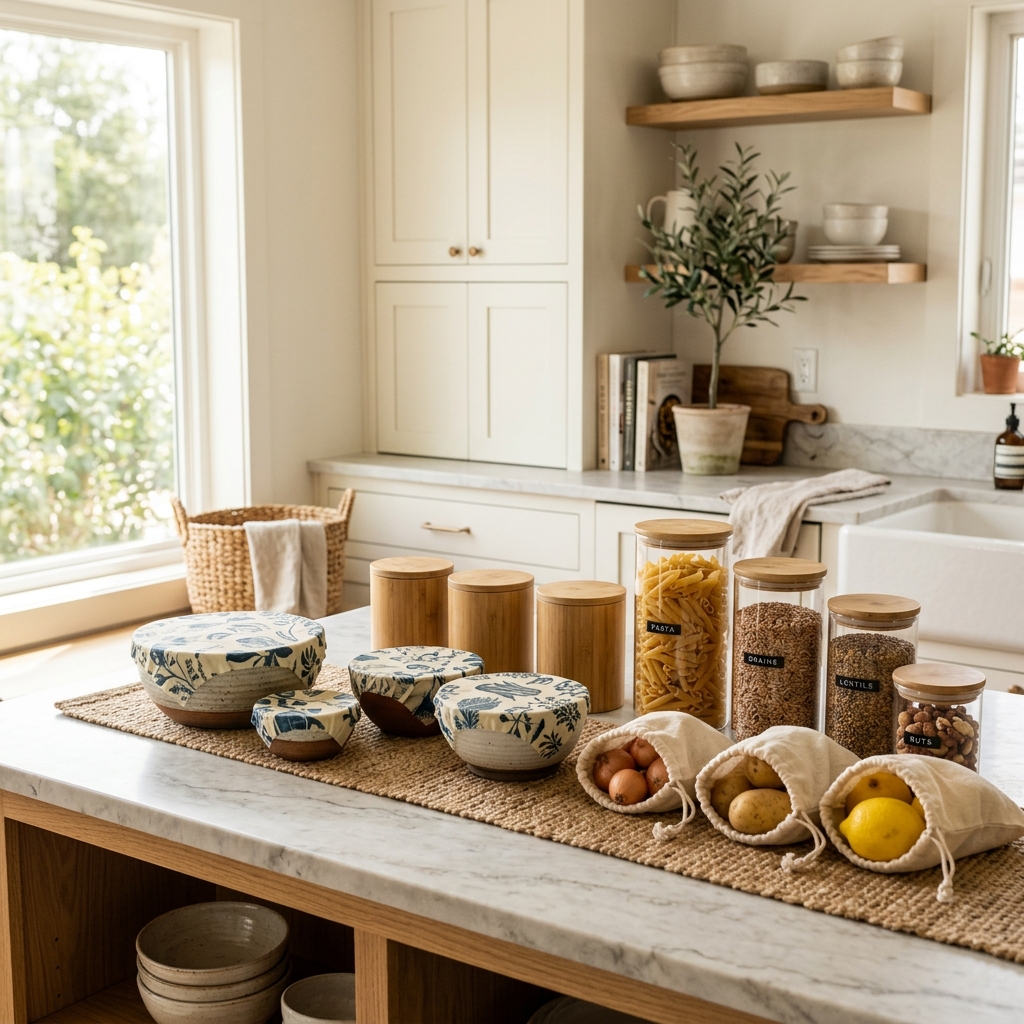
Reducing waste and eliminating plastic is one of the most meaningful changes we can make in our homes. The kitchen is often the largest source of single-use plastics, from cling wraps to disposable bags and plastic containers. Fortunately, transitioning to an eco-friendly home is simple when you focus on practical sustainable kitchen storage swaps. By replacing single-use items with reusable beeswax wraps, glass jars, and silicone bags, you can keep your food fresh while protecting the environment. In this guide, we explore the best plastic-free options to help you build a waste-free, beautiful, and sustainable kitchen.
Why Make the Switch to Sustainable Storage?
Standard plastic food storage solutions can release harmful chemicals into our food and take hundreds of years to break down in landfills. Making conscious, eco-friendly choices is a crucial step toward reducing our environmental footprint. By focusing on sustainable kitchen storage swaps, you not only eliminate single-use plastics but also design a kitchen that looks beautiful and organized. Natural materials like cotton, beeswax, glass, and bamboo bring warmth and texture to your countertops and refrigerator, creating a healthy, peaceful home environment.
1. Trade Plastic Cling Wrap for Reusable Beeswax Wraps
Plastic cling wrap is a common kitchen item, but it is single-use and cannot be recycled. Swapping it out is one of the easiest changes you can make. A key recommendation in any list of sustainable kitchen storage swaps is to invest in reusable beeswax wraps. Made from organic cotton infused with food-grade beeswax, jojoba oil, and tree resin, these wraps are self-adhesive and flexible. The warmth of your hands molds the wrap over bowls, cheese, or vegetables, creating a breathable seal that keeps food fresh longer. Best of all, they can be washed in cool water and reused for up to a year, after which they are completely compostable.
2. Replace Plastic Containers with Glass and Ceramic Jars
Storing leftovers in mismatched plastic containers can make your refrigerator look cluttered, and plastic can stain and retain odors. To create a clean, organized look, swap your plastic containers for high-quality glass or ceramic jars. A popular choice in modern sustainable kitchen storage swaps is to decant dry goods—like grains, pasta, flour, and nuts—into clear glass jars with airtight bamboo lids. Clear glass allows you to see your ingredients easily, making meal prep simple and preventing food waste. Glass and ceramic are also highly durable, easy to clean, and do not leach chemicals, making them a safe choice for food storage.
3. Swap Disposable Baggies for Reusable Silicone Bags
Single-use plastic sandwich bags are highly convenient but create a large amount of plastic waste over time. Swapping them is a simple way to reduce waste. Many guides on sustainable kitchen storage swaps suggest replacing disposable baggies with reusable silicone storage bags. Brands like Stasher make high-quality bags from food-grade platinum silicone, which is completely non-toxic and durable. These reusable bags feature airtight pinch-loc seals, and they are safe to use in the dishwasher, microwave, freezer, and even boiling water. They are perfect for packing lunches, storing frozen fruit, or cooking sous-vide meals.
4. Switch to Organic Linen and Cotton Produce Bags
When shopping for fresh fruits and vegetables, we often use thin plastic produce bags that are discarded immediately at home. Swapping these is an easy way to reduce plastic use. An essential part of successful sustainable kitchen storage swaps is to bring your own organic linen or cotton produce bags to the grocery store. Cotton mesh bags are breathable, allowing air to circulate around fruits and vegetables, which prevents moisture buildup and keeps them fresh longer. For leafy greens, damp linen bags are perfect for wrapping and storing in the refrigerator crisper drawer, keeping your greens crisp and fresh.
5. Swap Plastic Bread Bags for Reusable Linen Bread Bags
Freshly baked bread often comes in plastic packaging, which traps moisture and causes the crust to go soft. To keep your bread fresh, upgrade to reusable linen bread bags. As highlighted in top sustainable kitchen storage swaps, linen is naturally breathable, allowing just enough air circulation to keep bread crusty on the outside and soft on the inside. Linen bags also look beautiful sitting on your counter or breadboard, adding a warm, rustic element to your kitchen styling. When you buy bread from a local bakery, you can bring your linen bag to pack it plastic-free.
6. Choose Stainless Steel Containers for On-the-Go Meals
For taking lunches to work or packing snacks for travel, heavy glass containers can sometimes be too heavy or breakable. For a lightweight, durable option, swap glass for food-grade stainless steel containers. Stainless steel is a key material in modern sustainable kitchen storage swaps. These containers are lightweight, completely unbreakable, and leak-proof when fitted with silicone seals. They are perfect for kids’ lunches, camping trips, or taking leftovers to work. Stainless steel is easy to clean and will last a lifetime, making it an incredibly cost-effective and eco-friendly investment for your home.
Summary: Sustainable Kitchen Storage Swaps Checklist
Upgrading your kitchen storage to plastic-free, sustainable alternatives is simple when you focus on these key material swaps:
| Traditional Item | Sustainable Storage Swap | Environmental & Food Benefit |
|---|---|---|
| Plastic Cling Wrap | Reusable organic cotton beeswax wraps | Washable, compostable, keeps cheese and veggies fresh longer |
| Plastic Food Tubs | Clear glass jars with airtight bamboo lids | Durable, chemical-free, creates a beautiful organized pantry |
| Ziploc Baggies | Reusable platinum silicone storage bags | Dishwasher-safe, leak-proof, microwave and freezer friendly |
| Plastic Grocery Bags | Organic cotton mesh and linen produce bags | Breathable fabric prevents moisture buildup and spoilage |
| Disposable Lunchboxes | Food-grade stainless steel lunch containers | Lightweight, unbreakable, and lasts a lifetime |
In conclusion, incorporating sustainable kitchen storage swaps allows you to design a beautiful, organized, and eco-friendly home. By trading plastic wrap for beeswax wraps, choosing glass jars, and using silicone bags, you can keep your food fresh and eliminate waste. These simple changes help protect the planet while creating a healthy, peaceful, and chemical-free kitchen space for your family.