
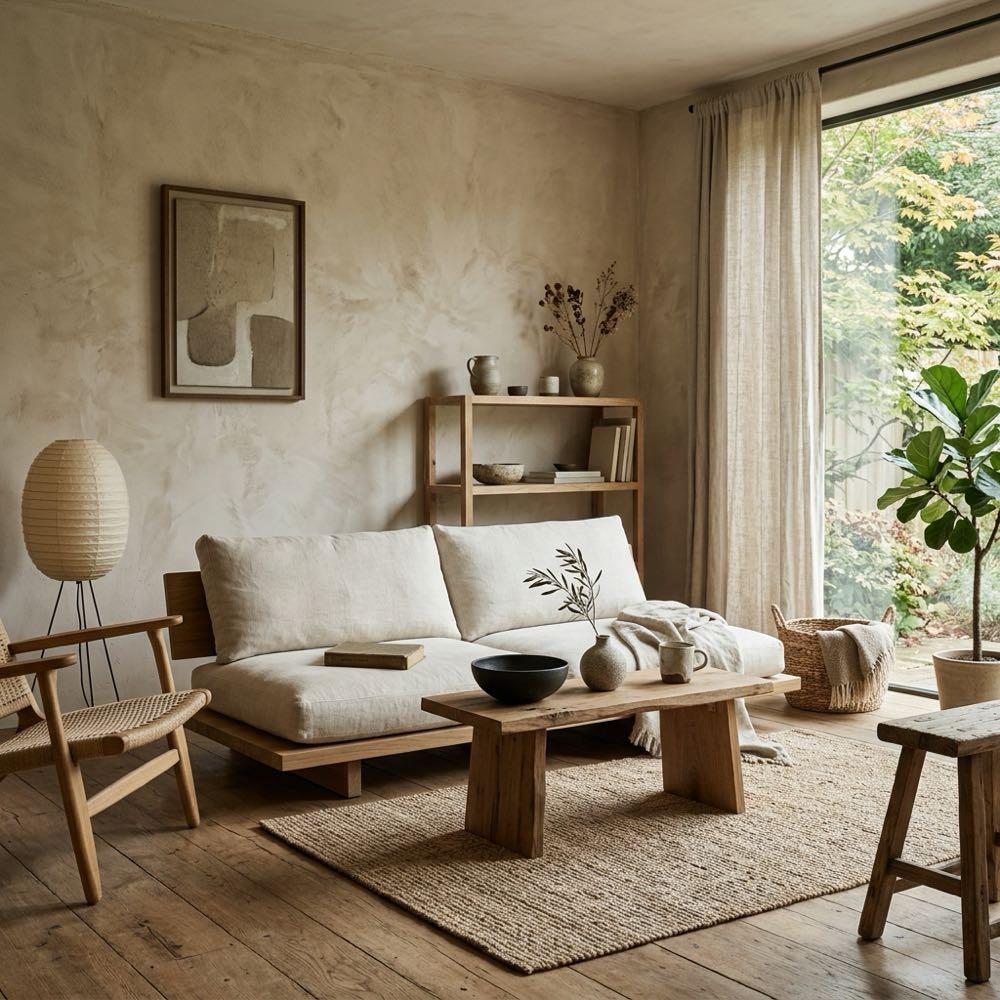
Introduction to Wabi Sabi Styling
Modern homes are often designed with sleek, highly polished surfaces that can feel cold and impersonal. In reaction, homeowners are looking for ways to bring texture, history, and natural character into their spaces. In contemporary interior design, creating a wabi sabi living room has become a very popular way to design a cozy organic sanctuary. Originating from ancient Japanese philosophy, this approach finds beauty in imperfection, transience, and the natural cycle of decay. By focusing on raw textures, you create a space that feels calm.
The beauty of this style lies in its authenticity. Unlike standard modern minimalism that demands perfection, this design direction celebrates the natural marks of time, such as aged wood, weathered stone, and handmade ceramics. Staging a wabi sabi living room requires a shift in mindset: instead of hiding minor scratches or asymmetrical shapes, you showcase them as unique features that tell a story. This connection to natural elements and imperfect craftsmanship brings a deep sense of peace and tranquility to your daily home life, helping you slow down, practice mindfulness, and enjoy simple comforts.
The Foundations of Wabi Sabi Style
To successfully style a wabi sabi living room, you must understand the core principles of this ancient Japanese aesthetic. The design centers around three fundamental concepts: simplicity, organic warmth, and an appreciation for the passage of time. The layout should feel open, unhurried, and uncluttered. Avoid overcrowding the room with unnecessary furniture or mass-produced decorations, choosing a few functional pieces instead.
Another essential element is the connection to nature. This involves incorporating materials that are close to their raw, natural state. Think of rough-sawn timber, unhoned limestone, organic linen, woven jute, and textured clay plaster. These raw textures provide a tactile experience that appeals to all the senses. In an organic living room layout, the surfaces themselves become the main ornamentation, celebrating the unique split in wood, the weave of fabric, and the subtle variations of hand-applied plaster walls, eliminating the need for excessive plastic decor.
Choosing a Warm Earthy Color Palette
The color palette is crucial for establishing the quiet, reflective mood of this design style. Avoid bright, artificial colors or cold, clinical grays. Instead, build your palette around warm, earthy tones that reflect the natural world. Soft cream, sand, oatmeal, and warm beige are perfect options for the walls, creating a soft, inviting backdrop. For accent colors, look to the forest and the earth: deep moss green, warm terracotta, soft charcoal, slate gray, and rich ochre add beautiful contrast.
When decorating a wabi sabi living room, apply these colors in a subtle, blended way rather than using bold patterns. Limewash paint or clay plaster is an excellent wall treatment because it creates a soft, chalky texture with natural color variations. This hand-applied look catches the sunlight beautifully throughout the day, creating a dynamic surface that feels alive and warm. By keeping the color palette quiet and organic, you allow the raw beauty of your wood furniture and textile details to stand out.
Selecting Low-Profile and Hand-Crafted Furniture
Furniture selection is where the wabi-sabi philosophy truly shines. Look for pieces that are crafted from solid, natural materials and showcase honest construction. A low-profile sofa upholstered in a heavy, textured linen or organic cotton bouclé makes a perfect center for the room. Choose warm neutral tones for the upholstery, and avoid formal tufting or modern chrome legs. The sofa should invite you to sit down and relax, serving as the ultimate comfort zone for your family.
For side tables and storage, choose furniture made from solid wood like oak, walnut, or elm. Pieces that show the natural wood grain, knots, and cracks are highly prized in this aesthetic. A rustic coffee table made from a single slab of reclaimed wood, with its organic edges intact, adds immediate character to the space. In a wabi sabi living room, combine these rustic wood elements with simple woven rattan chairs or low paper cord stools. This contrast adds rich visual texture without cluttering the visual field.
Staging with Artisanal and Imperfect Decor
When accessorizing the space, the primary rule is to choose quality over quantity. Instead of filling shelves with mass-produced items, display a few handmade pieces that tell a story. Hand-thrown ceramic vases, wooden bowls, and hand-carved stone vessels are ideal. These items embody the wabi-sabi spirit, celebrating tiny imperfections like asymmetrical shapes, uneven glazing, and natural color variations. These unique details add character and depth to the room, creating an artistic feel.
Biophilic design elements are also essential for bringing natural energy into the room. Instead of a crowded collection of houseplants, choose a single, dramatic branch in a large ceramic vase, or place a delicate bonsai on a sideboard. A tall olive tree in a terracotta pot adds a touch of organic green without overwhelming the space. By keeping decorations minimal, you allow the unique beauty of each individual item to stand out, creating a calm living room that feels peaceful, curated, and balanced.
Lighting and the Importance of Soft Shadows
Lighting plays a massive role in creating a warm, cozy sanctuary. In this aesthetic, natural light is prioritized above all else. Large windows should be left uncovered or dressed with sheer linen curtains that allow soft, diffused sunlight to fill the room throughout the day. This connection to daylight enhances the organic feel of the space and boosts your overall well-being, keeping you connected to the natural rhythms of the day.
For artificial lighting, avoid harsh overhead fixtures that create glaring light. Instead, focus on layering soft, warm ambient light. Paper lanterns, particularly those inspired by traditional Japanese washi paper, are perfect for creating a warm, organic glow. Position a tall paper floor lamp beside your sofa, and place ceramic table lamps on sideboards. Use warm-toned LED bulbs (around 2700K) to replicate the cozy feel of candlelight. This layered lighting approach ensures that your home feels peaceful and relaxing during the evening hours.
Textiles and Layering for Organic Comfort
To bring cozy warmth into the room, you need to layer natural textiles. Start with a large, textured area rug made from natural wool or jute. A thick, plush wool rug in a cream or light gray color adds warmth underfoot, defines the seating area, and grounds the layout. Flat-weave jute rugs are also excellent for adding organic texture and durability.
Layer the sofa with linen throw pillows and a chunky knit wool blanket. Mix different textures like flat-weave linen, soft cotton, and nubby bouclé to create depth without relying on busy patterns. Stick to solid colors within your warm neutral palette to maintain a clean aesthetic. These soft layers invite you to slow down, relax, and enjoy the quiet comfort of your home, making the living room the ultimate sanctuary for your family.
Conclusion
Designing a calm and stylish home does not require complicated solutions. By embracing the principles of a wabi sabi living room, you can create a space that feels balanced, peaceful, and welcoming. By focusing on low-profile furniture, a warm neutral color palette, natural materials, and intentional decor, you establish a harmonious layout that supports a mindful lifestyle. This design approach is more than just a passing trend; it is a timeless philosophy that celebrates the beauty of nature, the warmth of home, and the joy of simple living.
To learn more about optimizing your space, explore our guide on Mid-Century Modern Living Room Decor.
For additional tips on creating a beautiful home, read our article about Scandinavian Modern Living Room Decor.
If you are planning a renovation, you might also find our ideas on Japandi Living Room Decor helpful.
To discover more sustainable choices, check out our tips on Tuscan Style Living Room Decor.