
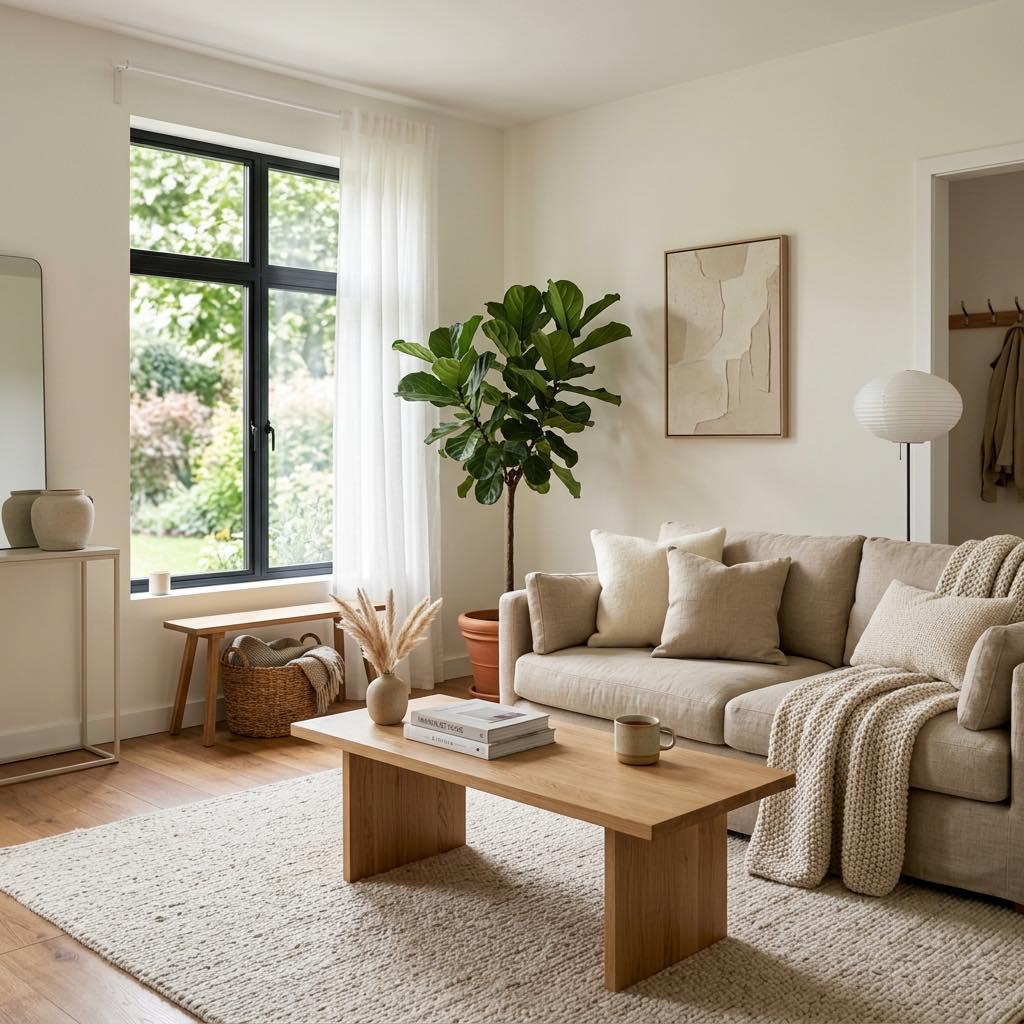
Designing a living space that feels calm and clutter-free often leads homeowners to explore minimalist interior design. However, standard minimalism can sometimes feel cold, stark, and uninviting due to its reliance on sharp white surfaces and clinical metal accents. To bring comfort and scale into your gathering space, designers are turning to a softer, more inviting design movement. Creating a beautiful warm minimalist living room is the ultimate way to establish a peaceful, clutter-free sanctuary that feels deeply welcoming. This style combines the clean lines of minimalism with natural wood grains, warm earthy color palettes, and cozy textiles. In this comprehensive design guide, we explore how to choose the right materials, layout your furniture, select warm colors, and stage decor for a cozy home.
What is Warm Minimalism?
Warm minimalism is an interior styling approach that values simplicity, functional layouts, and clean lines, but introduces cozy textures and natural materials. When designing a warm minimalist living room, the goal is to create a space that feels uncluttered but is filled with tactile interest. Unlike traditional minimalism, which focuses on subtraction, warm minimalism focuses on curation. Every piece of furniture and decor has a purpose, but they are chosen for their organic beauty and textures. This design philosophy values quality over quantity, inviting you to slow down and connect with the natural textures of raw oak, linen, clay, and woven grasses in your daily life.
1. Sourcing a Low-Profile Sofa in Earthy Linen
The sofa is the primary focal point of any living area, and its size and texture set the tone for the entire design. For this layout, choose a low-profile sectional or sofa upholstered in a soft, textured linen or a cozy cotton blend. Muted tones like oatmeal, warm beige, or soft taupe work beautifully to establish a quiet background. A low-profile design keeps the sightlines open, making the room feel spacious and airy. Avoid shiny synthetic fabrics or high-gloss leather, which can look cold. Instead, look for a sofa with rounded edges or a slipcovered design that feels relaxed, comfortable, and inviting to sit on.
2. Integrating Natural Wood and Oak Coffee Tables
Natural wood is a key element that brings warmth and organic texture into a minimalist layout. Pair your linen sofa with a coffee table made from solid white oak, walnut, or reclaimed timber. Woven oak grain and natural timber details soften the straight lines of modern walls, adding character to the room. When planning a warm minimalist living room, avoid painted or highly polished wooden surfaces. Instead, opt for matte, oil-rubbed, or raw finishes that highlight the natural texture of the wood. You can also introduce wood through floating timber shelves, a simple side table, or a low media console cabinet.
3. Earthy Paint Colors: Ochre, Bone, and Taupe
The wall color forms the foundation of your room’s atmosphere. Avoid stark, cool white paint, which can make a minimalist space feel like a clinical gallery. Instead, choose warm neutral paint colors derived from nature, such as soft bone, warm beige, sandy taupe, or light terracotta. These colors reflect natural daylight softly, creating a cozy glow in the room. You can also paint the trim and ceiling in the same warm neutral color to create a unified, color-drenched look. Choosing earthy, soft neutrals establishes a calm background that highlights your natural wood furniture and textured textiles beautifully.
4. Layering Textures with Bouclé and Woven Rugs
Texture is the secret ingredient that prevents a neutral space from looking boring or flat. Layer a variety of materials throughout the seating area, such as a cozy bouclé accent chair, natural linen curtains, and throw pillows made from chunky wool. Under the coffee table, place a large, hand-woven wool or jute rug to define the space and add texture. Woven baskets made from seagrass or rattan are perfect for holding extra blankets while adding another natural element. The combination of rough, soft, smooth, and woven textures creates visual interest without cluttering the room.
5. Smart Lighting Layouts to Highlight Textures
The beauty of warm mineral walls and textured wood is best shown with a thoughtful lighting design. Direct overhead lighting can wash out textures and make the space feel flat. Instead, install warm ambient lighting using floor lamps, wall sconces, and table lamps with fabric shades. Position your lights to cast soft shadows that emphasize the texture of your walls and wood grain. During the day, allow daylight to filter through sheer linen curtains. Good lighting design creates a cozy, relaxing atmosphere.
6. Curating Artisanal and Ceramic Decor
To keep the room clutter-free, display only a few curated decor items that highlight raw, natural materials. Select handmade ceramic vases, stone sculptures, and hand-carved wooden bowls. These artisanal pieces bring a sense of history and craft to your home. When decorating a warm minimalist living room, avoid mass-produced plastic ornaments or busy gallery walls. Instead, choose one large piece of abstract canvas art with thick plaster texture, or display a single branches of eucalyptus in a matte clay vase. Curating your decor carefully allows each beautiful piece to have visual breathing room.
7. Functional Layout and Traffic Flow Rules
A relaxing room must be easy to move through, with a layout that supports daily activities. Leave at least three feet of walking space between your furniture pieces to ensure smooth traffic flow. Avoid placing large armchairs or tables directly in the main walking paths. Position your main seating area to face a window or a cozy fireplace rather than a television screen, creating a layout that encourages conversation and connection. Designing a functional, balanced layout helps turn a warm minimalist living room into a peaceful sanctuary that supports daily wellness and relaxation.
8. Incorporating Biophilic Greenery and Plants
No organic space is complete without live plants to bring natural life and fresh air indoors. Place a tall potted plant, like a fiddle-leaf fig or a snake plant, in a vacant corner to add height and vibrant green color. On your coffee table or sideboard, a small vase with dried olive branches adds a delicate, organic touch. Choose pots made from rough terracotta, concrete, or matte ceramic to maintain the natural, textured look. Live plants purify the air and create a visual connection to the natural world, supporting a healthy home environment.
9. Maintaining an Uncluttered, Restful Environment
The final step in creating a warm minimalist home is setting up smart storage solutions to hide daily clutter. Choose media consoles and sideboards with closed doors to keep electronics, books, and cables out of sight. Keep flat surfaces like the coffee table and console top mostly clear, displaying only a few curated pieces. Regularly review your belongings, donating items that no longer serve a purpose. Keeping the room clean and organized reduces visual stress, allowing you to relax and enjoy the comforting, natural textures of your beautiful personal sanctuary.
Wrapping up, styling a cozy warm minimalist living room is an outstanding way to elevate your home design. By choosing a low-profile linen sofa, oak tables, earthy paint colors, and layering textures, you can create a beautiful sanctuary. Focus on curating artisanal decor, incorporate plants, and design lighting to highlight raw details. Take the time to clear clutter, plan your layout, and enjoy the peaceful beauty of your handcrafted living space for years to come.
To learn more about optimizing your space, explore our guide on Mid-Century Modern Living Room Decor.
For additional tips on creating a beautiful home, read our article about Scandinavian Modern Living Room Decor.
If you are planning a renovation, you might also find our ideas on Japandi Living Room Decor helpful.
To discover more sustainable choices, check out our tips on Tuscan Style Living Room Decor.