
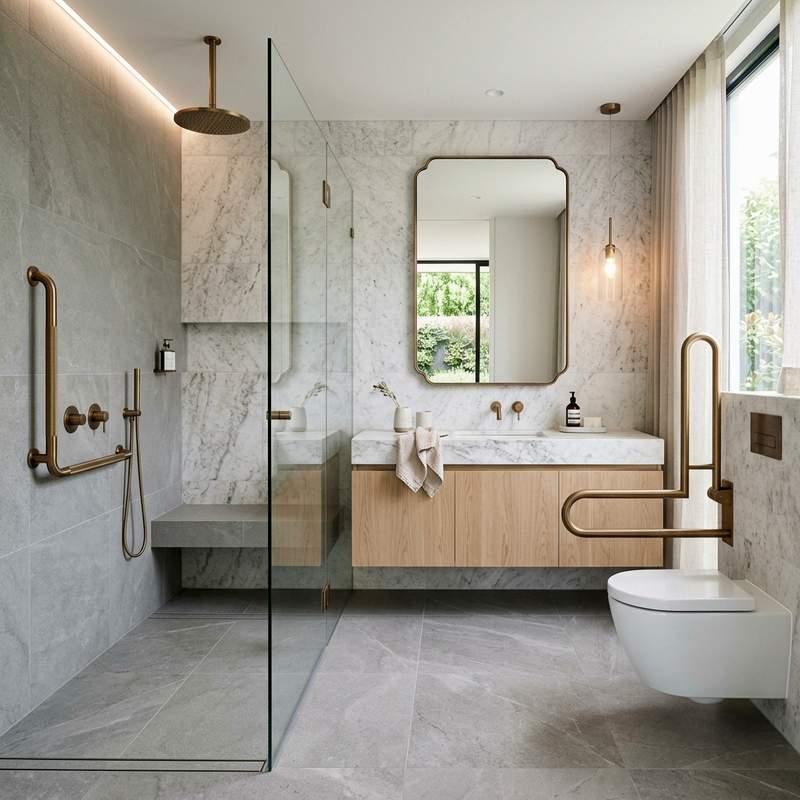
The bathroom is universally recognized as the most hazardous space in any residential property. Wet tile surfaces, soap residue, and high tub edges present significant fall risks for family members of all ages, particularly for seniors and individuals recovering from surgery. In our interior architecture practice, we specify and install ADA-compliant support hardware across high-end residential projects. We have seen firsthand that modern safety design does not require institutional, clinical fixtures. Today, designer support rails blend seamlessly with high-end plumbing fixtures, offering physical leverage without compromising visual elegance. In this comprehensive guide, we will explore Bathroom Safety Rails and Grab Bars, detailing five modern ADA-compliant installations for maximum peace of mind.
The Physics of Wall Blocking and Structural Anchorage
In luxury bathroom construction, safety hardware is only as reliable as the underlying framing structure. Installing support rails securely requires anchoring them into solid wood wall studs or utilizing specialized hollow-wall mounting systems capable of supporting 250 to 500 pounds of force. During any bathroom remodel or tile installation, we specify continuous three-quarter-inch plywood blocking behind the drywall across shower walls. This blocking allows safety bars to be mounted at any location or angle with complete structural integrity.
Furthermore, finish coordination is essential for achieving a cohesive designer aesthetic. Modern safety hardware is available in brushed nickel, matte black, oil-rubbed bronze, and champagne bronze finishes that match high-end plumbing lines. By selecting support bars from premium collections like the Moen Iso Series or Delta Decor Assist, safety elements blend harmoniously into the bathroom design, looking like intentional luxury accents rather than medical accommodations.
When planning a cohesive bathroom renovation, it is vital to pair sturdy wall rails with accessible roll in shower layouts. Eliminating raised thresholds ensures continuous roll-in access while establishing an open-concept wet-room floor plane. Combining zero-step entries with strategically positioned support rails creates an empowering environment for independent self-care.
5 Modern ADA-Compliant Installations
1. Dual Horizontal and Vertical Shower Entrance Rails
Entering and exiting a shower enclosure requires stepping over thresholds and balancing on wet tile, making the shower doorway a primary zone for fall prevention. Installing a strategic combination of vertical and horizontal support bars at the entrance provides continuous stability during entry and exit.
Position a twenty-four-inch vertical grab bar directly on the outer jamb wall or entry frame at a height of thirty-three to thirty-six inches above the floor. This vertical bar gives users a secure grip before stepping into the wet area. Inside the shower enclosure, mount a thirty-six-inch horizontal bar along the main wall at waist height. Using matte black stainless steel bars from Ginger Grab Bars creates a bold, modern contrast against light marble tile while providing dependable structural support.
2. The Integrated Towel Bar and Safety Rail Combo
One of the most common bathroom hazards occurs when individuals instinctively grab a lightweight towel bar or toilet paper holder for balance. Standard towel bars are designed to hold lightweight fabrics and will pull out of the drywall when subjected to body weight, causing severe falls. Installing multi-functional decorative grab bars eliminates this risk by combining towel storage with structural anchoring.
Replace standard towel racks with heavy-duty safety towel bars from the Moen Home Care Collection. These dual-purpose fixtures feature heavy-gauge stainless steel construction and concealed mounting flanges, supporting up to 500 pounds of pulling force while functioning as an elegant towel holder. Installing these dual-purpose bars near the vanity and shower exit ensures that every towel rack in the bathroom doubles as a life-saving support handle.
Underfoot safety is equally important when stepping out of the shower. Specifying slip resistant flooring for seniors—such as matte porcelain tile with a high DCOF rating or textured luxury vinyl plank—prevents slipping on water droplets, working hand-in-hand with your wall rails to eliminate fall risks.
3. Wall-Stud Mounted Toilet Support Rails
Sitting down on and rising from a standard toilet requires significant knee and core strength, which can become challenging for seniors or individuals with joint stiffness. Installing supportive grab bars around the toilet area provides crucial leverage, allowing users to lower and raise themselves safely and independently.
Mount a thirty-six-inch horizontal grab bar on the side wall adjacent to the toilet, positioned thirty-three to thirty-six inches above the floor and extending twelve inches past the front of the bowl. If the toilet is positioned between two walls, install parallel horizontal bars on both sides. In tighter powder rooms where side walls are distant, install a wall-mounted fold-down grab bar from Kohler that flips up vertically against the wall when not in use, keeping the space open and accessible.
4. Corner Shower Shelf Grab Bars
Storage shelves inside the shower are essential for holding shampoo bottles and soaps, but traditional plastic caddies can slide or break if accidentally leaned on. Combining corner shower shelving with heavy-duty safety bars creates a sleek, space-saving solution that keeps toiletries organized while offering a firm handhold inside the wet zone.
Install a triangular corner shelf grab bar, such as the Delta Decor Assist Corner Shelf Bar, inside the main shower enclosure. These fixtures feature a solid stainless steel frame wrapped around a removable, easy-to-clean shelf insert. Mounted securely into corner wall blocking, the shelf supports up to 300 pounds, allowing users to rest a foot while washing or grip the shelf rim for stability without cluttering the shower floor.
Modern home safety extends beyond manual support fixtures. Integrating senior assistive smart home devices—such as motion-activated night lighting and voice-controlled emergency alerts—ensures that pathways to the bathroom are fully illuminated and family caregivers stay connected around the clock.
5. Heavy-Duty Hollow Wall Anchors and Structural Systems
When renovating an existing bathroom where opening walls to install wood blocking is not feasible, mounting grab bars safely requires specialized heavy-duty fastening systems. Standard plastic drywall anchors or toggle bolts are completely unsafe for grab bars and will fail under body weight load.
Utilize professional structural hollow-wall anchoring systems, such as WingIts Grab Bar Fasteners. These engineered stainless steel anchors expand behind hollow drywall or tile walls, distributing pull forces across a wide surface area to meet or exceed ADA 250-pound load requirements. Combining WingIts fasteners with high-grade silicone sealant behind the mounting flanges ensures a rock-solid, watertight installation that protects ceramic tile from cracking.
Safety Rail Installation Standards and ADA Specifications
| Installation Zone | Recommended Orientation | ADA Mounting Height | Minimum Length | Recommended Model |
|---|---|---|---|---|
| Shower Control Wall | Horizontal or Slanted | 33 to 36 inches from floor | 24 to 36 inches | Moen Iso 36-Inch Grab Bar |
| Shower Entry Wall | Vertical | Bottom edge at 33 inches | 18 to 24 inches | Ginger Modernist 24-Inch Bar |
| Toilet Side Wall | Horizontal | 33 to 36 inches from floor | 42 inches | Delta Decor Assist 42-Inch Bar |
| Shower Corner Nook | Horizontal Corner Mount | 36 to 48 inches from floor | Corner triangular fitting | Delta Corner Shelf Grab Bar |
A Step-by-Step Guide to Installing Safety Rails
To install bathroom safety rails safely, follow this systematic four-step installation procedure. First, locate wall studs behind the tile using an electronic stud finder, or prepare heavy-duty WingIts hollow-wall anchors if wood studs are unavailable. Second, mark the mounting hole positions using a level to verify perfect horizontal or vertical alignment. Third, drill mounting holes through ceramic or porcelain tile using a diamond-tipped drill bit at low speed, preventing tile cracking. Finally, secure the mounting flanges with heavy-duty stainless steel screws, apply 100% RTV silicone behind the escutcheon plates to seal out moisture, and snap the decorative flange covers into place. Following these steps guarantees a watertight, professional installation.
Once installation is complete, test every bar by applying firm body weight pressure from multiple angles. Verify that there is zero deflection or movement in the bar or mounting wall. By combining professional anchoring techniques with designer hardware, you create a beautiful, safe bathroom environment that supports independent living for years to come.
Frequently Asked Questions
1. What weight capacity must a residential grab bar support?
According to ADA guidelines and residential building standards, a properly installed safety grab bar must be capable of supporting a minimum vertical pull force of 250 pounds, though many premium residential bars support up to 500 pounds.
2. Can grab bars be installed over ceramic tile walls?
Yes, grab bars can be installed over ceramic tile walls. Installers must use diamond-tipped masonry drill bits to penetrate the tile cleanly without cracking, and anchor the mounting screws directly into solid wood studs or WingIts hollow-wall fasteners.
3. What is the ideal diameter for a comfortable grab bar grip?
The ideal diameter for a comfortable hand grip is 1.25 to 1.5 inches. This size allows the fingers and thumb to wrap completely around the bar for a firm, non-slip hold without causing hand fatigue or strain.
4. How far should a grab bar sit off the wall surface?
ADA guidelines specify that the clearance space between the wall surface and the grab bar should be exactly 1.5 inches. This clearance provides enough room for hands to grip the bar easily while preventing arms from slipping behind the bar during a fall.
5. Are decorative towel bar grab bars as strong as standard bars?
Yes, decorative dual-purpose grab bars from reputable plumbing manufacturers like Moen and Delta are engineered to meet full ADA structural load requirements (supporting 300 to 500 pounds) while functioning as towel racks.
6. What is the recommended height for toilet grab bars?
Toilet grab bars should be installed horizontally at a height of thirty-three to thirty-six inches above the finished floor, measured from the top of the grabbing surface. This height provides optimal leverage when sitting down or standing up.
7. What is the difference between smooth and textured grab bar surfaces?
Smooth metal bars offer a sleek, modern appearance but can feel slippery when wet. Textured or peened grab bars feature subtle surface knurling or matte finishes that provide enhanced tactile grip, particularly inside wet shower enclosures.
8. Can fold-down grab bars be installed near toilets?
Yes, fold-down (or swing-up) grab bars are ideal for smaller bathrooms where side walls are distant. Mounted securely into back wall blocking, these bars extend alongside the toilet and flip up vertically out of the way when not needed.
9. Why shouldn’t standard towel bars be used for support?
Standard towel bars are secured into drywall with lightweight plastic anchors or small set screws designed only to hold fabric. Under body weight, standard towel bars instantly pull out of the wall, causing severe falls and wall damage.
10. How do I prevent water damage behind grab bar mounting flanges?
To prevent water from seeping into wall cavities behind mounting flanges, apply a generous bead of 100% waterproof RTV silicone sealant around the screw holes and backing plate before snapping the decorative escutcheon cover over the flange.