
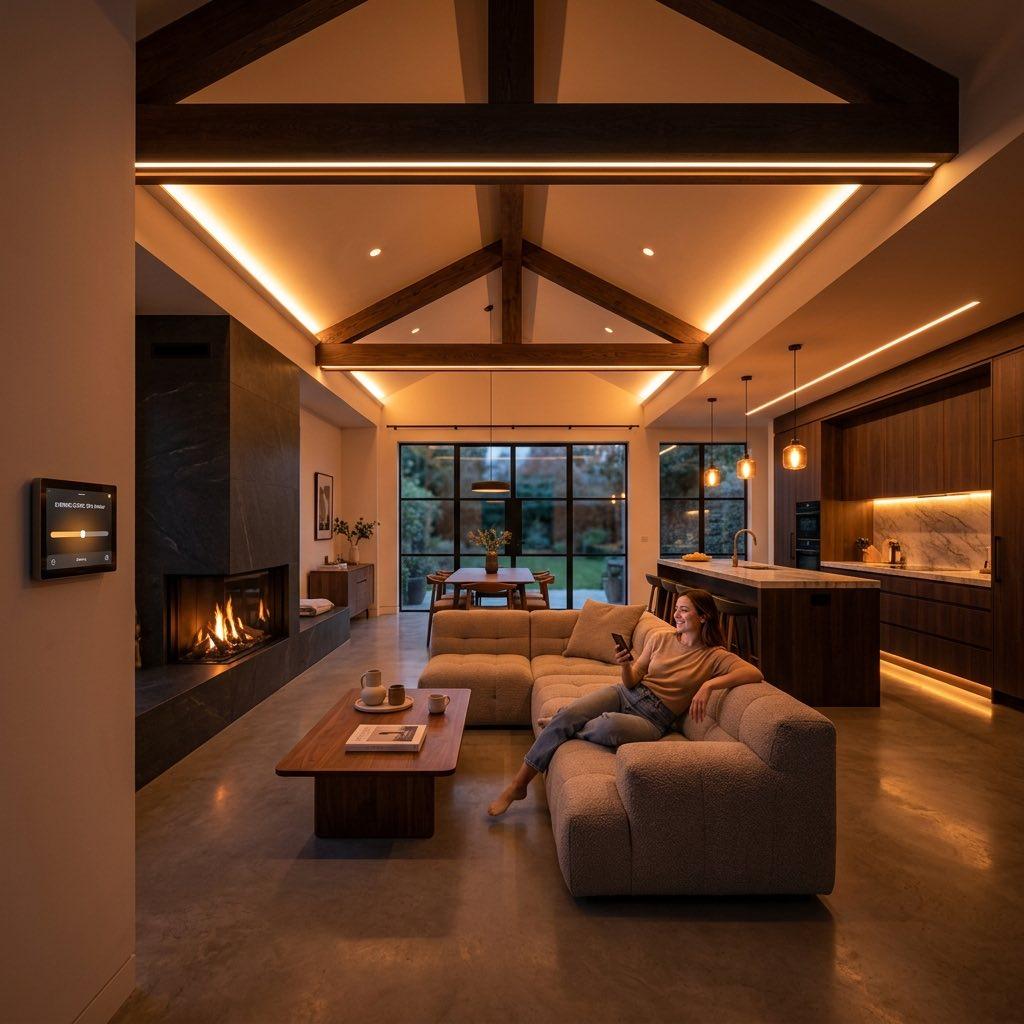
Our homes have become more than just physical shelters; they are spaces where we manage our health, energy, and daily well-being. A critical factor that affects our physical health and sleep quality is the type of light we expose ourselves to throughout the day. Standard home lighting is static, providing the same bright, artificial glare whether it is noon or midnight, which can disrupt our natural sleep-wake cycle. Upgrading to a modern smart home lighting control system allows you to align your home’s lighting with your body’s natural rhythm, mimicking the color temperature and intensity of natural sunlight. In this comprehensive smart home guide, we explore the science of biological lighting and detail how to design and automate your home’s lights for optimal health.
The Science of Circadian Rhythms and Light
Our biological clocks, or circadian rhythms, are deeply connected to the sun’s daily cycle. Exposure to bright blue-spectrum light in the morning signals our brains to stop producing melatonin and start producing cortisol, keeping us alert and energized. Conversely, warm, amber-spectrum light in the evening signals that it is time to wind down. Implementing smart home lighting control allows you to automate these shifts. By programming your lights to transition from cool white in the morning to a warm, soft glow in the evening, you support your natural sleep cycle, reduce eye strain, and create a peaceful environment that promotes deeper, more restorative sleep.
1. Choosing the Right Smart Bulbs and Fixtures
To build a system that supports your body’s biology, you must select the right smart lighting hardware. Look for smart bulbs and fixtures labeled “tunable white” or “full color-changing (RGBW).” Tunable white bulbs allow you to adjust the color temperature from a cool 6500 Kelvin (simulating daylight) to a warm 2000 Kelvin (simulating candlelight). Popular brands like Philips Hue, Lutron, and LIFX offer high-quality tunable bulbs and smart switches. Smart switches are especially useful because they allow you to control traditional fixtures while maintaining smart functionality, ensuring your schedules run smoothly even if someone uses the physical wall switch.
2. Automating Schedules and Transitions
The true power of a smart system lies in automation, allowing the lights to shift in the background without manual input. With smart home lighting control, you can program gradual transitions that mimic the natural sun. Set a “wake-up” schedule where your bedroom lights slowly brighten over 30 minutes, transitioning from soft orange to cool blue-white to wake you up gently. At midday, set the lights to maximum brightness to boost productivity. In the evening, schedule a gradual “sunset” transition that begins at dusk, slowly dimming the lights and shifting them to a warm amber hue to prepare your body for sleep.
3. Integrating Voice Assistants and Sensors
For a truly hands-free experience, integrate your smart lights with smart sensors and voice assistants. Motion sensors placed in hallways, bathrooms, and kitchens are incredibly useful. Program them to trigger bright light during the day and a dim, warm “nightlight” scene after 10 PM, allowing you to navigate your home safely in the middle of the night without waking up fully. Voice control via Apple HomeKit, Google Home, or Amazon Alexa allows you to easily override schedules when needed. A simple voice command like “Hey Google, activate movie mode” can dim the living room lights instantly.
4. Creating Dynamic Scenes for Daily Activities
Beyond health benefits, a tunable lighting system allows you to create custom atmospheres for different daily tasks. With smart home lighting control, you can program specific light scenes. Create a “Focus” scene with bright, cool white light for your home office to improve concentration and reduce fatigue. Set a “Relax” scene with soft, dim, warm light for the living room in the evening to help you wind down. For dining, program a “Dinner” scene with warm, ambient light that mimics candlelight. These custom scenes allow you to easily adapt your home’s environment to support your current activity.
5. Energy Management and Cost Savings
Smart lighting is not only good for your health; it is also highly energy-efficient. Smart bulbs use LED technology, which consumes up to 80% less energy than old incandescent bulbs and lasts for years. By automating your lights, you ensure that lights are never left on in empty rooms. You can program occupancy sensors to turn off lights automatically when a room is vacant for more than ten minutes. Also, dimming your lights by just 20% reduces energy consumption and extends the lifespan of the bulbs, saving you money on your monthly utility bills while reducing your carbon footprint.
6. Staging and Visual Integration Rules
When installing smart tech, maintaining the beauty of your home’s interior design is essential. When staging a smart home lighting control system, hide the technology so it blends seamlessly with your decor. Use smart switches that match your wall plates, and avoid exposing bare bulbs. Place smart LED light strips behind TV screens, under cabinets, or along bed frames to create soft, indirect lighting that hides the light source. Indirect lighting is much softer on the eyes and creates a modern, premium look that highlights your home’s architecture and textures without creating glare.
7. Installation and Network Configuration Tips
To ensure your smart system runs reliably, you must set up your home network correctly. Smart bulbs and switches connect via Wi-Fi, Bluetooth, or mesh protocols like Zigbee or Thread. If you have a large home with dozens of smart devices, using a smart bridge (such as a Philips Hue Bridge) is highly recommended. The bridge creates a dedicated mesh network for your lights, preventing your home Wi-Fi router from becoming overloaded and ensuring instant response times. Place your smart router in a central location, or use a mesh Wi-Fi system to eliminate dead zones in far corners of your home. Besides, when configuring your router, consider setting up a separate 2.4 GHz IoT (Internet of Things) guest network specifically for your smart home accessories. This keeps your main 5 GHz network clear for high-bandwidth activities like streaming or gaming, and adds an extra layer of firewall security to protect your private personal computer data from potential smart device vulnerabilities.
8. The Future of Smart Home Technology
As smart home technology continues to evolve, we are seeing deeper integrations and smarter automations. Future systems will utilize advanced AI to learn your daily habits and automatically adjust lighting, climate, and sound to match your preferences. New smart home standards, like Matter, are making it easier to connect devices from different brands, ensuring compatibility and security. Investing in a high-quality, open-platform system now ensures your home remains future-proof, allowing you to easily add new devices and capabilities as they become available on the market. This means you can choose the best products from various manufacturers without worrying about brand lock-in.
In short, upgrading to a modern smart home lighting control system is an outstanding investment in your family’s health, comfort, and energy efficiency. By sourcing tunable LED bulbs, setting up automatic schedules that follow the sun, integrating motion sensors, and hiding tech behind indirect fixtures, you can design a beautiful and functional lighting ecosystem. Prioritize a strong mesh network to ensure instant responsiveness, and enjoy the physical and mental benefits of living in harmony with your natural circadian rhythm for many years to come.
To learn more about optimizing your space, explore our guide on Smart Mirror Workout Home Gym Tech.
For additional tips on creating a beautiful home, read our article about Smart Home Wall Mount Control Panel Ideas.
If you are planning a renovation, you might also find our ideas on Smart Home Protocols Explained helpful.