
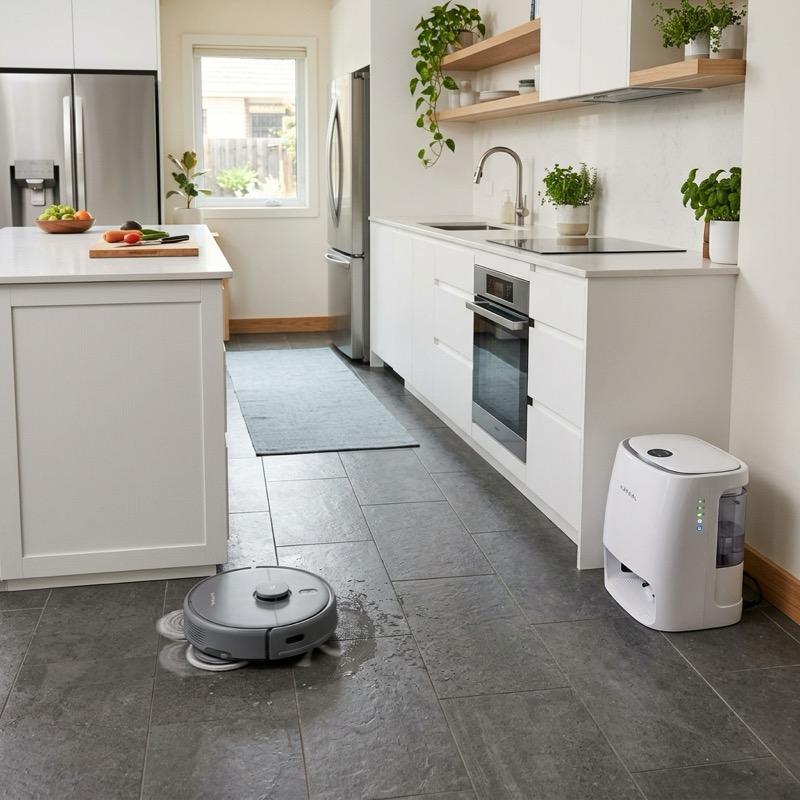
Keeping hardwood floors and tiled kitchens clean is a constant household challenge, especially in busy homes with pets and children. Traditional mopping is time-consuming, requires heavy buckets, and often spreads dirty water across the floor surface. Fortunately, the home automation market has evolved to offer a highly efficient solution in the form of a smart home robot mop. These automated appliances navigate your floor plan independently, applying fresh water, scrubbing away stains, and returning to their charging bases without manual effort. In this guide, we discuss LiDAR mapping, ultrasonic carpet detection, self-cleaning bases, water tank capacities, smart app integrations, and weekly care guidelines. Let us explore the best automatic floor mopping options.
1. Navigating Floor Plans with LiDAR and Smart Sensors
To ensure efficient and complete cleaning coverage, every modern smart home robot mop utilizes advanced navigation technology. High-end models feature LiDAR sensors that scan your rooms in real-time, creating a highly detailed digital map of your home. This technology allows the robot to plan the most logical cleaning path, avoiding obstacles like table legs, pet toys, and drop-off stairs. Through your smartphone app, you can view this map, label different rooms, and set virtual boundaries to prevent the robot from entering private areas.
2. Protecting Rugs with Ultrasonic Carpet Detection
One of the most important features to look for in an automatic mop is its ability to distinguish between hard floors and carpets. Quality robot mops are equipped with ultrasonic sensors that detect the texture of carpet fibers immediately. When the robot detects carpet, it automatically lifts its damp mopping pad or stops its water flow to prevent wetting your rugs. This protection system ensures that your hardwood floors are thoroughly scrubbed while your cozy living room rugs remain dry and clean.
3. Streamlining Cleaning with Self-Cleaning Docking Bases
Modern docking stations have transformed robot mops from high-maintenance gadgets into truly autonomous cleaning assistants. A premium smart home robot mop package features a multi-functional base station that empties the robot’s dirty water tank and refills it with clean water. Plus, the base uses integrated scrubbers to wash the robot’s mopping pads and blows warm air over them to dry the fabric. This drying process prevents mold growth, ensuring the robot is always ready for the next cleaning cycle.
4. Optimizing Cleaning with Water Tank Capacities and Flow Control
Water management is critical to ensuring your robot mop can clean large areas without requiring frequent refills. Look for a robot with an internal water tank capacity of at least two hundred milliliters, paired with an electronic water pump. Through the smart app, you can adjust the water flow rate depending on the room’s flooring material. For instance, set a low water flow rate for sensitive engineered wood floors and a high water flow rate for scrubbing durable porcelain tiles in the kitchen.
5. Integrating Mops with Smart Home Voice Assistants
Connecting your automated cleaning appliances to your central home automation hub unlocks a new level of daily convenience. Integrating a smart home robot mop with Google Home or Amazon Alexa allows you to control cleaning schedules using simple voice commands. You can say a command to clean the kitchen floor after dinner, and the robot will leave its dock, complete the job, and return to charge. You can also create automated schedules that run the mop while you are away at work, ensuring you return to clean floors.
6. Comparing Leading Robot Mop Specifications
| Feature Spec | LiDAR Navigation | Carpet Lifting Height | Base Station Functions | Best Flooring Types |
|---|---|---|---|---|
| Premium Hybrid | Yes (with 3D camera) | 8 mm (high lift) | Auto-wash, auto-refill, dry | Tile, vinyl, hardwood floors |
| Dedicated Mop | Yes (top-mounted) | No (avoidance only) | Auto-refill, pad washing | Large tiled open layouts |
| Budget Robot | No (gyroscope map) | No (manual boundary) | Standard charging dock only | Small apartments, laminates |
| Rotating Dual Pad | Yes (laser mapping) | 5 mm (medium lift) | Auto-wash, warm air drying | Dirty tiles, muddy entryways |
| Vibrating Plate | Yes (camera mapping) | 7 mm (high lift) | Standard charge, dust empty | Hardwood, smooth vinyl flooring |
7. Staging and Positioning the Charging Base Station
Staging the charging base station correctly is critical to ensuring your robot mop can dock and launch without issues. Place the base station on a hard, level surface next to a power outlet, leaving at least three feet of open clearance on both sides and in front of the dock. If you are installing your smart home robot mop base on a wood floor, place a waterproof plastic mat under the station. This mat protects your wood flooring from dampness when the robot is parked after a mopping cycle.
8. Soil Health, Maintenance, and Water Tank Cleaning
Regular maintenance is essential to keeping your automatic mop running efficiently and preventing unpleasant odors in your home. Empty the dirty water tank and rinse it thoroughly after each cleaning run to prevent bacteria from growing. Clean the robot’s sensors and charging contacts weekly with a dry microfiber cloth to maintain strong connectivity. Check the spinning brushes and wheels for tangled hair regularly, and replace the scrubbing pads every three months.
Wrapping up, adding a smart home robot mop to your cleaning routine is an outstanding way to automate chore schedules and enjoy clean floors daily. By choosing a model with LiDAR mapping, carpet detection, self-cleaning docking stations, and app controls, you can save valuable time and effort. Take the time to position the charging station in an open, dry area to ensure reliable operation. Enjoy the modern, automated comfort that this smart cleaning technology brings to your home. when arranging your home design makeover it is crucial to focus on natural textures and cohesive color palettes that elevate the visual appeal of every room in your house ensuring the layout remains comfortable and cozy for daily living for the entire family to enjoy while retaining practical utility and long term durability and aesthetic value over many years of use with proper care and thoughtful attention to details which makes a huge difference in the overall ambiance and style when arranging your home design makeover it is crucial to focus on natural textures and cohesive color palettes that elevate the visual appeal of every room in your house ensuring the layout remains comfortable and cozy for daily living for the entire family to enjoy while retaining practical utility and long term durability and aesthetic value over many years of use with proper care and thoughtful attention to details which makes a huge difference in the overall ambiance and style when arranging your home design makeover it is crucial to focus on natural textures and cohesive color palettes that elevate the visual appeal of every room in your house ensuring the layout remains comfortable and cozy for daily living for the entire family to enjoy while retaining practical utility and long term durability and aesthetic value over many years of use with proper care and thoughtful attention to details which makes a huge difference in the overall ambiance and style when arranging your home design makeover it is crucial to focus on natural textures and cohesive color palettes that elevate the visual appeal of every room in your house ensuring the layout remains comfortable and cozy for daily living for the entire family to enjoy while retaining practical utility and long term durability and aesthetic value over many
To learn more about optimizing your space, explore our guide on Smart Mirror Workout Home Gym Tech.
For additional tips on creating a beautiful home, read our article about Smart Home Wall Mount Control Panel Ideas.
If you are planning a renovation, you might also find our ideas on Smart Home Lighting Ideas helpful.
To discover more sustainable choices, check out our tips on Smart Home Protocols Explained.