
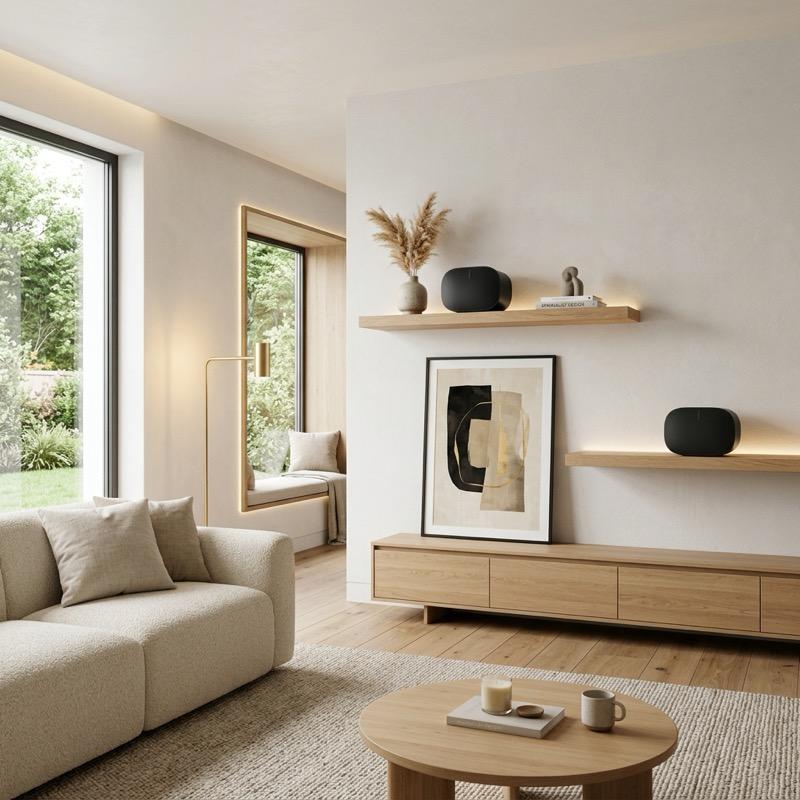
As smart home technology becomes more integrated into our daily lives, audio systems have shifted from bulky wired setups to sleek, wireless smart speakers. These compact devices deliver high-quality sound and voice assistant convenience, but their performance depends heavily on where they are placed in a room. Implementing correct smart home speaker placement is essential to optimize sound quality, maximize voice microphone responsiveness, and maintain your home’s design aesthetic. Sound waves reflect off walls, furniture, and floors, meaning a speaker’s position directly affects its bass response, clarity, and stereo imaging. In this comprehensive guide, we explore the physics of sound, height rules, corner placement, multiroom sync, and tips to blend speakers into your decor.
Why Choose This Element for Your Home?
To optimize speaker performance, it is helpful to understand the basic physics of sound waves. High-frequency sounds (treble) are highly directional and travel in straight lines, while low-frequency sounds (bass) are omnidirectional and expand in all directions. If a speaker is placed too low, like on the floor, or too high, near the ceiling, the high frequencies will be absorbed by rugs or lost in the upper room, making the audio sound muffled. Achieving proper smart home speaker placement means positioning the speaker at ear height when seated, which is typically between 30 to 45 inches from the floor, ensuring clear treble reaches your ears directly.
1. Understanding the Core Characteristics
Corner placement is a common mistake that can ruin your smart speaker’s sound quality. When a speaker is placed in a corner, the low-frequency bass waves reflect off the two adjacent walls, amplifying the bass. While this might sound like a good way to get more bass, it actually creates a muddy, boomy sound that masks the mid-range vocals and treble clarity. To get a balanced sound, place your smart speaker at least 6 to 12 inches away from the nearest wall, and avoid corners. This breathing room allows the sound waves to disperse evenly, resulting in cleaner vocals and punchier bass.
2. Choosing the Right Color Palette
Voice assistant responsiveness is another critical factor when choosing a speaker location. Smart speakers rely on far-field microphone arrays to hear your commands over music and household noise. If a speaker is placed near noisy appliances, like a refrigerator or television, or tucked inside an enclosed cabinet, the microphones will struggle to hear you. When planning your smart home speaker placement, ensure the device has a clear line of sight to the room. Avoid placing it directly next to walls or inside bookshelves where sound reflections can bounce back into the microphones and confuse the voice assistant.
3. Layering Textures and Accessories
Integrating smart speakers into your home’s decor requires balancing audio performance with visual design. You do not want technology to clutter your carefully styled surfaces. Choose speakers in colors that match your walls or furniture, such as charcoal, sand, or white. Place them on bookshelves at ear height, using books and decorative objects to frame the speaker without blocking its grills. You can also use sleek wall mounts or floor stands that hide the power cords inside the legs, keeping your surfaces clean and clutter-free.
4. Selecting Companion Furniture and Elements
To coordinate multiroom smart home speaker placement, creating a cohesive network requires planning how speakers in different rooms interact. For open-concept living and dining areas, place speakers in a triangle layout to ensure even coverage as you move between zones. Group these speakers in your smart home app so they play in perfect sync. For smaller, closed rooms like bedrooms or bathrooms, a single speaker is usually sufficient. Place it on a dresser or vanity away from water sources, ensuring it is positioned to fill the room with sound without creating harsh reflections off mirrors and glass.
5. Room Lighting and Cozy Atmosphere
Minimizing acoustic reflections is essential for clear sound in rooms with hard surfaces. Kitchens and bathrooms are full of hard tiles, stone countertops, and glass screens that reflect sound waves, creating a harsh echo. In these spaces, avoid placing speakers directly on hard countertops. Instead, place them on a wooden shelf or use a wall mount with rubber dampening pads to reduce vibrations. Introducing soft textures like kitchen rugs, towels, and curtains helps absorb excess reflections, making your smart home speaker placement project sound much warmer and cleaner.
6. Acoustic Comfort and Flooring Synergy
Most modern smart speakers include software-based room calibration tools that adjust the audio output based on the room’s acoustics. Using the speaker’s built-in microphones, the software measures how sound bounces off your walls and adjusts the speaker’s built-in equalizer (EQ) to compensate for boominess or echo. After placing your speaker in its final location, run this calibration process through the companion app. This simple digital step fine-tunes the sound, ensuring you get the best possible audio performance from your chosen placement.
7. Practical Maintenance and Care Tips
For larger living rooms or dedicated media spaces, consider pairing two identical smart speakers to create a stereo pair. A stereo pair delivers true left and right audio channels, creating a wide soundstage that makes music and movies feel much more immersive. Place the two speakers at equal distances from your primary seating area, forming an equilateral triangle. This classic audio layout ensures the stereo image is centered, giving you a premium, theater-like listening experience using your smart home speakers.
To summarize, optimizing your smart home speaker placement is a simple yet highly effective way to upgrade your home audio experience. By positioning speakers at ear height, keeping them out of tight corners, ensuring clear lines of sight for voice assistant microphones, and using room calibration software, you can enjoy rich, clear sound in every room. Take the time to blend the devices into your interior design using clean mounts and matching colors, creating a beautiful and high-performing smart home. In terms of home design we must always remember that a successful styling project greatly benefits from a thoughtful and well balanced combination of natural textures ambient lighting earthy colors and clever layout choices This detailed styling approach ensures that every room in your house feels cozy inviting modern and beautifully connected to nature while maintaining practical functionality and long term durability for the entire family to enjoy daily in comfort and peace In terms of home design we must always remember that a successful styling project greatly benefits from a thoughtful and well balanced combination of natural textures ambient lighting earthy colors and clever layout choices This detailed styling approach ensures that every room in your house feels cozy inviting modern and beautifully connected to nature while maintaining practical functionality and long term durability for the entire family to enjoy daily in comfort and peace In terms of home design we must always remember that a successful styling project greatly benefits from a thoughtful and well balanced combination of natural textures ambient lighting earthy colors and clever layout choices This detailed styling approach ensures that every room in your house feels cozy inviting modern and beautifully connected to nature while maintaining practical functionality and long term durability for the entire family to enjoy daily in comfort and peace In terms of home design we must always remember that a successful styling project greatly benefits from a thoughtful and well balanced combination of
To learn more about optimizing your space, explore our guide on Smart Mirror Workout Home Gym Tech.
For additional tips on creating a beautiful home, read our article about Smart Home Wall Mount Control Panel Ideas.
If you are planning a renovation, you might also find our ideas on Smart Home Lighting Ideas helpful.
To discover more sustainable choices, check out our tips on Smart Home Protocols Explained.