
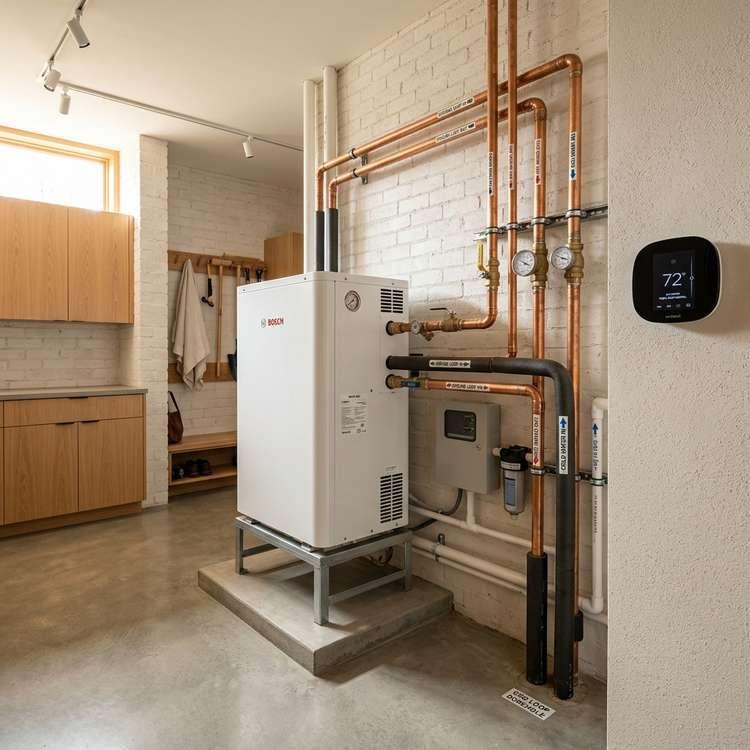
As home heating costs and carbon footprints continue to rise, eco-friendly homeowners are looking for clean alternatives to traditional fossil-fuel furnaces and air conditioners. While standard HVAC systems use a massive amount of electricity to generate heat, a sustainable alternative utilizes the earth’s natural thermal energy. Implementing sustainable geothermal heating and cooling systems represents one of the most efficient, durable, and clean HVAC choices available for modern homes. By utilizing the stable underground temperature to heat your home in winter and cool it in summer, you can lower your utility bills by up to seventy percent while protecting the environment.
The Physics of Geothermal Heat Pumps
Unlike standard air-source heat pumps that struggle in freezing winter air, a geothermal system, also known as a ground-source heat pump (GSHP), utilizes the earth’s stable underground temperature. Six feet below the surface, the ground remains at a constant temperature of fifty to fifty-five degrees year-round. A geothermal system routes a water-filled loop of pipe through this underground zone, absorbing ground heat in the winter and dumping home heat back into the cool earth during the summer, operating with zero emissions.
5 Clean HVAC Tips for Geothermal Systems
1. Choose the Right Loop Configuration: Vertical vs. Horizontal
Geothermal systems require an underground pipe loop. If you have a large yard, a horizontal loop is the most cost-effective option, placing pipes in shallow trenches four to six feet deep. However, if you have a small yard, select a vertical loop configuration. A vertical loop routes pipes down deep boreholes reaching 100 to 400 feet deep, requiring very little surface area and keeping your yard landscaping completely undisturbed.
2. Integrate with Radiant Floor Heating
To maximize the efficiency of your geothermal system, pair it with hydronic radiant floor heating. Geothermal heat pumps operate most efficiently when heating water to low temperatures (around 100 to 110 degrees). Radiant floors distribute this warm water through pipes beneath your floor, heating the room evenly from the ground up, eliminating drafty air vents and saving energy.
3. Size the Ground Heat Exchanger Correctly
Proper sizing is critical for geothermal efficiency. If the underground pipe loop is too small, it will not absorb enough heat, forcing the system to rely on expensive electric backup heaters. Work with a certified IGSHPA (International Ground Source Heat Pump Association) designer to run a thermal load calculation on your home, ensuring the loop length matches your home’s square footage.
4. Combine with Smart Thermostats for Passive Shifting
Connect your geothermal heat pump to a smart thermostat (such as an Ecobee or Nest). Program the thermostat to pre-heat or pre-cool your home during off-peak utility hours. Because geothermal systems operate most efficiently when maintaining a constant temperature, avoid setting large temperature setbacks. A smart thermostat maintains a steady, comfortable climate while minimizing energy spikes.
5. Benefit from Long-Term Durability and Tax Credits
While the initial installation cost of geothermal is higher than standard HVAC, the long-term savings are substantial. Geothermal heat pumps last over twenty years, and the underground loops are warrantied for over fifty years. Plus, federal tax credits (such as the Residential Clean Energy Credit) cover up to thirty percent of the total installation cost, speeding up your investment payback time.
Comparison: Air-Source Heat Pump vs. Geothermal Heat Pump
| HVAC Feature | Air-Source Heat Pump | Geothermal (Ground-Source) Heat Pump |
|---|---|---|
| Heat Source | Outdoor air (fluctuates from -10 to 100 degrees) | Underground soil (stable 50 to 55 degrees year-round) |
| Operating Efficiency | Medium (drops significantly in extreme cold) | High (remains highly efficient under all climates) |
| System Lifespan | 10 to 15 years (exposed to outdoor elements) | 20+ years (pump); 50+ years (underground loop) |
| Noise Levels | High (noisy outdoor compressor fan running) | Quiet (indoor water pump operates silently) |
Environmental Protection and Carbon Offset Benefits
Geothermal systems are a major step toward a zero-carbon home. They burn no fossil fuels, require no outdoor exhaust vents, and emit zero carbon dioxide locally. By replacing a standard gas furnace with a geothermal heat pump, you offset substantial carbon emissions, equivalent to planting hundreds of trees. Working with a certified professional ensures your geothermal system is safe, quiet, and ready to provide clean comfort for decades.
To learn more about optimizing your space, explore our guide on Sustainable Solar Power Home Battery Storage.
For additional tips on creating a beautiful home, read our article about Rainwater Harvesting System for Home.
If you are planning a renovation, you might also find our ideas on Upcycled Home Decor Ideas helpful.
To discover more sustainable choices, check out our tips on Best Eco Friendly Laundry Detergent Sheets.
Enhance your living space further by exploring our recommendations for Sustainable Bedroom Design Ideas.