As climate change, rising utility rates, and severe weather storms challenge our home electrical systems, clean energy independence has become a main goal for eco-friendly homeowners. While solar panels are an excellent first step, they only generate power when the sun is shining. To achieve true energy resilience, you must store that power for evening and emergency use. Exploring sustainable solar power home battery storage options represents the perfect way to optimize your solar investment, lower your carbon footprint, and protect your home from sudden blackouts. By storing clean solar energy locally, you can power your home sustainably day and night.
The Core Philosophy of Solar Battery Storage
A home solar battery works by storing excess electricity generated by your roof solar panels during the day, rather than exporting it back to the utility grid. In the evening, when utility rates are high, your smart home system automatically draws power from your battery instead of buying grid power—a process known as peak shaving. This setup reduces grid reliance, lowers your utility bills, and provides clean backup power during blackouts, ensuring your home remains functional and green under all circumstances.
5 Clean Energy Tips for Solar Battery Storage
1. Select Safe Lithium Iron Phosphate (LFP) Battery Chemistry
When reviewing battery options, battery chemistry is your most critical choice. Older lithium-ion batteries often utilize nickel manganese cobalt (NMC) chemistry, which carries risk of thermal runaway. Modern sustainable home batteries (like the Tesla Powerwall 3 or Enphase Encharge) utilize Lithium Iron Phosphate (LFP) chemistry. LFP batteries are extremely stable, non-flammable, and last twice as long as NMC batteries, providing over ten years of safe, reliable home power backup.
2. Size Your Battery Backup System Correctly
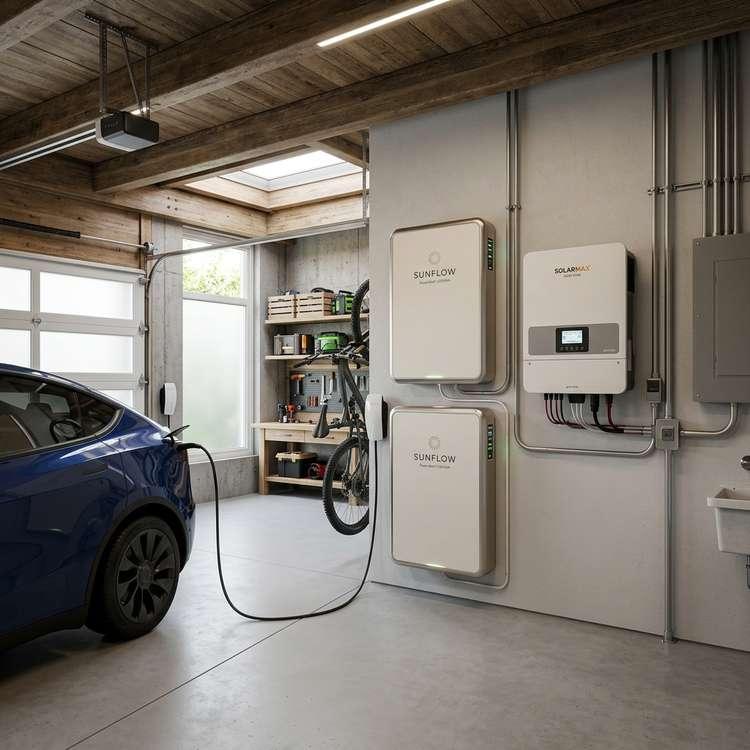
To ensure you have sufficient backup power during emergencies, size your battery storage capacity to match your home’s critical loads. A standard home battery provides ten to fifteen kilowatt-hours (kWh) of storage. If you only want to power critical loads (such as your refrigerator, Wi-Fi, and lights), a single battery is sufficient. However, if you want to run heavy appliances like central air conditioning or an electric vehicle charger, you will need a stack of two or three batteries connected in series.
3. Use Smart App Scheduling for Peak Shaving
To maximize your financial savings, configure your battery system to run on time-of-use scheduling. Use your smart battery app to charge the battery from your solar panels during cheap midday hours. During peak evening hours (typically 4 PM to 9 PM) when grid rates rise, program the system to run your home entirely on battery power. This smart energy shifting lowers your utility bills and reduces strain on the grid during peak hours.
4. Install Smart Load-Shedding Panels
During extended grid blackouts, you must manage your battery power carefully to prevent it from draining too quickly. Install a smart electrical subpanel (such as a Span Panel) next to your battery. A smart panel allows you to monitor and control every circuit in your house from your phone. If power goes out, the panel automatically turns off non-essential circuits (like pool pumps or guest room ACs) while keeping your refrigerator and medical devices running, extending battery life significantly.
5. Integrate with a Smart Home Energy Management System
For ultimate efficiency, integrate your solar battery with your smart home system. Program automation rules that coordinate your home appliances with your battery levels—for example, automatically dimming smart lighting, raising the thermostat temperature by two degrees, and pausing smart laundry appliances when the house switches to backup battery power, protecting your stored energy.
Comparison: Grid-Tied Solar Only vs. Solar with Battery Storage
| Feature | Grid-Tied Solar Only System | Solar with Battery Storage System |
|---|---|---|
| Blackout Protection | None (system shuts off during blackouts for safety) | High (instant backup power keeps critical loads running) |
| Time-of-Use Savings | Low (must buy grid power during expensive evening hours) | High (runs home on stored solar power during peak rates) |
| Grid Independence | Low (reliant on grid stability and utility rates) | High (can run off-grid indefinitely in sunny weather) |
| Carbon Footprint | Medium (still uses grid fossil fuels at night) | Low (runs on 100% clean solar energy day & night) |
Battery Maintenance and Safety Guidelines
Sustainable home batteries are designed to be low maintenance, but proper installation is critical for safety. Mount your batteries in a temperature-controlled space, such as a garage or a basement, as extreme freezing or hot temperatures can lower battery efficiency and life. Work with a certified solar installer to ensure the battery has proper ventilation and fire-safety detectors. Proper maintenance ensures your sustainable solar power home battery storage provides clean, reliable energy for your household for decades.
To learn more about optimizing your space, explore our guide on Sustainable Geothermal Heating and Cooling.
For additional tips on creating a beautiful home, read our article about Rainwater Harvesting System for Home.
If you are planning a renovation, you might also find our ideas on Upcycled Home Decor Ideas helpful.
To discover more sustainable choices, check out our tips on Best Eco Friendly Laundry Detergent Sheets.
Enhance your living space further by exploring our recommendations for Sustainable Bedroom Design Ideas.