
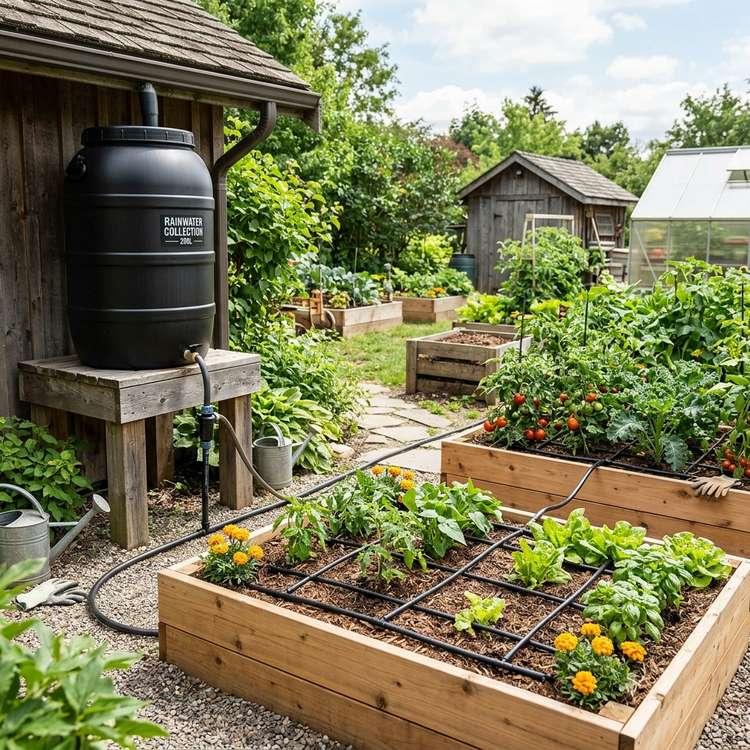
Water conservation is a priority for modern sustainable gardening, especially as water utility bills and dry summers become more common. One of the most efficient ways to irrigate your garden is by setting up a **drip irrigation rainwater collection setup**. By catching rainwater from your roof and routing it through a gravity-fed drip line grid, you can water your plants directly at their roots with zero waste. This eco-friendly setup utilizes pure rainwater—which is free of tap water chemicals like chlorine—to feed your vegetable beds and flowers, creating a self-sustaining system that benefits both your pocket and the environment.
The Benefits of Gravity-Fed Rainwater Drip Systems
Traditional drip irrigation relies on high-pressure municipal water. A gravity-fed rainwater system, however, operates at low pressure, meaning it uses only the height of the water barrel to distribute water. This eliminates the need for expensive pumps or electrical power. Plants love rainwater because it is naturally soft and contains traces of organic nitrogen, which supports healthy growth. Setting up a **drip irrigation rainwater collection setup** helps create a resilient, self-sufficient yard that survives hot summers with zero tap water usage.
Choosing the Right Rain Barrels and Filters
To ensure a reliable system, choose high-density polyethylene (HDPE) food-grade barrels with built-in UV protection to prevent algae growth. Install a first-flush diverter on your gutter downspout. This diverter filters out the first few gallons of dusty, debris-filled roof run-off, ensuring only clean rainwater enters your barrels. Place a fine mesh screen on the inlet to block leaves and mosquitoes, and install a low-pressure inline filter before the drip lines to prevent dirt from clogging the emitters. Proper filtration is essential for keeping your low-pressure system running smoothly.
Sizing Your System for Low-Pressure Gravity Flow
Because gravity-fed systems operate at low pressure, they require specific sizing and placement. For every foot of height you raise the rain barrel, you gain approx. 0.43 PSI of pressure. Elevate your barrels on concrete blocks or a wooden stand (approx. two to three feet high) to establish gravity flow. Use larger main pipes (such as one-half inch tubing) to minimize friction loss, and select non-compensating, low-pressure drip emitters. These adjustments ensure that water is distributed evenly to all your garden beds.
Comparison: High-Pressure Tap Drip vs. Low-Pressure Rainwater Drip
| System Feature | High-Pressure Tap Drip System | Low-Pressure Rainwater Drip System |
|---|---|---|
| Water Source & Cost | Municipal tap water; subject to utility rates | Free collected rainwater; zero utility cost |
| Operating Pressure | High pressure (requires regulator to lower to 25 PSI) | Low pressure (gravity-fed; operates under 5 PSI) |
| Power Requirements | Needs connection to municipal supply | Zero electricity needed; purely gravity-operated |
| Water Quality | Contains chlorine, fluoride, & dissolved salts | Naturally soft, chemical-free, nutrient-rich |
Expanding and Maintaining Your System
To increase your water storage, connect multiple rain barrels in series using overflow hoses. During winter or freezing months, drain the system and store components to prevent frost damage to the valves and tubings. Regularly cleaning the inline filters will keep the lines clear, ensuring that your **drip irrigation rainwater collection setup** provides reliable, sustainable irrigation to your garden for many seasons.
To learn more about optimizing your space, explore our guide on Sustainable Geothermal Heating and Cooling.
For additional tips on creating a beautiful home, read our article about Sustainable Solar Power Home Battery Storage.
If you are planning a renovation, you might also find our ideas on Rainwater Harvesting System for Home helpful.
To discover more sustainable choices, check out our tips on Upcycled Home Decor Ideas.
Enhance your living space further by exploring our recommendations for Best Eco Friendly Laundry Detergent Sheets.