
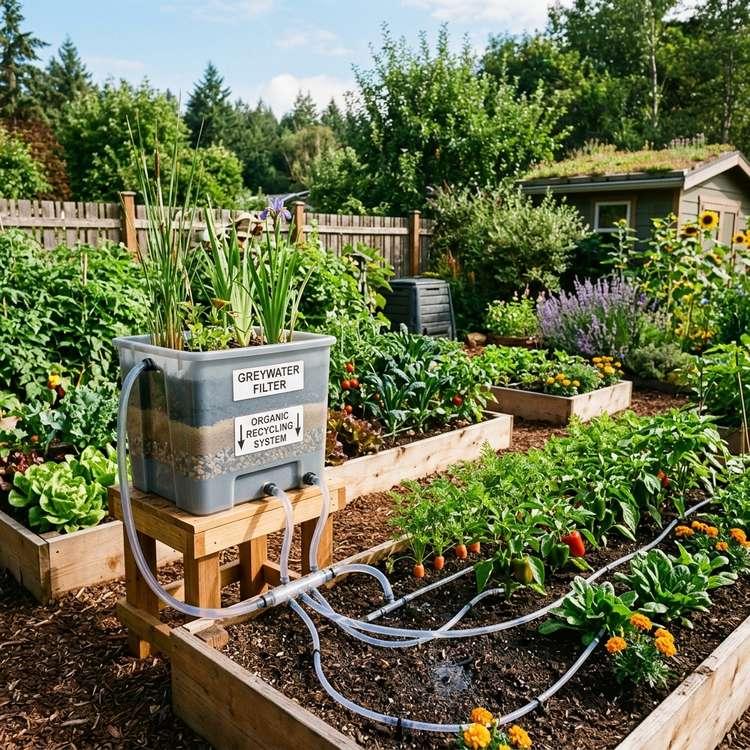
As water scarcity and utility costs rise, sustainable landscaping is becoming a priority for eco-conscious homeowners. One of the most effective ways to conserve water in your household is by implementing greywater recycling systems for home gardens. Greywater refers to the gently used water from your bathroom sinks, showers, bathtubs, and washing machines. Rather than letting this valuable resource flow into the sewer system, you can filter and reuse it to irrigate your garden, keeping your landscape lush and green while reducing your environmental footprint.
Understanding Greywater vs. Blackwater
It is important to understand the difference between water types. Blackwater is toilet water, kitchen sink waste, and dishwasher discharge, which contain high levels of pathogens and organic matter and must be sent to the sewer. Greywater, however, contains only minimal traces of dirt, hair, and eco-friendly soap. With simple filtration, it is perfectly safe to use for landscape irrigation. By implementing greywater recycling systems for home gardens, you can recycle up to sixty percent of your household wastewater, redirecting it to feed your trees, shrubs, and ornamental plants.
Types of Greywater Systems: Simple vs. Automated
Depending on your budget and garden layout, you can choose between two main types of recycling setups:
- Laundry-to-Landscape (L2L): The simplest and most popular system. It redirects the drain hose of your washing machine directly to a garden valve, using the washer’s internal pump to distribute water without extra electricity.
- Branched Drain Systems: A gravity-fed system that routes pipes from your shower or bathroom sink directly to your yard, distributing water through underground mulch basins.
- Pumped & Filtered Systems: An automated setup that collects greywater in a tank, filters out lint and hair, and pumps it through standard drip lines to irrigate plants on a timer.
Choosing Safe Soaps and Garden Irrigation Tips
To protect your soil and plants, you must use biodegradable, biocompatible soaps and detergents that are free of boron, chlorine, and sodium. Avoid spraying greywater directly onto edible vegetable leaves; instead, route it underground to the roots of fruit trees, shrubs, and flowers. Implementing greywater recycling systems for home gardens helps create a thriving, drought-tolerant yard that survives hot summers without tap water.
Comparison: Greywater System Options
| System Type | Difficulty to Install | Permit Required | Primary Application |
|---|---|---|---|
| Laundry-to-Landscape | Easy (DIY friendly) | No (in most regions) | Irrigating trees and large shrubs |
| Branched Drain | Medium (requires plumbing adjust) | Sometimes | Gravity-fed mulch basins |
| Pumped & Filtered | High (requires professional) | Yes | Subsurface drip irrigation zones |
Long-Term Benefits for Your Household
Recycling water lowers your sewage and water bills immediately. It also supports local ecosystems by reducing water extraction from rivers and reservoirs. Building greywater recycling systems for home gardens is an essential step in turning your property into a highly efficient, sustainable homestead.
To learn more about optimizing your space, explore our guide on Sustainable Geothermal Heating and Cooling.
For additional tips on creating a beautiful home, read our article about Sustainable Solar Power Home Battery Storage.
If you are planning a renovation, you might also find our ideas on Rainwater Harvesting System for Home helpful.
To discover more sustainable choices, check out our tips on Upcycled Home Decor Ideas.