
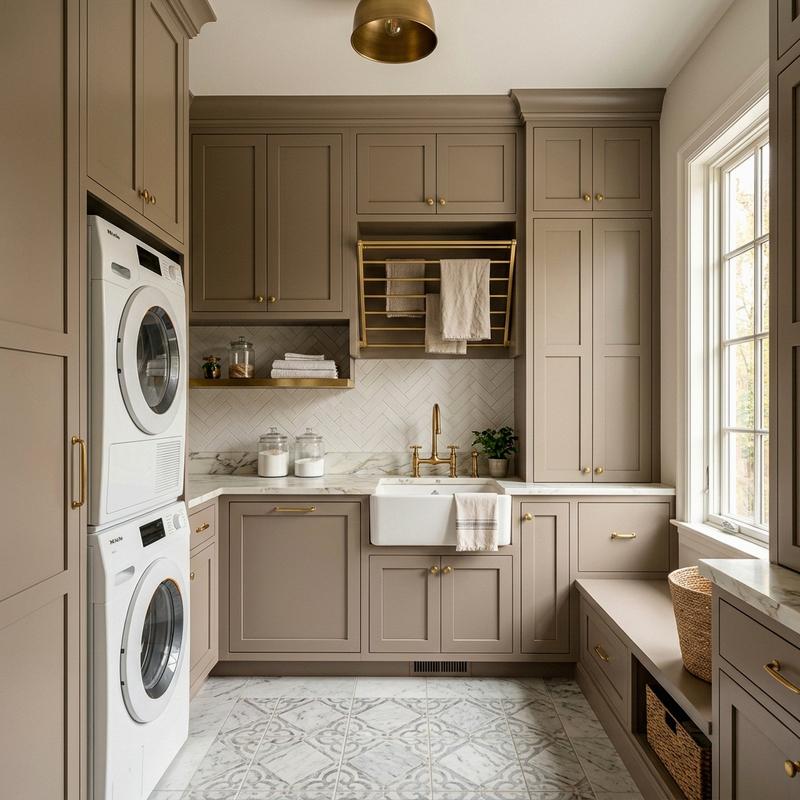
Laundry Room Makeover Trends: Combining Hardworking Utility with Premium Aesthetics
Our team at HomeTunez has seen a dramatic shift in how homeowners view their utility spaces. For decades, the laundry room was a forgotten, utilitarian corner, often relegated to a dark basement or a cramped closet behind folding doors. Today, it has emerged as a key focal point for interior design, where high-end aesthetics meet hardworking functionality. Homeowners are realizing that the rooms where they perform daily chores should be just as beautiful, inspiring, and comfortable as their main living areas. This shift is driven by the desire to create cohesive interiors that prioritize well-being. This article explores the latest makeover trends that elevate this hardworking space into a premium sanctuary.
In my interior architecture practice, I always emphasize that utility does not require compromising your home’s aesthetic character. Designing a laundry room requires balancing chemical-resistant surfaces with premium millwork, smart appliances, and thoughtful styling. A well-designed workspace reduces the physical strain of washing and drying clothes while elevating your mental well-being during chores. Modern layouts incorporate built-in folding stations, custom cabinetry, smart storage, and biophilic elements to create a peaceful atmosphere. We aim to help you design a space that combines ergonomic utility with premium design. By selecting the right layout and details, you can turn a daily chore into a pleasant routine.
A cohesive home design should extend its aesthetic and ecological philosophy to every single room. If you have explored sustainable bedroom design ideas to create a non-toxic personal sanctuary, you understand the value of choosing natural materials and low-emission finishes. The laundry room is no exception to this rule. By selecting sustainably sourced wood for cabinets and avoiding chemical-heavy paints, you protect your indoor air quality while handling dirty garments. Sourcing ecological materials helps minimize the environmental footprint of your home renovations. This holistic approach ensures that your home feels connected, healthy, and visually harmonious across all thresholds.
We also see an increasing demand for multi-functional laundry spaces that serve double duty as mudrooms, craft areas, or pet washing stations. Designing these hybrid rooms requires careful zoning to prevent clutter from overlapping. For instance, separating the dirty sorting area from the clean folding counter keeps the workspace organized and clean. Incorporating seating like custom benches with integrated shoe storage makes transitioning from the outdoors seamless and comfortable. You can also install custom pet wash stations with tiled surrounds and hand-held sprayers. This smart spatial planning optimizes your home’s footprint while ensuring every square foot is functional.
Adding smart surveillance to your utility transitions can also enhance your home’s security and efficiency. Many homeowners choose to place the best smart indoor security cameras for home near mudroom entrances or laundry cabinets to monitor incoming packages, pet activity, or appliance cycles. Having visual access to this high-traffic entry point provides peace of mind and allows you to oversee your home’s daily operations from anywhere. You can check on your washing cycles remotely and verify when kids arrive home from school. Integrating smart technology with custom millwork shows how modern design can elevate the security and convenience of utility spaces.
Material Science and Durability in the Laundry Room
Choosing materials for a laundry room requires understanding how different surfaces react to high humidity, water splashes, and harsh chemical exposures. Standard cabinetry can warp or delaminate when exposed to steam from washers and dryers, making high-quality substrates essential. We recommend using marine-grade plywood or high-density fiberboard finished with premium moisture-resistant coatings. For countertops, natural stones like soapstone or engineered surfaces like quartz and sintered stone are ideal. Sintered stone is particularly resistant to high heat, allowing you to set steam irons down without warping the surface. These non-porous materials resist staining from liquid detergents and are easy to sanitize after heavy use.
The paints and finishes you select for walls and cabinets must withstand frequent scrubbing and moisture. Standard drywall paints can mildew quickly in damp environments, which is why we suggest high-performance, water-resistant paints. Finishing your wainscoting and cabinets with eco-friendly coatings from Farrow & Ball provides a durable, washable finish. Their low-VOC, water-based eggshell and gloss paints are perfect for high-humidity areas, offering rich color depth without emitting harmful chemical vapors. Protecting your wood cabinets and baseboards from water damage is equally important, and using specialized wood sealers and cleaners from Bona will keep these surfaces looking pristine and scratch-free.
If your laundry room includes custom seating, built-in benches, or fabric storage bins, selecting high-performance textiles is crucial for longevity. Standard fabrics will absorb moisture and develop mold or mildew over time. For bench cushions and valances, using solution-dyed acrylic fabrics from Sunbrella ensures that the textile remains resistant to water, stains, and fading under direct sunlight. These fabrics are engineered to withstand abrasive use and are easy to spot-clean. For interior cushions or folding stools that need a softer touch, high-performance fabrics from Crypton provide an excellent stain and odor barrier. These materials prevent liquid spills and dirt from penetrating into the cushion core, making cleanup simple.
Maintaining the cleanliness of your premium utility surfaces should not involve introducing harsh chemicals into your home. Hardwood counters, acrylic shelves, and tiled backsplashes can easily collect detergent spills and lint dust. We recommend maintaining these hardworking surfaces with gentle, plant-derived cleaning products from Method. Their biodegradable sprays break down sticky residues without leaving toxic fumes or damaging the finish of your custom woodwork. Using plant-based solutions protects your home from synthetic chemical coatings. Using green cleaning solutions helps preserve the integrity of your materials while keeping your family safe from chemical exposure.
Utilizing eco-friendly products in your daily chore routine is a natural extension of a sustainable lifestyle. Choosing sustainable materials and low-emission finishes in the laundry room protects your family’s health. For example, when washing your clothes, using the best eco-friendly laundry detergent sheets reduces plastic waste and eliminates synthetic chemical residues. This choice protects your clothing fibers and prevents toxic runoff from entering the local water supply. Many sheets use biodegradable ingredients that dissolve completely in both cold and hot water cycles. Aligning your cleaning practices with your material choices creates a cohesive, eco-conscious home environment.
Built-In Integrations and Styling
Integrating custom features into your laundry room layout is the key to maximizing utility while achieving a premium aesthetic. Custom millwork can hide unsightly appliances and organize messy chores. Many modern makeovers feature washers and dryers raised on custom platforms with pull-out laundry baskets underneath, reducing the need to bend down. You can also hide appliances behind sliding pocket doors or folding panels that match your cabinet fronts, allowing the room to transition into a clean corridor when laundry is done. This integration is highly effective in homes where the laundry is open to a hallway.
Drying racks and folding stations are other essential built-in integrations. Installing pull-out drying drawers with wire mesh bottoms allows you to dry delicate items flat without cluttering the countertops. You can also mount folding drying racks that fold flat against the wall when not in use. For folding, a solid countertop placed directly over front-loading washers and dryers creates a spacious, continuous workspace. Adding a built-in hanging rod between upper cabinets provides a convenient spot for hanging shirts straight from the dryer, preventing wrinkles and keeping the room organized. You can choose a polished brass or matte black rod to match your hardware.
Smart home automation can further improve the efficiency of your utility space. Modern laundry appliances can connect to your home network, sending notifications to your phone when a cycle is complete. When planning these smart upgrades, choosing the right smart home protocols (Zigbee, Z-Wave, Wi-Fi) is crucial for ensuring reliable connectivity. Low-power protocols like Zigbee are excellent for water leak sensors placed behind washing machines, as they communicate efficiently with your central hub without draining battery power. These sensors can shut off your main water valve automatically if a leak is detected. This integration protects your home from water damage while keeping your system responsive.
Lighting and hardware details play a major role in styling your laundry room. Standard utility spaces often suffer from dim, harsh fluorescent lighting that makes sorting clothes difficult. We recommend installing a layered lighting scheme that includes recessed ceiling lights for general illumination, under-cabinet LED strips for task lighting over folding areas, and a decorative pendant for visual interest. Under-cabinet lighting should use high-CRI LEDs to ensure you can distinguish between navy and black garments. Choosing high-quality cabinet hardware, such as solid brass or matte black pulls, adds a touch of luxury that elevates the entire design, proving that even functional spaces deserve beautiful accents.
Finally, styling your laundry room should focus on creating a calm, inviting atmosphere. You can add open shelving to display glass jars filled with baking soda, wooden laundry brushes, and small green plants that thrive in humid environments. In the same way that applying budget-friendly modern living room decor ideas can refresh your main seating areas without overspending, using simple styling hacks in the laundry room can make a significant difference. Using natural wicker baskets, ceramic trays, and matching containers transforms necessary storage into a beautiful design statement. These natural details bring warmth to the space, making chore time feel less tedious.
Comparing Modern Utility Layouts
To help you evaluate the best layout and design solutions for your utility makeover, our team has compiled a detailed comparison of modern laundry room configurations. Each option offers unique benefits, installation costs, and durability considerations that you should weigh based on your home’s square footage and daily washing needs. Selecting the right configuration ensures that your workflow is efficient and your storage is maximized. The following table outlines the key characteristics of these popular layouts to help guide your planning process.
| Layout Solution | Average Cost Range | Durability & Lifespan | Key Aesthetic Benefit | Space Efficiency | Best Storage Feature |
|---|---|---|---|---|---|
| Galley Utility | $3,500 – $7,000 | Outstanding (20+ Years) | Sleek, continuous lines | High (Parallel workspace) | Overhead cabinets & folding counters |
| L-Shape Layout | $4,500 – $9,000 | Excellent (15-20 Years) | Corner sink integration | Very High (Utilizes corners) | Deep corner cabinets with lazy susans |
| Hidden Closet | $2,000 – $4,500 | Good (10-15 Years) | Completely concealed behind doors | Maximum (Compact footprint) | Pull-out sorting hampers |
| Mudroom Combo | $6,000 – $12,000 | Outstanding (20+ Years) | Welcoming transition zone | Medium (Requires larger room) | Custom cubbies & dog washing station |
| Stacked Closet | $1,500 – $3,500 | Very Good (12-15 Years) | Minimalist and unobtrusive | Excellent (Vertical stack) | Slide-out folding tray between machines |
When deciding on a layout, it is essential to analyze how you navigate the space. For instance, a Mudroom Combo is ideal for active families with pets, while a compact Stacked Closet works best in smaller apartments or secondary laundry zones. Sourcing premium materials for these layouts will ensure they remain functional and beautiful for decades, protecting your investment and enhancing your home’s overall value. In the following section, we provide a comprehensive, step-by-step guide to executing a custom utility upgrade yourself, focusing on installing a premium butcher block countertop over front-loading machines. Designing the layout correctly will save you hours of chore time every single week.
Step-by-Step DIY Implementation Guide
Adding a solid wood countertop over front-loading washing machines is one of the most effective ways to upgrade your laundry room’s look and functionality. It provides a spacious, smooth surface for folding clothes while concealing the gaps and hoses behind the appliances. This detailed DIY guide walks you through the entire process of measuring, cutting, sealing, and installing a premium butcher block folding station and an overhead brass drying rod. Planning these steps ahead of time will prevent structural errors and ensure a smooth, rewarding installation process.
Step 1: Measuring and Assessing Clearances
Begin by measuring the width and depth of the space above your washing machines. Measure the width at the back, middle, and front of the alcove, as walls are rarely perfectly square. Use the smallest measurement and subtract a quarter-inch to allow for ease of installation. For the depth, measure from the back wall to the front face of your appliances, adding one inch to create a slight overhang that conceals the control panels. Ensure that your machines have at least two inches of clearance behind them for water hoses and electrical plugs to prevent pinching. Check that the floor is level before proceeding.
Step 2: Sourcing Materials and Preparing the Cleats
Because front-loading washers and dryers vibrate during spin cycles, the countertop should never rest directly on top of the machines. Instead, it must float slightly above them, supported by sturdy wooden cleats mounted to the wall studs. Cut three pieces of 1×3 hardwood lumber: one long piece for the back wall and two shorter pieces for the side walls. Use a stud finder to locate the studs behind your drywall, marking their positions clearly. Sand the cleats to remove any splinters before painting them to match your walls. Use premium self-tapping wood screws to prevent splitting the timber.
Step 3: Installing the Wall Support Cleats
Determine the height of your countertop by measuring your washing machines and adding one inch for clearance. Mark a level line at this height along the back and side walls. Align the top edge of your wooden cleats with this line. Secure the cleats to the wall studs using three-inch heavy-duty wood screws. If you are installing the countertop in an open space without side walls, you will need to install a vertical support panel or heavy-duty metal brackets to hold the outer edges. Test the cleats to ensure they are rock-solid. A solid support foundation prevents the wood counter from warping over time.
Step 4: Sizing, Sanding, and Sealing the Butcher Block
Cut your premium butcher block countertop to the measured dimensions using a circular saw with a fine-tooth blade. Sand the edges smooth with 150-grit and then 220-grit sandpaper to prevent any rough edges from catching on delicate clothes. Seal the wood using a durable, water-resistant topcoat. We recommend applying three coats of a high-quality water-based polyurethane or a natural, food-safe wood oil. Sand lightly between coats to ensure a glass-smooth, durable finish that resists water drops and detergent spills. Let each coat dry completely in a well-ventilated, dust-free space.
Step 5: Mounting the Countertop and Installing the Drying Rod
Carefully slide the sealed butcher block onto the support cleats, checking that it sits level. Secure the countertop to the cleats from underneath using pocket screws, ensuring you do not drill through the top surface. Once the counter is in place, mount a brass hanging rod between the upper cabinets or walls. Position the rod at least eighteen inches above the countertop to allow space for hanging shirts and trousers. Test the installation by placing heavy items on the counter, ensuring there is no deflection or rattling. Clean up any dust on adjacent surfaces before loading the counter.
Frequently Asked Questions
What is the ideal height for a laundry room folding countertop?
The ideal height for a folding countertop is between 36 and 39 inches, which matches standard kitchen counter height. If you are installing the countertop directly over front-loading washers and dryers, the height will be determined by the machines, which usually stand around 36 inches tall. Adding support cleats raises the final counter surface to approximately 38 inches, creating an ergonomically comfortable height for folding laundry without straining your back. This height allows you to work without bending forward.
How do I prevent mold and mildew in a humid laundry space?
Prevent mold requires proper ventilation and moisture-resistant materials. Install a high-capacity exhaust fan to exhaust humid air outside during washing cycles. Paint your walls and wainscoting with moisture-resistant paint from Farrow & Ball, and finish cabinet wood surfaces with protective sealers. Regularly clean under appliance rubber seals and wipe down countertops with plant-derived cleaners from Method to remove damp residues before mold spores can develop. Running a dehumidifier during humid seasons also helps.
Can I stack my washing machine and dryer to save space?
Stacking your washing machine and dryer is an excellent space-saving solution for small utility rooms or closets. Ensure you use the manufacturer’s approved stacking kit to lock the appliances securely together and prevent tipping. Front-loading machines are required for stacking, and the washer must always be placed on the bottom because it is heavier when filled with water. This vertical setup frees up valuable floor space for storage. It is crucial to have a professional assist with heavy lifting.
What is the most durable countertop material for laundry rooms?
Quartz and sintered stone are the most durable materials for utility countertops because they are completely non-porous and chemical-resistant. Unlike natural marble, quartz will not etch or stain when exposed to liquid detergents or bleach. Solid surface acrylics and sealed butcher block are also great choices but require more care to prevent scratching. Sintered stone offers outstanding heat resistance, allowing you to set hot steam irons down safely without damage. This material remains beautiful for decades with minimal maintenance.
How do I silence a vibrating washing machine during spin cycles?
Silence noisy vibrations by checking that your washing machine is perfectly level. Adjust the legs underneath the machine and tighten the locking nuts. Install heavy-duty rubber anti-vibration pads under the feet to absorb movement and sound. Ensure the machine does not touch adjacent cabinets or the countertop, leaving a half-inch gap on all sides. Regularly inspect the load size to prevent off-balance cycles that cause loud rattling. Overloading is the primary cause of severe machine vibrations.
What are the benefits of installing a laundry room utility sink?
A utility sink is highly beneficial for hand-washing delicate garments, scrubbing muddy shoes, and pre-treating tough fabric stains. It also provides a convenient spot for washing pets or cleaning household items without using kitchen sinks. Choose a deep undermount sink made of stainless steel or fireclay, which resist scratching and chemical staining. Pair the sink with a pull-down sprayer faucet to make rinsing corners and tall buckets easy. Deep basins help contain water splashes during heavy scrubbing.
How do I organize laundry detergent sheets and cleaning supplies?
Organize supplies by storing them in labeled containers on open shelves or inside upper cabinets. Keep frequently used items like eco-friendly laundry detergent sheets in glass jars or decorative ceramic trays at arm’s reach. Place heavier liquid detergents and household cleaners in lower cabinets secured with child safety locks. Using uniform containers reduces visual clutter and makes it simple to see when your cleaning supplies are running low. This neat visual organization helps keep chores efficient.
Should I choose open shelving or closed cabinets for storage?
A combination of both storage styles works best. Closed cabinets hide visual clutter like detergent bottles, laundry baskets, and cleaning tools, keeping the space looking tidy. Open shelving is perfect for displaying decorative jars, green plants, and fresh folded towels, adding warmth and personality to the room. Position open shelves above folding counters for easy access to daily essentials while keeping chemicals hidden away inside closed cupboards. This dual approach balances utility and decoration.
How can I make a dark basement laundry room feel brighter?
Brighten a dark utility room by painting the walls and cabinetry in light, reflective colors like warm white or soft cream. Install high-lumen recessed ceiling lights and bright under-cabinet LED strips to eliminate dark corners. Use clear glass cabinet inserts and mirror backsplashes to bounce light around the room. Adding natural wood accents, woven storage baskets, and vibrant greenery will make the subterranean space feel inviting and cheerful. Good lighting completely transforms dark basements.
What smart sensors are recommended for a laundry room?
We highly recommend installing smart water leak sensors behind your washing machine and near the utility sink to prevent flooding. Connect these sensors to your smart hub using low-power protocols like Zigbee or Z-Wave for instant mobile alerts if water is detected. You can also install smart contact sensors on cabinets storing cleaning chemicals to monitor safety, and smart humidity sensors to automatically trigger your exhaust fan. These connected devices protect your home from major water damage.
Design Summary
Transforming your laundry room into a premium utility space is an excellent investment that improves your home’s layout and your daily routine. By replacing cluttered, mismatched storage with custom cabinetry, durable countertops, and built-in folding stations, you create a workspace that blends hardworking utility with high-end design. Sourcing durable materials like hardwoods and quartz, and finishing them with eco-friendly coatings, ensures that your utility room remains beautiful and moisture-free for decades. Adding smart technology and thoughtful lighting completes the transformation, making chore time a pleasure. This functional layout makes home maintenance a seamless process.
This design approach also reflects how you style your wider living areas for family life. Just as applying budget-friendly modern living room decor ideas helps update your main gathering spaces for comfort and style without overspending, a laundry room makeover can be planned to deliver maximum visual impact within a reasonable budget. Merging functional storage with beautiful design elements ensures your entire home remains cohesive and organized. A well-designed utility room adds tangible real estate value to your property. Ultimately, a successful laundry room makeover shows that you do not have to sacrifice style to achieve outstanding utility, creating a beautiful and efficient home.
To learn more about optimizing your space, explore our guide on Smart Home Tech for Seniors.
For additional tips on creating a beautiful home, read our article about Non-Slip Flooring Solutions.