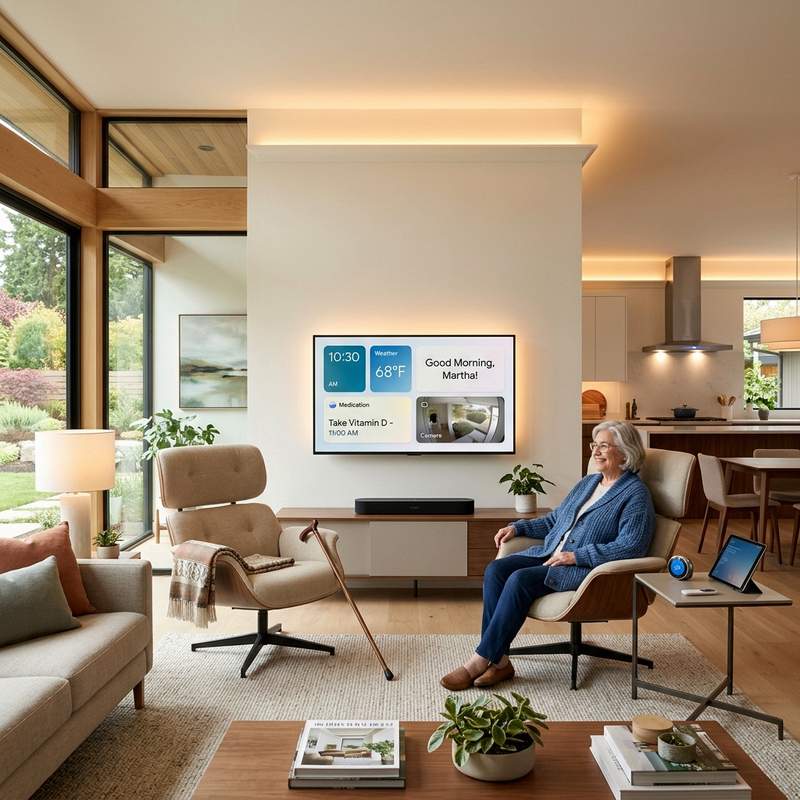
Smart home technology has evolved far beyond novelty automation gadgets to become a cornerstone of modern accessible living. For aging adults and individuals living with physical limitations, assistive smart devices offer unprecedented autonomy, physical safety, and family connectivity. In our technology integration practice, we have designed smart home ecosystems for hundreds of aging-in-place residences. We have seen firsthand that a well-designed assistive tech setup does not feel overwhelming or intrusive. By automating routine daily tasks, monitoring environmental hazards, and enabling effortless hands-free control, smart technology empowers seniors to remain safely in their homes while giving family caregivers complete peace of mind. In this comprehensive guide, we will explore Smart Home Tech for Seniors, detailing five essential assistive devices for independent living.
The Human-Centered Approach to Assistive Smart Design
Integrating technology for aging adults requires a user-centered design approach. Complex smartphone apps, tiny touchscreens, and dense menu trees often create frustration for seniors experiencing vision changes or reduced manual dexterity. Effective assistive tech relies on passive automation and natural voice interfaces that operate invisibly in the background without requiring complex manual inputs.
One of the primary pillars of senior smart home design is “Voice Control Primacy.” Smart voice assistants—such as Amazon Alexa or Apple Siri—allow users to control lighting, adjust thermostats, set medication reminders, and make phone calls using simple spoken commands. Voice control eliminates the need to cross rooms to flip wall switches, reach behind furniture for lamp cords, or hold small smartphones, making home management effortless for those with limited mobility.
Furthermore, automated environmental monitoring protects the home from undetected hazards. Smart sensors track water leaks, stove usage, room temperature extremes, and motion patterns. If a stove is left burning unattended, or if morning motion is not detected by a normal hour, the smart system alerts family members or emergency services automatically. This proactive monitoring layer catches dangers early while respecting the senior’s daily privacy and independence.
5 Essential Assistive Smart Devices
1. Smart Voice Assistants with Video Displays
A central smart display hub serves as the brain of an accessible smart home ecosystem. Smart displays combine voice assistant capabilities with large, bright touchscreens that display visual confirmations, incoming call video, and daily calendar schedules in high contrast font.
The Amazon Echo Show 10 is an exceptional choice for senior living. It features a ten-inch HD screen that automatically rotates to face the user as they move around the room, keeping video calls and recipe instructions in clear view. Seniors can make hands-free video calls to family members using simple commands like “Alexa, call Sarah.” The device also supports automated drop-in video calls for pre-approved family caregivers during emergencies, providing immediate visual contact without requiring the senior to physically touch the screen.
2. Automated Smart Door Locks and Video Doorbells
Answering the front door can be physically challenging or hazardous for seniors with reduced mobility or fear of home intruders. Traditional key locks require fine motor control and hand twisting, which can be painful for individuals with severe arthritis. Smart door locks and video doorbells eliminate key fumbling while providing complete entrance control from an armchair or bed.
Install a keyless smart lock like the August Smart Lock Pro paired with a Ring Video Doorbell Pro 2. When a visitor presses the doorbell, the senior receives a video alert on their Echo Show display or tablet, allowing them to see and speak to the visitor hands-free. If trusted family members, home health aides, or emergency responders arrive, the door can be unlocked remotely via voice command or smartphone app, eliminating risky rushes to the front door.
3. Motion-Activated Smart Lighting and Color Sequences
Adequate lighting is essential for preventing falls, but manual wall switches require walking into dark rooms to find controls. Automated smart lighting ecosystems eliminate dark pathways by triggering lights based on motion, time of day, or voice commands.
Integrate a smart lighting system using Philips Hue Smart Bulbs paired with wireless motion sensors positioned along hallways, bathrooms, and bedroom perimeters. When a senior steps out of bed at night, the floor-level sensors trigger the hallway and bathroom lights to turn on automatically at a soft 20% warm amber brightness. This gentle illumination guides footsteps safely without causing blinding glare or disrupting sleep cycles. In the morning, lights transition to bright daylight spectrum tones, supporting natural circadian rhythms.
4. Smart Medication Dispensers with Caregiver Alerts
Medication adherence is critical for managing chronic health conditions, yet managing complex prescription schedules with multiple pill bottles often leads to missed doses or accidental double-dosing. Automated smart medication dispensers eliminate pill management confusion by organizing and dispensing exact prescription doses at scheduled times.
Utilize a smart medication dispenser like the Hero Health Smart Medication Dispenser. The device holds up to a ninety-day supply of ten different medications, automatically dispensing the exact pills into a cup at scheduled times while flashing a visual light and sounding an audible chime. If the dose is not retrieved within a specified time window, the system sends an instant text notification to family caregivers, ensuring medication compliance without requiring daily in-person supervision.
5. Automated Fall Detection Sensors and Smart Wearables
Falls represent the most serious health threat to independent seniors. Traditional emergency pendant buttons require the user to stay conscious and manually press a button after falling, which is impossible if the fall causes unconsciousness. Modern smart fall detection systems utilize radar sensors and wearable gyroscopes to detect falls automatically and contact help immediately.
Equip seniors with a smart wearable like the Apple Watch Series 9 or a dedicated medical alert device like the Medical Guardian Active Mobile. These devices feature advanced accelerometers and gyroscopes calibrated to recognize the specific impact profile of a hard fall. If a fall is detected, the device sounds an alarm, displays an on-screen prompt, and automatically calls emergency services and family contacts with precise GPS location coordinates if the user does not respond within sixty seconds.
Smart Assistive Device Comparison & Integration Matrix
| Device Category | Primary Assistive Function | Control Interface | Caregiver Alert Method | Recommended System / Model |
|---|---|---|---|---|
| Smart Voice Display | Hands-free video calling & device control | Voice Commands & Large Touchscreen | Drop-in video & App notifications | Amazon Echo Show 10 |
| Smart Lock & Doorbell | Keyless entry & remote door answering | Voice, PIN Code & Smartphone App | Push alerts & Video recording | August Smart Lock & Ring Video Doorbell |
| Automated Lighting | Motion-triggered night illumination | Passive Motion Sensors & Schedules | System status app dashboard | Philips Hue Bulbs & Motion Sensors |
| Smart Pill Dispenser | Automated scheduled medication dispensing | One-touch button retrieval | SMS text alerts on missed doses | Hero Health Smart Dispenser |
A Step-by-Step Guide to Deploying a Senior Smart Home
Deploying a reliable senior smart home requires a systematic three-phase approach. First, establish a robust, high-speed mesh Wi-Fi network—such as the Eero Pro 6E Mesh System—to ensure complete wireless coverage without dead zones across every room. Second, configure a primary smart hub, setting up simplified voice profiles and customizing high-contrast display fonts for easy reading. Third, pair priority safety devices step by step—starting with motion-activated night lighting and video doorbells before integrating smart locks and fall detection wearables. Testing every device with the senior user ensures they feel confident and comfortable with the automated routines.
Once deployment is complete, establish pre-authorized caregiver access accounts on the smart home app. Schedule weekly automated device diagnostic checks to verify battery levels and Wi-Fi connectivity across all sensors. By pairing intuitive interfaces with proactive caregiver alerts, you create an empowering technological shield that supports lifelong independence.
Frequently Asked Questions
1. Are smart home devices easy for non-tech-savvy seniors to use?
Yes, when configured correctly. Modern assistive tech relies on simple spoken voice commands or passive motion automation, eliminating the need to navigate complex menus or touchscreens.
2. How does automated fall detection work without pressing a button?
Automated fall detection devices use miniaturized accelerometers and gyroscopes to track rapid changes in body velocity and impact force, automatically placing an emergency call if a hard fall is recognized and the user remains motionless.
3. What happens to smart home devices during a power outage?
Critical assistive devices—such as smart locks, medical alerts, and hub routers—feature battery backup systems that maintain operation for 12 to 24 hours during electrical power outages.
4. Can family members monitor senior smart devices remotely?
Yes, family caregivers can access secure companion smartphone apps to view real-time lock status, receive medication dispensing alerts, view video doorbell feeds, and check room motion activity dashboards from anywhere.
5. How do smart door locks help emergency responders?
If a medical emergency occurs, family members can unlock the smart door lock remotely via app, or emergency dispatchers can be provided with a temporary digital PIN code, allowing paramedics to enter instantly without breaking down doors.
6. What is the benefit of motion-activated lighting for night safety?
Motion-activated lighting illuminates pathways automatically as soon as a senior steps out of bed, preventing trips over unseen objects without requiring them to search for wall switches in total darkness.
7. How does a smart medication dispenser prevent double-dosing?
Smart dispensers keep prescription pills locked inside a secure internal hopper, only dispensing the precise required dose into a cup at scheduled times, preventing accidental extra doses or wrong medication mix-ups.
8. Are smart voice assistants private and secure?
Reputable smart home platforms utilize encrypted data transmission and provide physical microphone mute switches and camera privacy shutters, allowing users to control their privacy settings easily.
9. Can smart lighting improve senior sleep quality?
Yes, smart lighting can be programmed to follow natural circadian cycles—emitting bright daylight spectrum tones in the morning to boost alertness, and shifting to warm amber tones in the evening to promote natural melatonin release and restful sleep.
10. What Wi-Fi setup is required for a reliable smart home?
A high-speed mesh Wi-Fi system (like Eero Pro) is recommended. Mesh networks distribute wireless coverage evenly across all rooms, ensuring smart locks, motion sensors, and cameras maintain a rock-solid internet connection.
To learn more about optimizing your space, explore our guide on Non-Slip Flooring Solutions.
For additional tips on creating a beautiful home, read our article about Wheelchair Accessible Bathroom Design.
If you are planning a renovation, you might also find our ideas on Grab Bars and Safety Features helpful.
To discover more sustainable choices, check out our tips on Aging in Place Home Modifications.
Enhance your living space further by exploring our recommendations for Holiday Lighting and Outdoor Display.