
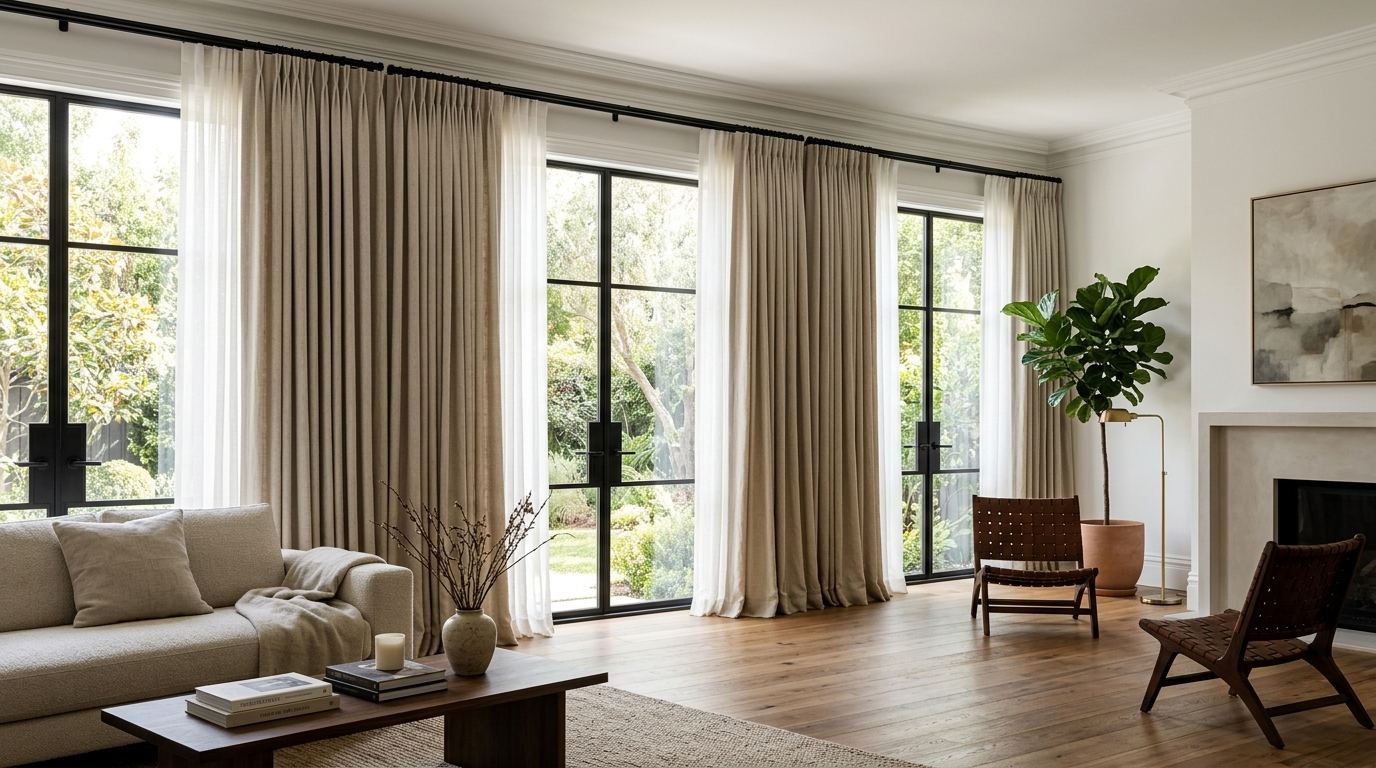
Window treatments are the framed eyelids of residential architecture. In living room interior design, custom curtain and drapery selection plays a dual role—delivering functional daylight control, privacy, and thermal insulation while introducing soft, flowing fabric volume that frames views and connects wall surfaces to floor planes. Throughout my fifteen years as an interior architect and textile specialist, I have seen improper curtain selection flatten beautiful rooms, while high-hung custom drapes made modest spaces feel like soaring luxury penthouses.
In 2026, living room drapery design has evolved beyond basic utility blinds or heavy formal drapes. Modern window trends celebrate natural tactile fabrics—slubbed Belgian linen, semi-sheer cotton weaves, textured wool blends, and rich matte velvets. By mastering professional hanging rules, selecting high-density fabrics, and pairing sleek drapery hardware, you can transform your windows into breathtaking architectural features.
In this definitive 2026 drapery guide, we will explore key curtain trends, precise hanging rules of thumb (rod heights, stack-back widths, hem lengths), fabric selection blueprints, drapery pleat styles, hardware finishes, and light-filtering strategies that elevate your living room window treatments.
1. The High and Wide Hanging Rule for Ceiling Height Illusion
The single most important rule in professional drapery design is hanging curtain rods high and wide. Mounting curtain rods directly above the window frame chops up your wall visually, making ceilings appear low and windows look small.
Install your curtain rod high—just 2 to 3 inches below the ceiling line or crown molding—and extend the rod 6 to 12 inches wider than the window frame on both sides. Choose floor-length 95-inch or 108-inch drapery panels that touch the floor smoothly.
When curtains are drawn open, the drapery panels rest against the wall fabric stack rather than blocking window glass. This simple hanging technique floods your room with natural daylight while drawing the eye upward, making standard eight-foot ceilings feel soaring.
2. Tactile Natural Fabrics: Belgian Linen and Woven Sheers
Synthetic polyester shiny drapes are officially out of style. In 2026, window treatments prioritize natural tactile fabrics that filter daylight into soft, diffused golden tones.
Belgian Linen Drapes: Pure linen features natural slubs and breathable weight, draping in crisp vertical folds. Linen adds relaxed organic sophistication to modern, coastal, and bohemian interiors. If you love natural fiber textures, explore our feature on boho living room inspiration to see how linen drapes pair with jute rugs and rattan.
Semi-Sheer Cotton Weaves: Semi-sheer fabrics offer daytime privacy while allowing gentle sunlight to pass through. When soft breezes blow, sheer drapes introduce gentle, rhythmic movement to your living room environment.
3. Deep Matte Velvet Drapes for Winter Cozy and Thermal Control
For colder climates or formal living lounges, heavy matte velvet drapes offer luxurious visual depth and exceptional thermal insulation. Velvet absorbs sound reflections while blocking cold window drafts during winter months.
Choose rich earthy velvet tones—such as terracotta, moss green, deep navy, or warm caramel. Ensure velvet panels feature a matte, low-sheen finish rather than shiny synthetic gloss.
Pair heavy velvet drapes with warm 2700K lamp lighting and plush wool rugs. If you are decorating your living space for cold seasons, read our complete guide on cozy living room ideas for winter for winter drapery and fireplace styling.
4. Drapery Hem Length Styles: Kissing vs. Puddling vs. Floating
How curtain bottoms interact with your floor dictates the formal tone and maintenance ease of your living room window treatments.
The Kissing Hem (Designer Standard): Curtains touch the floor surface precisely, with a 1/4-inch brush. This clean hem style looks tailored, allows easy vacuuming, and represents the premier choice for modern interiors.
The Puddling Hem (Formal Luxury): Curtains extend 1 to 3 inches longer than floor length, pooling fabric across the floor surface. Puddling adds romantic European drama, but requires frequent dusting in high-traffic rooms.
The Floating Hem (Avoid in Living Rooms): Curtains hang 1 to 3 inches above the floor. Floating hems look short and unfinished, resembling ill-fitting trousers. Keep curtains touching or puddling the floor.
5. Drapery Pleat Styles: Pinch Pleat vs. Ripplefold vs. Grommet
The top heading pleat style dictates how drapery fabric hangs and folds along the curtain rod.
Euro Pinch Pleat (Tailored Elegance): Pinched at the top edge, creating structured, graceful vertical folds that fall straight down. Ideal for linen and wool drapes in modern and traditional rooms.
Ripplefold Pleat (Sleek Modernism): Uses a continuous S-curve track system to create uniform, flowing wave folds. Ripplefold drapes fold down into compact side stacks, making them ideal for wide sliding glass doors.
Grommet Top (Out of Style): Metal rings stamped through fabric. Grommet headings look casual and budget-grade, and are being replaced by clean pinch pleats and hidden tab headings.
6. Drapery Hardware Finishes: Unlacquered Brass, Black Iron, and Lucite
Curtain rods, rings, and wall brackets act like jewelry for your windows. Choosing slender, high-quality drapery hardware elevates your window treatment design.
Select thin 1-inch to 1.25-inch diameter metal rods in matte black iron, unlacquered brass, or aged bronze. Sleek lucite (acrylic) rods with brass end brackets provide modern glam elegance in boutique living rooms.
Ensure drapery rings match rod finishes exactly, and use drapery pins hooked into ring loops for smooth, whisper-quiet gliding across the rod.
7. Double Curtain Rod Systems for Sheer and Blackout Layering
Installing a double curtain rod system offers ultimate flexibility over daylight control and evening privacy.
Mount a thin inner rod holding semi-sheer linen drapes for daytime glare reduction, and a heavy outer rod holding lined blackout or velvet drapes. During daytime hours, open heavy outer drapes while leaving sheers drawn to flood the room with soft light.
During evening hours, draw heavy outer drapes closed to seal out dark windows, absorb TV sound echoes, and create an intimate, cozy sanctuary.
8. Motorized Smart Drapery Tracks and Home Automation
Integrating motorized smart drapery tracks (such as Somfy or Lutron Serena) adds quiet modern luxury and energy efficiency to living rooms.
Motorized tracks operate smoothly via wall keypads, smartphone apps, or automated schedules. Program drapes to open automatically at sunrise to illuminate your home with natural daylight, and close at sunset for evening privacy.
Motorized drapery tracks are particularly valuable for tall 10 to 12-foot windows or double-height living rooms where manual curtain pulling is difficult.
9. Curtain Color Coordination with Wall Paint and Trim
Curtain colors should harmonize with your room’s overall paint scheme, acting either as a seamless extension of vertical walls or as a subtle textured accent.
For small living rooms, choose drapery fabric that matches your wall paint color closely (e.g., cream linen drapes against cream walls). Color-matching drapes and walls erases visual breaks, making small floor plans feel open and expansive. If you are decorating compact spaces, explore our list of small living room decorating tips for curtain and paint tricks.
In spacious living rooms with neutral walls, introduce secondary accent colors through drapery—such as terracotta, olive green, or soft indigo—to frame window views cleanly.
10. French Return Curtain Rods for Light Blocking
French return curtain rods curve 90 degrees back to touch the wall directly on both sides, eliminating light gaps between the wall and curtain edge.
French return rods allow drapery panels to wrap all the way to the drywall surface, blocking side light leaks and cold drafts completely. Their clean curved metal silhouette looks elegant and architectural.
11. Drapery Lining Options: Thermal vs. Light-Filtering vs. Privacy
Adding proper inner lining to custom drapes protects face fabrics from sun bleaching, adds luxurious weight, and improves energy efficiency.
Privacy Lining (Standard): Lightweight cotton lining that protects linen or silk face fabrics from UV degradation while allowing daylight filtering.
Blackout Lining: Dense opaque lining that blocks 100% of light penetration, ideal for media living rooms where preventing screen glare is essential.
Thermal Interlining: Heavy flannel layer sandwiched between face fabric and lining that provides high thermal insulation against winter cold and summer heat.
12. Window Framing with Woven Roman Shades and Layered Drapes
Combining woven natural Roman shades with floor-length drapery panels creates a rich, textured window treatment layered with depth.
Mount a woven bamboo, seagrass, or linen Roman shade inside the window jamb, and frame the window sides with floor-length linen curtain panels. The contrast between structured woven shades and soft flowing drapes delivers high-end designer appeal.
13. Bay Window and Corner Window Drapery Blueprints
Drapery layout for angled bay windows or 90-degree corner windows requires specialized elbows and continuous rod systems.
Use hinged drapery rod corner connectors that articulate to match exact bay window angles. Install individual drapery panels on outer window corners, leaving central glass open for unobstructed views.
14. Caring for Linen and Velvet Living Room Drapes
Protect your drapery investment with simple maintenance protocols:
- Vacuum Regularly: Vacuum drapery panels monthly using a soft brush attachment, working from top to bottom to remove accumulated dust.
- Steam Wrinkles: Use a handheld garment steamer to remove packing folds and wrinkles after hanging new linen or velvet drapes.
- Professional Dry Cleaning: Dry clean lined velvet and wool drapes every 3 to 5 years to preserve fabric weight and color vibrancy.
Drapery Measurement & Stack-Back Cheat Sheet
- Rod Height: Mount rods 2 to 3 inches below ceiling molding or 8 to 12 inches above window frames.
- Rod Width Extension: Extend rods 6 to 12 inches beyond window casing on both sides for fabric stack-back.
- Drapery Fullness Ratio: Purchase curtain panels with a total width equal to 2x to 2.5x the width of your window opening.
- Hem Length: Ensure curtain bottoms brush (kiss) the floor surface precisely.
Real-World Case Study: Custom Drapery Makeover for High Ceiling Room
To demonstrate the practical impact of proper drapery hanging, consider a recent project involving a living room in Boston with 9-foot ceilings. The homeowners had hung 63-inch curtains directly above the window frames, leaving cold light gaps and making the room feel squat.
Our design team installed thin black iron French return curtain rods 2 inches below the ceiling molding, extending rods 10 inches wider than window frames on both sides. We hung floor-length 108-inch Belgian linen drapes featuring custom Euro pinch pleats.
The transformation was dramatic: when opened, the drapes rested against drywalls to maximize daylight. The high vertical linen folds drew the eye upward, making the 9-foot ceilings feel soaring while insulating the room against winter drafts.
Drapery Fabric Selection & Hanging Rules Summary
- Belgian Linen: Breathable slubbed weave for organic modern rooms. Explore styling in our boho living room inspiration guide.
- Matte Velvet: Heavy insulating fabric for winter warmth. Read our guide on cozy living room ideas for winter.
- High Hanging Rule: Mount rods 2-3 inches below ceiling molding to raise perceived height. See our how to make your living room look expensive guide.
- Rod Extension: Extend rods 6-12 inches beyond window frames for stack-back.
- Hem Length: Ensure curtain bottoms kiss the floor surface precisely.
- Small Room Drapery: Color-match drapes to wall paint. Check our small living room decorating tips.
Drapery Fullness Ratios and Panel Width Calculations
Calculating proper drapery fabric volume is essential for full, luxurious vertical folds. Multiply your window opening width by 2x to 2.5x to determine total required curtain panel width. Undersized drapes look thin and cheap when drawn closed.
Curtain Rod Wall Anchor and Stud Mounting Protocols
Heavy linen and velvet drapes exert significant downward leverage on wall brackets. Always anchor drapery brackets into solid wooden studs or use heavy-duty toggle bolt drywall anchors rated for at least 50 lbs to prevent brackets from pulling out of drywalls.
Drapery Fullness Calculations and Fabric Selection
Calculating proper drapery fabric volume is essential for full, luxurious vertical folds. Multiply your window opening width by 2x to 2.5x to determine total required curtain panel width. Undersized drapes look thin and cheap when drawn closed.
Curtain Rod Anchor Protocols and Heavy Fabric Weight Support
Heavy linen and velvet drapes exert significant downward leverage on wall brackets. Always anchor drapery brackets into solid wooden studs or use heavy-duty toggle bolt drywall anchors rated for at least 50 lbs to prevent brackets from pulling out of drywalls.
Drapery Care, Vacuuming, and Steaming Maintenance
Vacuum drapery panels monthly using a soft brush attachment, working from top to bottom to remove dust. Use a handheld garment steamer to remove packing folds and wrinkles after hanging new linen or velvet drapes.
Drapery Fabric Selection and Pleat Style Blueprint
Selecting custom curtain fabrics dictates room mood and light-filtering functionality. 100% Belgian linen drapes filter daylight into soft golden tones while draping in crisp vertical folds, ideal for organic modern rooms. Heavy matte velvet drapes absorb sound reflections and seal out winter drafts, delivering cozy luxury for formal living lounges.
Living Room Drapery Hanging & Hardware Summary
- High Hanging Rule: Mount rods 2-3 inches below ceiling molding. See our how to make your living room look expensive guide.
- Rod Extension: Extend rods 6-12 inches beyond window frames for fabric stack-back.
- Hem Length: Ensure curtain bottoms kiss the floor surface precisely.
- Small Room Drapery: Color-match drapes to wall paint. Check our small living room decorating tips guide.
Step-by-Step Drapery Measurement and Installation Guide
Measuring and hanging custom living room drapes accurately prevents costly fabric errors and ensures crisp vertical folds. Measure wall width from outer window casing edges, extending your curtain rod 6 to 12 inches wider than the window frame on both sides to allow fabric stack-back.
Mount curtain rod brackets 2 to 3 inches below ceiling molding or crown trim. Measure drapery length from the top of curtain rings down to the floor, choosing 95-inch or 108-inch floor-length panels that touch (kiss) the floor surface precisely. Use a handheld garment steamer to remove packing folds from linen or velvet panels after hanging.
Drapery Hardware Selection and Ring Attachment Blueprint
Selecting slender, high-quality curtain hardware elevates your window treatments. Choose 1-inch diameter metal rods in matte black iron, unlacquered brass, or aged bronze. Ensure curtain rings match rod finishes exactly, attaching drapery pins into ring loops for smooth, whisper-quiet gliding across rods.
Install French return curtain rods that curve 90 degrees back to meet walls directly. French return rods eliminate light gaps and cold drafts around curtain sides, creating a clean architectural finish.
Living Room Curtain and Drapery Hanging Blueprint
Mastering professional drapery hanging rules elevates window treatments instantly. Install thin curtain rods high near ceiling molding (2 to 3 inches below crown trim), extending rods 6 to 12 inches wider than window frames on both sides for fabric stack-back. Choose floor-length 95-inch or 108-inch Belgian linen or velvet panels that touch (kiss) the floor surface precisely, drawing the eye upward to make ceilings feel soaring.
Living Room Curtain and Drapery Trends Summary
Mastering professional drapery hanging rules elevates window treatments instantly. Install thin curtain rods high near ceiling molding (2 to 3 inches below crown trim), extending rods 6 to 12 inches wider than window frames on both sides for fabric stack-back. Choose floor-length 95-inch or 108-inch Belgian linen or velvet panels that touch (kiss) the floor surface precisely, drawing the eye upward to make ceilings feel soaring.
Investing in high-quality, properly scaled living room drapery is one of the most transformative choices in interior architecture. When hung high near ceiling molding and proportioned with generous fullness, custom Belgian linen or velvet drapes frame window views, insulate room temperature, and elevate your entire living space into a soaring pent-house sanctuary.
Whether you choose crisp Belgian linen for organic modern spaces or rich matte velvet for winter warmth, properly hung floor-length drapes establish quiet luxury across your window perimeters. Follow these drapery hanging rules to maximize natural daylight and transform your home’s architectural character.
Investing in custom window drapes elevates daily comfort and home energy efficiency. With proper hanging rod placements and high-density linen or velvet fabrics, your window treatments become a timeless architectural anchor across your living room layout.
Quality window treatments reflect interior architectural care. Investing in high-density linen and velvet fabrics ensures long-lasting beauty and thermal performance for your home.
Frequently Asked Questions (FAQ)
1. How high above a window should curtain rods be hung?
Hang curtain rods high—just 2 to 3 inches below the ceiling line or crown molding (typically 8 to 12 inches above the window frame). High rods draw the eye upward, making ceilings feel soaring.
2. How far beyond the window frame should curtain rods extend?
Extend curtain rods 6 to 12 inches wider than the window frame on both sides. When drapes are opened, fabric panels rest against drywalls rather than blocking daylight glass.
3. Should living room curtains touch the floor?
Yes. Curtains should touch (kiss) the floor surface precisely or pool 1 to 2 inches on the floor. Avoid short floating curtains that hang inches above the floor.
4. What fabric is best for modern living room curtains?
100% Belgian linen and textured semi-sheer cotton blends are top choices for modern interiors. They filter sunlight into a warm golden glow while draping in crisp vertical folds.
5. How wide should curtain panels be for a window?
Combined curtain panel width should equal 2x to 2.5x the width of your window frame to ensure luxurious, full fabric folds when closed.
6. What is a French return curtain rod?
A French return rod curves 90 degrees back to meet the wall directly on both sides, eliminating light gaps and cold drafts around curtain edges.
7. Can I layer Roman shades with curtains?
Yes. Pairing inside-mounted woven bamboo or linen Roman shades with floor-length curtain panels creates a rich, multi-layered window treatment with high designer appeal.
8. Are grommet top curtains still stylish?
No. Metal grommet ring headings look casual and budget-grade. Modern trends favor tailored Euro pinch pleats, ripplefold wave tracks, and hidden tab headings.
9. How do I remove wrinkles from new linen curtains after hanging?
Use a handheld garment steamer to steam vertical fabric folds from top to bottom. The weight of the linen combined with steam relaxes packing creases effortlessly.
10. Why is drapery lining important?
Drapery lining protects face fabrics from UV sun bleaching, adds luxurious weight for crisp vertical hangs, and improves home energy efficiency and thermal control.