
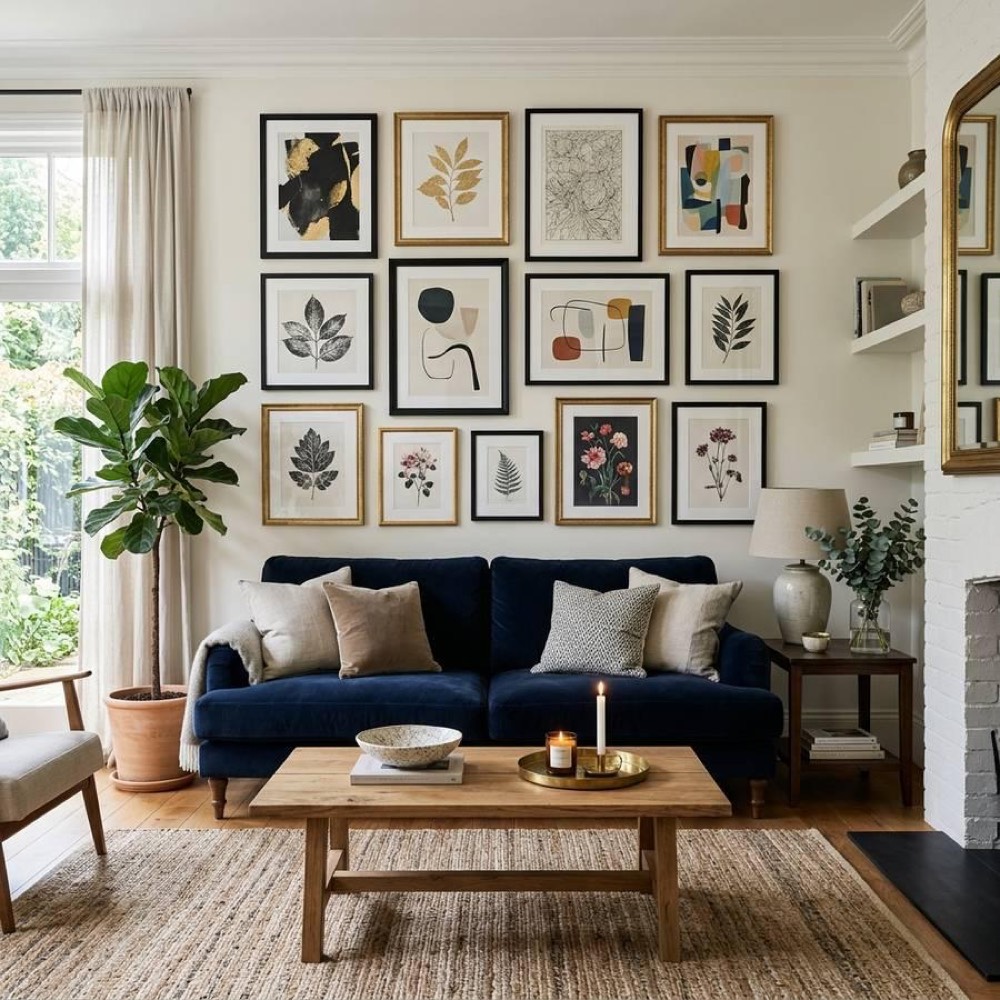
Few decorative installations alter the soul and personality of a living room as dramatically as a well-curated gallery wall. An empty wall above a main couch or sideboard is a blank canvas waiting to tell your family’s story. Throughout my fifteen years as an interior architect and spatial stylist, I have seen gallery walls transform sterile, plain rooms into warm, curated homes filled with visual intrigue, personal history, and artistic balance.
Hanging a gallery wall can feel daunting. Many homeowners worry about making dozens of unnecessary nail holes in their drywall, choosing mismatched frames, or creating a chaotic layout that feels cluttered rather than intentional. Achieving a museum-quality gallery wall requires spatial planning, proportion awareness, and a clear understanding of layout geometry before a single nail is driven into the wall.
In this comprehensive guide, we will unpack fourteen creative gallery wall ideas and layout templates designed for modern living rooms. We will cover symmetrical grid installations, organic salon-style arrangements, picture ledge layouts, frame selection, artwork matting, and step-by-step hanging guidelines that guarantee flawless execution on your first attempt.
1. The Classic Symmetrical Grid Layout for Architectural Cleanliness
For modern, Scandinavian, or minimalist living rooms, the symmetrical grid layout offers unmatched architectural order and clean visual harmony. A grid gallery wall consists of identical frame sizes, identical mat widths, and identical frame finishes arranged in precise rows and columns—typically a 2×3 grid of six frames or a 3×3 grid of nine frames.
To execute a grid wall flawlessly, precise measurement is non-negotiable. Spacing between every frame must remain exactly equal—typically two to three inches apart. Use thin black or natural oak frames (such as IKEA’s Ribba series or Pottery Barn’s Gallery Frames) with wide white mat boards to elevate small 8×10 prints into substantial framed features.
Grid layouts work exceptionally well with cohesive series artwork—such as architectural black-and-white photography, botanical sketches, or minimal geometric prints. Position the grid above your main sofa or media console. If you are shopping for your main seating piece to pair with a grid installation, review our comprehensive sectional sofa buying guide to ensure your sofa width aligns proportionally with your artwork layout width.
2. The Organic Salon-Style Layout for Eclectic Personality
If you prefer an artistic, collected-over-time aesthetic, the organic salon-style gallery wall is your ideal choice. Originating in 17th-century French art salons, this approach mixes different frame sizes, frame materials (wood, brass, painted metal), mat styles, and artistic mediums across a free-flowing, asymmetrical composition.
While salon layouts appear casual, the most successful installations follow a hidden structural logic. Start by selecting one large central anchor piece of artwork and position it slightly off-center. Build outward from this anchor piece, pairing larger frames with smaller frames to maintain visual weight balance across the entire cluster.
Mix black-and-white photography with oil paintings, plaster relief art, sketch drawings, and framed vintage textiles. Keep frame spacing consistent at roughly two to three inches between adjacent frames, regardless of frame size differences. This consistent spacing unifies diverse artwork into a cohesive, artistic installation.
3. Floating Picture Ledge Display for Flexible Artwork Rotation
If you love changing out artwork seasonally or dislike putting permanent nail holes into your walls, picture ledges offer the ultimate flexible gallery solution. Installing two or three long shallow wooden ledges (in natural oak or black walnut) allows you to layer framed art, books, and ceramic objects casually against your living room wall.
The magic of a picture ledge lies in the art of layering. Overlap frames of varying heights and widths, placing larger pieces at the back and smaller frames in front. Mix portrait and landscape orientations to create rhythmic height variation across the ledge.
Picture ledges pair beautifully with warm neutral wall colors. If you are looking for soft paint backdrops that make floating ledge displays pop, read our expert analysis of the best living room paint colors to select luminous paint formulas that complement natural wood ledges.
4. Monochrome Black-and-White Photography Wall
A black-and-white photography gallery wall brings timeless drama, historical depth, and sophisticated contrast to modern living spaces. Removing color focuses the eye on architectural shapes, natural textures, lighting contrast, and emotional expression within the photographs.
Collect high-contrast family portraits, architectural travel photos, or dramatic landscape shots. Use thin black aluminum or wooden frames with extra-wide bright white mats. The contrast between deep black frames, white mats, and grayscale photography creates a clean visual cadence across your wall.
A monochrome photo wall integrates seamlessly into warm neutral environments. You can see how high-contrast black-and-white framing grounds tactile linen, raw stone, and bouclé seating in our guide on organic modern living room decor ideas.
5. Oversized Triptych or Diptych Installation
Sometimes three large statement frames create a more powerful modern impact than ten small frames. A triptych layout consists of three large identical frames hung side-by-side across a wide wall area above a sofa or sideboard.
Choose three matching 24×36 inch or 30×40 inch frames featuring a single continuous landscape photograph split across three panels, or three complementary abstract minimalist brushstroke art prints. Hang the three panels precisely two to three inches apart.
A triptych installation provides generous visual scale that fills a tall living room wall without feeling busy or cluttered. It is an ideal artwork solution for homeowners who want clean modern minimalism with maximum visual authority.
6. Floor-to-Ceiling Vertical Gallery Nook
Do not limit your gallery wall to the space directly above your sofa. Narrow, awkward wall areas—such as the space between two windows, an entry alcove, or the corner next to a fireplace—can be transformed into dramatic vertical gallery nooks.
Hang four to six small matching frames vertically from just above the baseboard all the way up near the ceiling line. This floor-to-ceiling vertical arrangement draws the eye upward, making standard eight-foot ceilings feel significantly taller.
Vertical gallery nooks are ideal for displaying small botanical line drawings, architectural sketches, or intimate family polaroid collections. They turn previously wasted wall space into an intentional architectural feature.
7. Mix-and-Match Wooden Frame Gallery
If you want a warm, organic gallery wall without the strictness of a black-frame grid, curate a collection of natural wood frames in varying wood species and grain tones. Combine white oak, natural walnut, bleached maple, and reclaimed wood frames.
Although the wood species differ, keep frame profile widths similar (thin 0.75-inch or 1-inch profiles) and use identical off-white mats across all artwork. The subtle variations in wood grain introduce organic warmth that pairs naturally with green houseplants and linen upholstery.
This mix-and-match wood approach is particularly effective in budget-friendly makeovers where frames are sourced over time from different craft stores and thrift shops. For more budget decorating ideas, explore our feature on budget modern living room design ideas to discover how strategic framing elevates affordable art prints.
8. Corner Wrap-Around Gallery Installation
Break away from traditional flat-wall hanging by extending your gallery installation around a 90-degree room corner. A wrap-around gallery wall connects two adjacent walls, softening sharp room transitions and making open floor plans feel integrated and cozy.
Position your artwork so that horizontal line spacing continues seamlessly from the left wall onto the right wall across the corner junction. Maintain the exact same frame gap (two to three inches) as artwork turns the corner.
Wrap-around gallery walls work exceptionally well around a cozy corner reading nook, framing a lounge chair and floor lamp with continuous visual warmth and artistic texture. If you want to explore more wall styling blueprints across our site, visit our master repository of living room design guides for additional inspiration.
9. Linear Horizontal Stringer Layout Above Low Furniture
A linear horizontal gallery layout consists of a single long row of matching frames aligned along a strict center baseline above a long sideboard, low media credenza, or long sofa.
Select four to six identical square or rectangular frames and hang them so their horizontal midpoints sit on a perfectly level chalk line. Keep spacing between frames tight at two inches.
This long horizontal arrangement reinforces sleek linear architecture, drawing the eye across the room and making narrow living spaces appear wider and more expansive.
10. Architectural Shadowbox and 3D Object Gallery
Gallery walls do not have to consist solely of flat paper prints. Integrating three-dimensional objects into your arrangement introduces rich tactile depth and authentic sculptural texture.
Combine framed art prints with deep shadowbox frames containing shallow antique baskets, hand-carved wooden spoons, dried botanical specimens, textile fragments, or small ceramic wall pocket vases filled with fresh greenery.
Interspersing 3D objects among flat frames breaks up glass reflections, catches ambient lamp light, and gives your gallery wall the authentic feel of a curated museum exhibit.
11. Asymmetrical Off-Center Television Surround
In many modern living rooms, the television dominates the main wall, making traditional artwork placement tricky. An asymmetrical gallery wall built around your TV incorporates the screen into the overall art composition so it does not look like a stark black rectangle on an empty wall.
Arrange frames around the top and sides of the television, varying frame sizes and orientations. Use black frames for several of the artwork pieces so the black TV screen blends naturally into the surrounding art cluster when turned off.
If you use an artwork-display TV like Samsung’s The Frame, set the digital screen to display artwork that matches the color palette and matting of your surrounding physical frames for a seamless high-tech gallery integration.
12. Vintage Brass and Gilded Frame Gallery
For transitional, traditional, or French-inspired modern living rooms, a curated gallery of vintage brass and ornate gilded frames introduces romantic warmth, antique charm, and reflected lamp light.
Collect vintage gold-leaf, aged brass, and ornate metal frames from thrift shops, antique markets, and estate sales. Pair them with oil portrait paintings, botanical illustrations, and classic landscape sketches.
Hang the frames in an organic cluster above a velvet sofa or marble-topped console table. The warm metallic frames catch evening lamp light, adding a rich glowing polish to your living room.
13. Archival Family Heritage Photo Wall
Transform your living room into a meaningful family sanctuary by dedicating a gallery wall to archival family photographs spanning multiple generations. A heritage photo wall honors family history while serving as a captivating focal point for guests.
Scan old black-and-white or sepia-toned family photos and print them in uniform sizes (such as 8×10 or 11×14 inches). Frame them in matching dark walnut or black wood frames with wide off-white mats.
Arrange the photos chronologically or in a balanced symmetrical grid. The uniform printing and framing elevate personal snapshots into a museum-worthy family archive that sparks warm conversation daily.
14. Floor-Priced Casual Leaner Wall
For an ultra-relaxed, editorial studio atmosphere, skip wall hanging entirely and lean oversized framed art directly against the floor and low furniture surfaces.
Place one or two extra-large 30×40 inch framed art pieces directly on the floor, leaning slightly back against your main accent wall. Layer smaller framed prints in front of the large base frames at an angle.
This casual leaning approach creates a chic, artist’s-loft vibe that feels effortless, unpretentious, and easily adjustable whenever inspiration strikes.
Real-World Case Study: Designing a Salon Gallery Wall for a Modern Loft
In a recent loft renovation project in downtown Seattle, our design team was tasked with styling a dramatic eighteen-foot brick and drywall living room wall. The client was an avid art collector who owned an eclectic mix of vintage oil portraits, architectural travel photos, abstract watercolor sketches, and brass wall sculptures.
Rather than arranging a rigid symmetrical grid, we designed an organic salon-style gallery wall anchored around a large 30×40-inch oil landscape painting hung slightly off-center. We surrounded the anchor piece with medium and small frames, maintaining a strict two-inch spacing gap between adjacent frames regardless of frame size differences.
To unify the diverse collection, we used custom white oak frames, thin matte black aluminum frames, and aged brass shadowboxes. The resulting installation transformed the loft’s main wall into a breathtaking museum-quality feature that anchored the entire double-height living room layout.
Artwork Matting and Proportion Guidelines
Matting protects artwork paper from touching frame glass while providing a clean visual margin that elevates small prints. Follow these designer matting rules:
- Standard Mat Margins: Use a 2-to-3-inch white or off-white mat margin for 8×10 and 11×14 prints.
- Oversized Weighted Bottom Matting: Add an extra half-inch of width to the bottom mat margin. This classic archival framing technique counteracts optical illusion, preventing art from looking like it is sliding down inside the frame.
- Color-Matched Mats: Pair warm cream paper mats with natural wood frames, and bright white mats with black aluminum frames.
Choosing the Right Glass and Framing Materials
The glass and matting materials you select have a huge impact on your gallery wall’s longevity and clarity under room lighting. Standard window glass reflects heavy glare from lamps and windows, obscuring artwork details during daytime hours.
UV-Protective Non-Glare Glass: Invest in museum-grade or non-glare acrylic (such as Tru Vue Museum Glass) for valuable prints or rooms with heavy sunlight. Non-glare glass eliminates harsh reflections while protecting paper prints from UV fading.
Acid-Free Archival Mat Board: Always use 100% acid-free cotton rag mat boards. Cheap paper mats contain lignin, which yellow over time and leave permanent brown burn marks on artwork edges.
Step-by-Step Guide to Hanging a Flawless Gallery Wall
Avoid unnecessary wall holes by following this foolproof four-step designer installation process:
- Map Your Layout on the Floor: Clear floor space in front of your wall and arrange your frames on the floor. Experiment with different frame arrangements and spacing until you find the perfect composition.
- Create Paper Kraft Templates: Trace each frame onto butcher paper or kraft paper and cut out the paper templates. Mark the exact nail hook position on each paper template.
- Tape Templates to the Wall: Use painter’s tape to stick the paper templates onto your wall. Stand back ten feet to check overall height, balance, and alignment with your furniture. Adjust tape positions easily.
- Drive Nails and Hang Frames: Hammer nails directly through the marked hook points on your paper templates. Tear away the paper templates, hang your framed art, and use a small spirit level to ensure every frame hangs perfectly straight.
Gallery Wall Height and Spacing Cheat Sheet
- Height Above Sofa: The bottom edge of the lowest gallery frames should hang 6 to 10 inches above the top of your sofa back.
- Spacing Between Frames: Keep spacing consistent at 2 to 3 inches between adjacent frames for small layouts, and 3 to 4 inches for extra-large frames.
- Center Line Height: If hanging a gallery wall on an open wall without furniture below, the center point of the overall layout should sit 57 to 60 inches from the floor (eye level).
- Overall Width Proportions: The total width of your gallery wall cluster should span approximately two-thirds to three-quarters of the width of the furniture piece below it.
Art Curation Strategies: Sourcing Affordable Original Prints and Vintage Finds
Building an impressive gallery wall does not require spending thousands at high-end art galleries. Experienced interior stylists use creative sourcing strategies to assemble diverse, high-impact artwork collections on a modest budget.
Public Domain Art Archives: Museums such as the Metropolitan Museum of Art, the National Gallery of Art, and the Art Institute of Chicago offer free high-resolution downloads of classic paintings, vintage sketches, and botanical illustrations. You can download these public domain files and print them at your local photo shop for a couple of dollars.
Estate Sales and Flea Markets: Local estate sales and vintage markets are goldmines for original oil paintings, antique wood-cut prints, and unique hand-carved frames. The natural patina and historical character of thrifted art pieces add authentic charm that mass-produced store prints cannot duplicate.
Personal Travel Photography: Transform your personal vacation and travel photographs into gallery art. Convert digital photos to high-contrast black-and-white or subtle sepia tones, print them in 8×10 or 11×14 sizes, and frame them with wide white mats for a deeply personal exhibition.
Gallery Wall Maintenance and Cleaning Protocol
Keep your gallery wall looking pristine for years with simple maintenance steps:
- Dust Frames Bi-Weekly: Use a soft microfiber duster or feather duster to clean frame tops and glass surfaces without disturbing frame alignment.
- Clean Glass with Microfiber: Spray glass cleaner directly onto a clean microfiber cloth—never directly onto frame glass—to prevent liquid from seeping under frame edges and damaging paper mats.
- Check Rubber Bumpers Annually: Ensure self-adhesive rubber bumpers remain attached to bottom frame corners to protect wall paint and prevent frames from shifting over time.
Frequently Asked Questions (FAQ)
1. How high above a sofa should a gallery wall be hung?
The bottom row of frames should hang 6 to 10 inches above the top of your sofa back. Hanging artwork higher creates an awkward visual gap and disconnects the artwork from your seating area.
2. Should gallery wall frames match or be different?
Both approaches work. Matching frames in a symmetrical grid layout create a clean, modern, architectural look. Mixing different frame materials (wood, brass, black metal) in an organic salon layout delivers a cozy, eclectic, collected-over-time aesthetic.
3. How far apart should frames be spaced on a gallery wall?
Keep spacing consistent at 2 to 3 inches between frames for standard 8×10 and 11×14 frames. For extra-large frames (24×36 inches or larger), increase spacing to 3 to 4 inches so pieces have room to breathe.
4. What is the best way to hang a gallery wall without damaging drywall?
Use heavy-duty picture hanging Command strips for lightweight frames up to 10-15 pounds. For heavier solid wood or glass-front frames, use slim brass picture hooks with thin nails that leave minimal pinholes in drywall.
5. How do I choose artwork for a gallery wall?
Choose artwork that shares a unifying element—such as a consistent color palette, subject theme (nature, architecture, abstract), or artistic medium (black-and-white photography). Mixing different frame sizes while maintaining color harmony creates balanced visual interest.
6. What size mats should I use for gallery frames?
Use wide mat boards (2.5 to 4 inches of mat margin around the artwork). Wide mats give artwork visual importance, reduce glass glare, and elevate small prints into substantial gallery displays.
7. How do I prevent gallery wall frames from hanging crooked?
Place two small self-adhesive rubber bumper pads on the bottom back corners of every frame. The rubber bumpers grip the wall, prevent sliding, protect paint, and keep frames hanging straight permanently.
8. Can I include a television in a gallery wall layout?
Yes. Arrange frames around the top and sides of your TV asynchronously. Using black frames helps the TV screen blend into the art composition when turned off, minimizing its visual dominance.
9. Should a gallery wall be centered on the wall or on the sofa?
Always center your gallery wall layout on the primary furniture piece below it (such as your sofa or credenza), rather than centering it on the overall wall length. Aligning art with furniture creates visual balance.
10. What is a salon-style gallery wall?
A salon-style gallery wall is an organic, asymmetrical arrangement of varying frame sizes, art mediums, and frame finishes grouped around a central anchor piece. It mimics historical 17th-century European art exhibition layouts.