
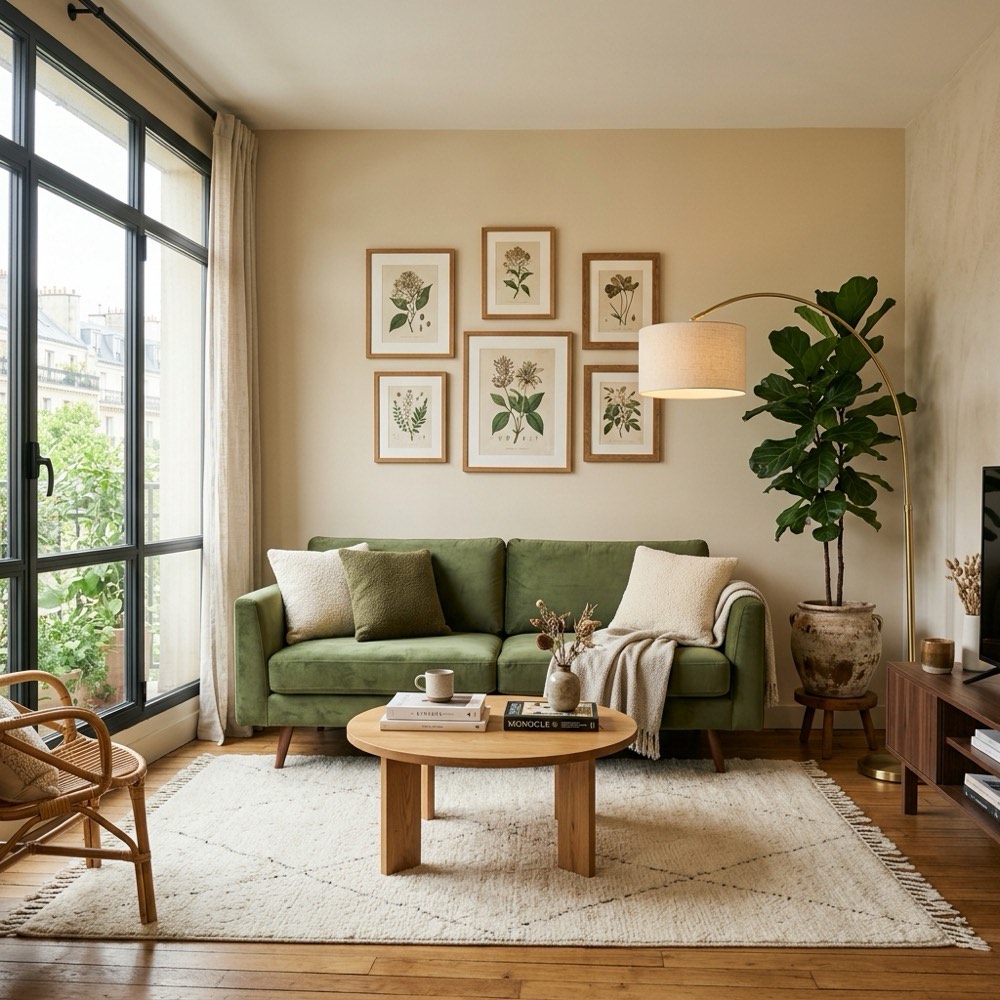
A sectional sofa is easily the most important furniture investment you will make for your living room. As the physical and visual anchor of your main seating zone, your sectional defines how your family relaxes, entertains guests, watches movies, and experiences daily home life. Throughout my fifteen years as an interior architect and spatial planner, I have guided hundreds of clients through the process of selecting the perfect sectional sofa for their homes.
Buying a sectional sofa involves far more than simply picking a fabric color you like on a showroom floor. A sectional is a major spatial commitment that must fit your room’s precise floor plan dimensions, accommodate foot traffic pathways, survive years of daily wear, and complement your overall architectural style. Making a mistake in seat depth, frame construction, or fabric durability can lead to years of discomfort and costly replacement.
In this ultimate designer buying guide, we will break down every critical decision point necessary to select your ideal sectional sofa. We will cover L-shape versus U-shape configurations, chaise orientation, internal frame joinery, cushion fill ratios, stain-resistant performance fabrics, precise room measuring techniques, and styling strategies that ensure your investment delivers luxury comfort for a decade or more.
1. Choose the Right Sectional Configuration for Your Space
Sectional sofas come in several primary architectural configurations, each designed to serve specific room layouts and lifestyle needs. Selecting the wrong configuration can block doorways, pinch walkway traffic, or leave your living room feeling awkwardly cramped.
The **L-Shape Sectional** is the most popular and versatile configuration. It features two perpendicular seating arms, forming a right angle that tucks neatly into a room corner or floats open-concept style to define the boundary between a living room and dining zone. L-shape sectionals work exceptionally well in small-to-medium living spaces.
The **U-Shape Sectional** features a central sofa section flanked by two extending arms or chaises on both ends. This configuration creates an intimate conversational pit ideal for large families and movie nights, but requires a spacious, expansive living room to avoid overwhelming the floor plan.
The **Modular Sectional** consists of individual, movable seating units (corner pieces, armless seats, and ottomans) that clip together. Modular designs—such as those from Lovesac, Article, or CB2—offer ultimate flexibility, allowing you to reconfigure your sofa layout whenever you move to a new home or host a large party.
2. Determine Left-Facing (RAF) vs. Right-Facing (LAF) Orientation
One of the most common sectional purchasing errors occurs when buyers misinterpret chaise orientation terminology. Ordering a left-arm chaise when your layout requires a right-arm chaise can completely ruin your living room flow, blocking entryways or TV sightlines.
To determine orientation correctly, stand directly in front of the sectional, looking at it head-on from the center of the room. A **Left-Arm Facing (LAF)** sectional means the chaise or extending arm is on your **left-hand side** as you face the sofa.
Conversely, a **Right-Arm Facing (RAF)** sectional means the chaise extends on your **right-hand side** as you face the sofa. Always measure your doorway clearances, traffic paths, and fireplace locations before confirming your chaise orientation order.
3. Measure Room Proportions and Traffic Clearances
Never rely on visual estimation when shopping for a sectional sofa. Sectionals appear significantly smaller in high-ceiling furniture showrooms than they do inside residential living rooms. Careful room measurement is essential to prevent purchasing an oversized sofa that overwhelms your layout.
Follow the designer **36-Inch Rule**: maintain at least 30 to 36 inches of clear walking space between the edges of your sectional and surrounding walls, coffee tables, television consoles, or doorways. This clearance ensures comfortable foot traffic flow without awkward squeezing.
Before purchasing, outline the proposed sectional dimensions on your living room floor using blue painter’s tape. Leave the tape down for two days while walking around your room. This simple physical mock-up reveals exactly how the sofa impacts foot traffic and room proportions.
4. Evaluate Internal Frame Construction and Joinery
The longevity, structural integrity, and comfort of a sectional sofa depend entirely on what is inside its frame. Cheap mass-market sectionals use low-grade particle board, plastic joints, and staples that warp and squeak within two years. A high-quality investment sectional relies on solid hardwood construction.
Look for frames constructed from **Kiln-Dried Hardwood**—such as oak, maple, beech, or ash. Kiln-drying removes moisture from the wood, preventing warping, bowing, and splitting over time. Avoid sectionals constructed with soft pine, particle board, or MDF frame components.
Inquire about frame joinery. High-end sofa frames feature **Corner-Blocked, Double-Doweled, and Glued** joints. Heavy wooden corner blocks glued and screwed into stress points reinforce frame strength, ensuring your sectional withstands jumping kids, heavy loads, and years of daily use without sagging.
5. Select Suspension Systems: Eight-Way Hand-Tied vs. Sinuous Springs
Underneath your seat cushions lies the sofa suspension system, which supports cushion weight and provides buoyant comfort. The suspension system works alongside cushion foam to prevent bottoming out when sitting down.
The gold standard of sofa suspension is **Eight-Way Hand-Tied Springs**. Craftspeople hand-tie steel coil springs in eight directions using heavy twine. This traditional suspension distributes weight evenly, offers unmatched floating support, and lasts for decades.
The modern industry standard is **Sinuous Spring Suspension** (S-shaped steel wires running horizontally across the frame). High-gauge (heavy 8-gauge steel) sinuous springs provide excellent, durable support at a more accessible price point. Avoid cheap webbing suspension systems made of woven elastic straps, which stretch out and sag quickly.
6. Understand Cushion Fill Ratios for Desired Seating Feel
Cushion fill dictates whether your sectional feels like a structured, upright formal seat or a soft, sink-in lounge couch. Choose your cushion fill based on how your family uses the living room daily.
For high-traffic family rooms, choose **High-Resiliency Foam Cores Wrapped in Poly-Fiber**. High-resiliency (HR) foam cores (2.0 lb density or higher) maintain their structural shape, offer firm ergonomic support, and bounce back instantly without requiring daily cushion fluffing.
For ultimate sink-in luxury, choose **Foam Cores Wrapped in Down and Feather Blend** (typically 50/50 down and feather surround). Down-wrapped cushions deliver plush cloud-like comfort. However, down cushions require regular fluffing and turning to prevent flattening over time.
7. Select High-Performance Stain-Resistant Fabrics
Upholstery fabric dictates both the visual texture of your sectional and its ability to withstand spills, pet claws, and daily wear. In modern home design, performance fabrics have revolutionized sofa longevity.
If you have children or pets, specify **Performance Fabrics**—such as Crypton, Revolution, or Solution-Dyed Acrylics. These performance fabrics treat individual fibers to repel liquids, resist staining from wine or coffee, and allow easy spot cleaning with mild soap and water.
If you love natural textures, washed Belgian linen and heavy cotton canvas offer beautiful matte elegance. If you want to explore how linen and bouclé sectionals integrate into warm neutral spaces, check out our guide on organic modern living room decor ideas. For high-traffic family layouts, consider high-rub-count performance velvet, which combines luxurious soft pile with incredible scratch and stain resistance.
8. Seat Depth and Height Ergonomics: Tailoring to Your Height
Seat depth—the distance from the front edge of the seat cushion to the front of the back cushion—determines how your body sits on the sofa. Selecting an incorrect seat depth leads to chronic lower back discomfort.
Standard seat depth ranges between **21 and 22 inches**, ideal for average-height individuals who prefer sitting upright with feet planted flat on the floor. Deep seat sectionals range between **23 and 26 inches**, perfect for tall individuals or families who love curling up, lounging, and sleeping on the couch.
Seat height (distance from floor to top of seat cushion) typically measures 18 to 20 inches. Lower seat heights (16-17 inches) provide a relaxed, low-slung modern profile, while higher seats (19-20 inches) offer easier entry and exit for seniors or individuals with hip and knee concerns.
9. Style Sectionals with Proper Rug and Coffee Table Scaling
Once your sectional arrives, pairing it with properly scaled rugs and coffee tables completes the room layout cleanly. An undersized coffee table or small rug will make an expansive sectional look awkward and out of proportion.
Ensure your area rug extends at least 6 to 12 inches beyond the outer edges of your sectional. At minimum, the front legs of all sectional modules must rest comfortably on the rug surface. If you are decorating on a budget, read our step-by-step strategy for budget modern living room design ideas to learn how layering large jute base rugs under smaller wool runners keeps costs low while covering large sectional floor areas.
For coffee tables, choose a table that spans approximately **two-thirds the total length** of the sofa seating section. Maintain 14 to 18 inches of legroom between the coffee table edge and the sectional cushions. Round or oval coffee tables work exceptionally well inside L-shape sectionals, softening sharp right angles and improving traffic flow.
10. Complement Sectionals with Wall Art and Lighting Layers
A large sectional sofa creates a substantial horizontal visual block. To balance this heavy base, decorate the wall area above the sofa back with curated wall art and layered ambient lighting.
Hang a large statement canvas or a curated gallery wall above the sofa. Ensure the overall width of your artwork spans roughly **two-thirds to three-quarters** of the total sofa width, hanging the bottom frames 6 to 10 inches above the sofa back. Explore our pre-measured layout templates in living room gallery wall ideas for hanging guidelines that complement long sectional layouts.
Anchor the corners behind your sectional with a arching metal floor lamp or position slender side tables with ceramic table lamps at both ends. Warm 2700K lighting washes down across sofa cushions, creating an inviting evening sanctuary for your family.
11. Paint Color Selection for Sectional Background Walls
The paint color behind your sectional sets the backdrop contrast for your main upholstery. If your sectional features a light cream or beige performance fabric, painting the wall in a soft warm greige or earthy neutral provides subtle depth that makes the sofa pop.
If your sectional is upholstered in dark charcoal, navy, or rich forest green velvet, light off-white background walls provide crisp modern contrast. Alternatively, color-drenching the room in a rich mid-tone paint creates a cozy, cocooning den. For detailed paint undertone recommendations, explore our guide on the best living room paint colors to find shades that pair seamlessly with your sofa fabric.
Real-World Case Study: Customizing a Sectional for a Multi-Functional Family Room
To demonstrate the spatial impact of proper sectional selection, consider a recent suburban home project in Austin, Texas. The homeowners had a spacious open-concept living room that connected directly to their kitchen and dining space. Their previous arrangement consisted of a small sofa and two mismatched armchairs, which left the center of the room feeling cluttered and fragmented.
Our design team specified a large 10×12-foot modular L-shape sectional upholstered in a high-performance warm greige Crypton fabric. We selected a Right-Arm Facing (RAF) chaise configuration that floated parallel to the kitchen island, establishing a clear visual boundary for the living zone without blocking foot traffic toward the patio doors.
We paired the sectional with a 9×12 natural jute area rug and a 42-inch round oak coffee table. The high-resiliency foam cushions provided durable ergonomic support for daily family use, while the stain-resistant performance fabric allowed easy cleanup of food and beverage spills. The new sectional layout doubled the seating capacity while making the open floor plan feel unified, comfortable, and luxury-tailored.
Sectional Cushion Density and High-Rub Count Fabric Specs
When reviewing technical specification sheets from sofa manufacturers, pay close attention to density ratings and rub counts:
- Foam Density (lbs/cu ft): Look for high-resiliency foam cores rated at **2.0 to 2.5 lbs/cu ft**. Cheap sofas use 1.5 lb foam that breaks down within eighteen months.
- Double-Rub Count (Wyzenbeek Method): Upholstery fabric durability is measured in double rubs. Residential fabrics should offer at least **15,000 to 30,000 double rubs**. Heavy-duty performance fabrics for kids and pets feature **50,000 to 100,000+ double rubs**.
- Pilling Resistance (Class 1-5): Choose fabrics with a Class 4 or Class 5 pilling rating to ensure loose surface fibers do not form fuzzy fabric balls over time.
12. Delivery, Entryway Clearance, and Assembly Logistics
Even if a sectional fits your living room floor plan perfectly, it can fail to enter your home if doorway or stairwell clearances are inadequate. Measuring entry pathways is just as important as measuring the living room floor.
Measure the height and width of all entryway doors, stairwell turns, hallways, and elevator doors along the delivery route. Compare these dimensions against the sectional’s **minimum door width clearance** specification provided by the manufacturer.
If your home features narrow stairwells or tight 90-degree hallway turns, consider a modular sectional where individual seating units ship in manageable separate boxes that navigate tight doorways effortlessly. For more living room layout resources, explore our complete catalog of living room spatial planning guides to optimize every square foot of your home.
13. Long-Term Sectional Maintenance Protocols
Protect your sectional investment by implementing routine care habits that preserve cushion shape and fabric appearance over years of daily use:
- Rotate and Fluff Cushions Monthly: Swap seat and back cushions between high-use spots (like the corner seat) and low-use spots to ensure even foam wear and fabric aging.
- Vacuum Upholstery Weekly: Use a soft brush vacuum attachment to remove dust, crumbs, and pet dander from fabric weaves and cushion crevices before grit causes fiber abrasion.
- Treat Spills Immediately: Blot liquid spills immediately with a clean, dry white microfiber cloth—never rub, which pushes stains deeper into fiber cores. Use mild distilled water and gentle soap for spot cleaning.
- Keep Away from Direct Sun: Position your sectional away from harsh direct sunlight or use sheer window drapes to prevent UV fading on fabric dyes and natural leather.
Sectional Sofa Buying Checklist
- [ ] Measured living room floor dimensions and painter’s tape mock-up completed.
- [ ] Verified 30-to-36-inch clearance for walking traffic pathways around sofa edges.
- [ ] Verified Left-Arm Facing (LAF) vs Right-Arm Facing (RAF) chaise orientation.
- [ ] Confirmed Kiln-Dried Hardwood frame construction and corner-blocked joinery.
- [ ] Selected 8-way hand-tied or 8-gauge sinuous spring suspension.
- [ ] Selected high-resiliency foam core or down-wrapped cushion fill ratio.
- [ ] Chosen stain-resistant performance fabric with high double-rub count.
- [ ] Measured entryway, hallway, and door clearances for delivery access.
Spatial Ergonomics and Accessible Seating Considerations
Designing a living room that accommodates family members of all ages and mobility levels requires thoughtful attention to sectional ergonomics. High-end sectional design balances luxurious lounging comfort with accessible structural support.
Seat Cushion Firmness for Senior Family Members: While ultra-plush down cushions offer cloud-like lounging, soft sink-in cushions can make standing up difficult for older adults or individuals with back and hip concerns. Specify high-resiliency foam cores (2.0 lb density) with a medium-firm feel to provide supportive leverage when exiting the couch.
Armrest Dimensions and Height: Wide, flat track armrests (6 to 8 inches wide) provide convenient surfaces for resting arms, books, or remote controls. Lower armrests (20 to 22 inches from floor) create an open, spacious visual feel, while higher padded pillow arms offer comfortable head support when napping horizontally across chaise sections.
Sectional Color Selection and Room Lighting Dynamics
The upholstery color you select for your sectional interacts directly with room lighting. Light cream, oat, or light gray sectionals reflect ambient lamp light, making small living rooms feel spacious and airy. Dark navy, charcoal, or forest green sectionals create a grounding anchor in large open-concept spaces.
Always request physical fabric swatches from sofa manufacturers before ordering. Place fabric swatches on your current sofa and observe them under morning daylight, afternoon sun, and evening lamplight to ensure the fabric color harmonizes with your wall paint and area rug.
Frequently Asked Questions (FAQ)
1. What is the difference between an L-shape and a U-shape sectional?
An L-shape sectional features two perpendicular seating arms forming a 90-degree corner, making it versatile for small-to-medium rooms. A U-shape sectional features a central sofa section flanked by two extending arms or chaises on both ends, creating an expansive conversational pit ideal for large open floor plans.
2. What does Left-Arm Facing (LAF) mean when buying a sectional?
Left-Arm Facing (LAF) means that when you stand directly in front of the sectional looking at it head-on, the chaise or extending arm is located on your left-hand side.
3. How much space should be left between a sectional and a coffee table?
Maintain 14 to 18 inches of clearance between the front of your sectional seat cushions and the edge of your coffee table. This provides comfortable legroom while keeping drinks within easy reach.
4. What is the most durable fabric for a sectional sofa with kids and pets?
Performance fabrics (such as Crypton, Revolution, or Solution-Dyed Acrylics) and high-rub-count performance velvets are top choices. They offer exceptional stain resistance, repel liquid spills, resist snagging from pet claws, and clean easily with mild soap and water.
5. Is high-resiliency foam or down fill better for sectional cushions?
High-resiliency foam wrapped in poly-fiber provides durable, firm ergonomic support that holds its shape without requiring daily fluffing. Down and feather blend fill offers luxurious sink-in softness, but requires regular fluffing and turning to prevent cushion flattening.
6. How do I know if a sectional sofa frame is high quality?
A high-quality frame is constructed from kiln-dried hardwood (such as oak, maple, or ash) with corner-blocked, double-doweled, and glued joinery. Avoid frames made of soft pine, particle board, or stapled cardboard components.
7. How long should a good quality sectional sofa last?
A well-constructed sectional with a kiln-dried hardwood frame, quality suspension, and high-density foam or performance fabric will comfortably last 10 to 15 years or more with routine care and cushion rotation.
8. What size area rug do I need for an L-shape sectional?
Choose an area rug large enough to extend at least 6 to 12 inches beyond the outer frame of your sectional. At minimum, the front legs of all sectional modules should rest comfortably on the rug surface. Common sizes are 8×10 or 9×12 feet.
9. Can a sectional sofa work in a small living room?
Yes. A compact L-shape sectional with slender track arms, raised legs (showing floor space), and a shallow chaise often makes a small living room feel larger and more organized than a cluttered combination of a small sofa and multiple armchairs.
10. What is a modular sectional sofa?
A modular sectional consists of individual independent seating units (corner pieces, armless chairs, ottomans) that clip together. Modular sectionals allow you to reconfigure seat layouts easily to adapt to different room shapes or entertaining needs.