
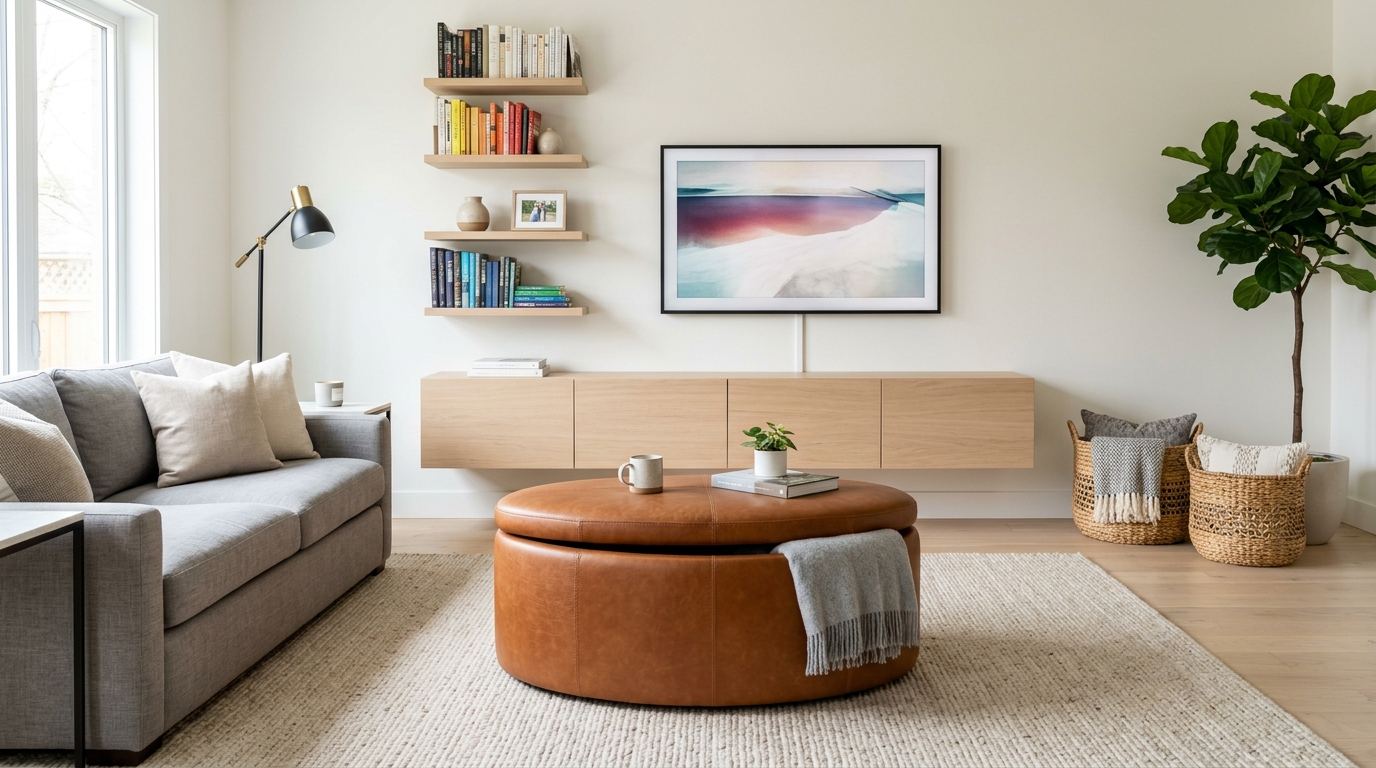
Visual clutter is the single greatest enemy of beautiful interior design. Stray magazines, electronic cords, children’s toys, gaming controllers, and extra throw blankets can quickly overwhelm a living space, leaving even the most expensive furniture feeling chaotic and disorganized. Throughout my fifteen years as an interior architect and spatial organizer, I have seen thoughtful storage solutions transform chaotic living rooms into serene, high-functioning sanctuaries.
Effective living room storage is not about hiding everything away in plastic totes or packing closets to the ceiling. True designer storage integrates seamlessly into your home’s architectural blueprint, utilizing multi-functional furniture, vertical wall height, concealed cable raceways, and custom built-in cabinetry. Storage should work quietly in the background, keeping daily essentials within easy reach while maintaining clean, uncluttered visual planes.
In this comprehensive master guide, we will unpack fifteen clever living room storage solutions tailored for homes of all sizes. We will cover upholstered storage ottomans, low floating credenzas, vertical floating wall shelves, hidden cable concealment, built-in window benches, and closet organization hacks that keep your living room organized, airy, and stunning.
1. Upholstered Storage Ottomans as Dual-Purpose Coffee Tables
Replacing a standard open coffee table with a large upholstered storage ottoman is one of the smartest multi-functional storage upgrades for living rooms. A storage ottoman provides a plush footrest, extra seating when hosting guests, and a massive hidden interior compartment for fleece blankets, accent pillows, and board games.
Choose storage ottomans wrapped in durable performance fabrics—such as stain-resistant bouclé, woven linen, or cognac leather. Top the ottoman with a flat wooden tray to hold drinks, candles, and remotes securely while preserving interior access.
In small living rooms, a round or oval storage ottoman eliminates sharp table corners, improving foot traffic safety for young children while keeping living room clutter concealed out of sight.
2. Low-Profile Floating Media Consoles
Traditional ground-mounted media cabinets occupy valuable floor area and can make living rooms feel bottom-heavy. Wall-mounted floating media consoles elevate storage off the floor, leaving open floor space visible underneath.
Seeing floor space extend beneath a floating console tricks your brain into perceiving a larger floor area. Choose a long, slender floating console constructed from white oak or smoked walnut, featuring push-latch doors that hide electronics, cable boxes, and surge protectors.
Tuck warm LED strip lights underneath the floating console to cast a soft glow across the floor surface during evening hours. If you are designing an integrated entertainment wall, review our comprehensive guide on living room TV wall ideas for cable hiding and console blueprints.
3. Utilizing Vertical Wall Height with Floor-to-Ceiling Shelving
When horizontal floor space is limited, vertical wall space becomes your most valuable storage asset. Standard low cabinets consume floor area, whereas tall vertical shelving utilizes unused upper wall volume efficiently.
Install floor-to-ceiling floating wall shelves or modular bookcase units (such as customized IKEA Billy shelves). Stacking books, decorative ceramic vessels, and trailing indoor plants vertically draws the eye upward, highlighting ceiling height while providing generous display capacity.
Keep lower shelves closed behind cabinet doors for unsightly clutter, and reserve upper open shelves for curated books and decor. Using light-colored wooden shelves (such as white oak) prevents tall wall storage from feeling top-heavy.
4. Built-In Window Seat Benches with Hinged Storage Lids
Converting an empty window niche or bay window area into a custom built-in window bench creates a cozy reading nook while providing massive hidden storage underneath.
Build a bench box under your window using cabinet-grade plywood, incorporating top-hinged lid doors or front pull-out drawers. Use the interior storage cavity for extra bed linens, winter throw blankets, or seasonal holiday decor.
Top the bench with a custom 3-inch foam cushion wrapped in durable linen or velvet fabric, layering throw pillows and a reading lamp. A window seat provides a peaceful spot for morning coffee, adding custom charm to your living room layout.
5. Concealed In-Wall Cable Raceways and AV Conduit
Tangled black electrical cords hanging down drywalls instantly ruin a tailored living room layout. Managing electronic cables creates clean visual planes across your entertainment wall.
Install an code-compliant in-wall TV power bridge kit to provide a recessed power outlet directly behind your TV screen. Run a 2-inch flexible plastic conduit pipe inside the drywall cavity between the TV and your low media console below, fishing HDMI and audio cables out of sight.
For rental homes where cutting drywall is restricted, use paintable plastic cable raceway channels attached with adhesive backing, painting the channel the exact color of your walls to blend into the background.
6. Multi-Functional Sideboards and Credenzas Behind Sofas
Floating a sofa in the middle of an open-concept floor plan often leaves the plain back of the couch exposed. Positioning a low sideboard or credenza directly behind your sofa back provides storage while anchoring seating.
Select a credenza that sits 1 to 2 inches lower than the top of your sofa back. Closed credenza doors hide office paperwork, table linens, and board games out of view.
Style the top credenza surface with warm table lamps, hardcover design books, and ceramic urns. If you are planning furniture placements in open floor plans, explore our list of small living room decorating tips for furniture scaling and floating layout rules.
7. Decorative Woven Storage Baskets for Textiles
Woven seagrass, rattan, and fabric storage baskets offer accessible, beautiful storage for daily items that need to be put away quickly—such as children’s toys, dog gear, and throw blankets.
Place a set of two or three large hand-woven seagrass baskets next to your sofa or underneath an open console table. The natural woven fibers introduce warm organic texture to your living space while concealing loose items.
Tuck soft fleece blankets and extra pillows into baskets so family members can grab them easily during evening movie watching, maintaining neat visual order across the room.
8. Hidden Door Storage and Push-Latch Cabinetry
Modern minimalist interior design favors seamless, handle-free storage cabinetry that looks like architectural wall paneling. Incorporating push-latch doors eliminates visible metal handles and hardware pulls.
Build custom wall cabinetry flush with drywalls, painting cabinet doors the exact color and finish as surrounding walls. Pressing gently on the seamless panel pops the door open to reveal deep storage shelves within.
Seamless push-latch cabinetry creates a serene, wire-free visual plane that makes small and medium living rooms feel uncluttered and spacious.
9. Nesting Coffee Tables with Interior Drawers
Coffee tables featuring built-in drawers or nesting lower tiers provide versatile surface area and storage in compact living rooms.
Choose coffee tables with shallow push-latch drawers to hold remotes, reading glasses, coasters, and charging cables. Nesting coffee table sets allow you to slide a smaller table underneath the main table to save floor space, or separate them when hosting guests.
Round or oval coffee tables with storage drawers soften sharp furniture angles while keeping everyday tabletop clutter hidden out of sight.
10. Corner Built-In Cabinets for Unused Nooks
Room corners are frequently neglected in living room layouts, remaining empty or accumulating awkward clutter. Installing custom corner built-in cabinets converts dead corner space into functional storage.
Build angled corner cabinets featuring closed lower doors and upper open display shelves. Corner cabinets draw the eye into room perimeters, softening hard 90-degree drywall angles.
Paint corner cabinets to match your room baseboards and crown molding to create an integrated architectural feature that maximizes storage capacity.
11. Reclaimed Timber Side Tables with Storage Cubbies
Incorporating accent side tables with built-in lower shelves or storage cubbies provides accessible surface area next to reading armchairs and sofas.
Select solid timber or metal side tables featuring an open lower shelf to stack design books or place a woven storage box. Stacking books horizontally on lower shelves adds curated charm while keeping tabletop surfaces clear for tea cups and lamps.
If you love organic, tactile textures, explore our feature on boho living room inspiration to see how raw timber tables and woven storage baskets bring warmth to living spaces.
12. Custom Armoire Cabinets for Hiding Televisions
For formal living rooms or traditional interiors where you prefer to conceal your television completely when entertaining, custom armoire cabinets provide the ultimate disappearing act.
Install a tall wooden armoire featuring pocket doors that slide back smoothly into side cabinet recesses. When closed, the elegant wooden doors conceal the TV screen and audio equipment entirely.
When it is time for movie watching, simply open the armoire doors and slide them into side pockets for unobstructed screen viewing.
13. Staircase Nook Storage and Built-In Drawers
If your living room sits adjacent to a staircase, the empty space underneath the stairs represents prime storage real estate. Converting under-stair cavities into custom built-in storage maximizes house volume.
Install pull-out deep drawer units on heavy-duty ball-bearing slides under the staircase slope, or create a recessed reading nook with built-in bookshelves. Under-stair storage holds shoes, coats, games, and luggage cleanly out of view.
14. Wall-Mounted Drop-Down Desks for WFH Spaces
As remote working has become standard, incorporating a home office desk into a living room without cluttering the lounge zone requires space-saving design.
Install a wall-mounted floating drop-down desk (secrétaire desk). When closed, the unit looks like a shallow floating cabinet mounted on the wall. When lowered, the cabinet door opens to provide a sturdy laptop desk surface complete with internal organizer cubbies and charging ports.
Fold the desk closed at the end of the workday to mentally separate work life from evening living room relaxation.
15. Seasonal Storage Auditing and Decluttering Rules
The most effective long-term storage strategy costs nothing: regular decluttering and seasonal auditing. Storage systems function best when they hold items that are genuinely useful or loved.
Audit your living room every six months. Rotate accent pillows, throw blankets, and decorative ceramic vessels seasonally, storing off-season items in clear labeled containers in closets.
Maintain negative space across coffee tables and bookshelves. Leaving surfaces 30% open creates an airy, peaceful environment that highlights your favorite decor pieces.
Living Room Storage Dimension & Clearance Cheat Sheet
- Floating Console Clearance: Mount floating media cabinets 8 to 12 inches above the floor for easy vacuum access.
- Credenza Depth: Choose sideboards with a depth of 14 to 18 inches to prevent encroaching on main walking paths.
- Shelving Vertical Clearance: Leave 10 to 14 inches of vertical height between shelves for standard hardcover books and ceramic vessels.
- Basket Storage Height: Select woven floor baskets 14 to 18 inches tall to hold folded throw blankets neatly.
Real-World Case Study: Eliminating Clutter in a Family Living Room
To illustrate the power of integrated storage design, consider a recent project involving a busy family living room in Denver. The homeowners struggled with scattered children’s toys, loose electronic cables, and extra blankets crowding sofa cushions, leaving the room chaotic.
Our design team implemented three smart storage solutions. First, we replaced a sharp glass coffee table with a large round upholstered storage ottoman in cognac performance leather, storing all plush toys inside. Second, we installed a wall-mounted floating oak media console, concealing all TV wiring within drywall cavities.
Third, we added two large hand-woven seagrass floor baskets next to the couch for throw blankets. The transformation restored visual order, provided generous storage, and allowed the family to transition the room from a daytime play space to an adult relaxation sanctuary in 5 minutes.
Living Room Storage & Organization Checklist
- [ ] Replace sharp coffee tables with upholstered storage ottomans.
- [ ] Mount floating media consoles 8-12 inches off the floor to keep floor space visible.
- [ ] Install floor-to-ceiling floating wall shelves to utilize vertical height.
- [ ] Conceal electronic wires using in-wall conduit pipes or paintable raceways.
- [ ] Place hand-woven seagrass baskets next to sofas for blanket and toy storage.
- [ ] Select low sideboards with push-latch doors to hide paperwork. See our luxury living room on a budget guide for credenza styling ideas.
- [ ] Incorporate space-saving solutions for compact footprints. Check our small living room decorating tips for storage hacks.
Hidden Storage Organization Systems and Labeling
Maximizing internal cabinet utility requires structured organizer bins and trays. Use clear acrylic bins inside credenza drawers to categorize electronic cables, remote batteries, and art supplies. Label internal bins so family members know exactly where to return items after use, maintaining long-term organization.
Vertical Shelf Styling and Proportional Display Rules
Avoid packing floating shelves to capacity. Follow the 70/30 rule: fill 70% of shelf area with books, ceramic urns, and plants, leaving 30% open as negative space. Group items in odd numbers and vary heights to create relaxed, museum-quality shelf displays.
Hidden Cable Raceways and In-Wall Electrical Planning
Tangled electronic cords hanging down drywalls ruin clean living room aesthetics. Install an code-compliant in-wall TV power bridge kit to provide a recessed power outlet directly behind your TV screen. Run a 2-inch flexible plastic conduit pipe inside the drywall cavity between the TV and low media console below, fishing HDMI and audio cables out of sight.
Custom Cabinet Hardware and Push-Latch Mechanism Care
Seamless push-latch doors create a modern, wire-free visual plane across living room credenzas. Inspect magnetic push-latches annually, adjusting catch tension so doors pop open smoothly upon light pressure. Wipe cabinet doors with a microfiber cloth to remove fingerprints and maintain clean surfaces.
Seasonal Living Room Storage Audits and Decluttering
Audit living room storage cabinets every six months. Donate unused toys, books, and decor. Store off-season throw blankets and holiday decor in clear labeled containers in closets, keeping living room storage focused on daily essentials.
Multi-Functional Furniture Storage Options for Small Rooms
In compact apartment living rooms, multi-functional furniture is essential for controlling clutter. Replace traditional coffee tables with upholstered storage ottomans that conceal blankets and games inside. Use low floating media consoles to elevate storage off the floor, keeping floor space visible to make small floor plans feel open.
Living Room Storage & Decluttering Blueprint
- Floating Console Height: Mount consoles 8 to 12 inches above floors for easy vacuuming.
- Storage Ottomans: Choose performance fabrics or leather that wipe clean easily.
- Woven Floor Baskets: Place seagrass baskets next to sofas for blanket and toy storage. Check ideas in our boho living room inspiration guide.
- Small Room Storage: Utilize vertical wall height with floor-to-ceiling shelves. Read our small living room decorating tips guide.
Step-by-Step Cable Concealment and In-Wall Outlet Installation
Eliminating tangled electronic wires hanging down drywalls requires basic in-wall routing techniques. Purchase a code-compliant in-wall TV power bridge kit from a home improvement store. Cut a 2×3-inch hole in drywall behind your mounted TV screen and another hole directly behind your low media console below.
Pass a flexible plastic conduit pipe inside the drywall cavity between the two openings, securing brush wall plates over the drywall holes. Fish HDMI cables, power cords, and optical audio cables down through the conduit pipe. This installation keeps all electronic wires hidden inside drywalls while allowing easy cable upgrades in the future.
Living Room Storage Maintenance and Decluttering Schedules
Maintaining a clean, organized living room requires simple seasonal storage routines. Every six months, inspect credenzas and ottomans to donate unused toys, magazines, or decor items. Storing off-season items in labeled storage totes in secondary closets preserves living room breathing room and keeps daily essentials organized.
Clean cabinet surfaces monthly with a microfiber cloth and natural wood cleaner to maintain pristine timber finishes. Keeping surfaces partially open maintains negative space, making living rooms feel serene, open, and luxurious.
Living Room Storage Solutions Strategy Blueprint
Designing a high-functioning living room storage system balances hidden storage with accessible display. Use closed credenza doors and upholstered storage ottomans to hide messy electronics, children’s toys, and extra throw blankets out of view. Utilize upper vertical wall space with floating wooden shelves to display curated hardcover books, ceramic art, and biophilic houseplants, keeping living rooms organized and serene.
Living Room Storage Solutions Summary & Planning Guide
Creating an organized living room relies on integrating concealed storage with vertical display shelves. Use low floating media consoles and upholstered storage ottomans to hide electronics, toys, and blankets out of sight. Utilize upper wall height with slender floating shelves to display books, ceramic art, and biophilic plants, keeping floor space clear and floor plans feeling spacious and open.
Frequently Asked Questions (FAQ)
1. How do I add storage to a small living room without making it feel crowded?
Use multi-functional furniture—such as upholstered storage ottomans, low floating media consoles, and floor-to-ceiling slender wall shelves that utilize vertical space.
2. What is the best way to hide TV cords in a living room?
Install an in-wall power bridge kit and run cables through a flexible conduit pipe inside drywalls. For rental homes, use paintable plastic wire raceways painted the exact color of your walls.
3. How high should a floating media console be mounted?
Mount floating media consoles 8 to 12 inches off the floor. This clearance keeps floor space visible underneath, making small rooms feel larger and allowing easy vacuuming.
4. How can I hide toys in a living room stylishly?
Use large hand-woven seagrass baskets with lids, upholstered storage ottomans, or low credenzas with push-latch doors that conceal toy bins completely out of sight.
5. What is the difference between a sideboard and a credenza?
Sideboards traditionally feature short legs or sit flush on the floor with higher storage cabinets. Credenzas are low-profile storage units featuring long horizontal silhouettes and sliding or push-latch doors.
6. How do I organize bookshelves without making them look messy?
Mix books stacked vertically and horizontally with decorative ceramic vessels, framed photos, and indoor plants. Maintain negative space by leaving 30% of shelf area open.
7. Can I build built-in storage in a rental apartment?
Focus on non-permanent storage—such as freestanding tall bookcases secured with anti-tip wall straps, storage ottomans, floating wall shelves, and under-sofa rolling bins.
8. What furniture material is easiest to clean for living room storage?
Hardwoods (like oak and walnut) sealed with matte polyurethane and performance leather or Crypton fabrics on storage ottomans resist stains and wipe clean easily.
9. How do I choose a coffee table with storage?
Select coffee tables featuring shallow push-latch drawers, nesting lower tiers, or lift-top mechanisms that raise to desk height while offering internal storage compartments.
10. Why is negative space important in living room storage design?
Negative space prevents visual clutter. Leaving surfaces partially open allows your brain to rest, highlighting curated decor pieces and making living rooms feel peaceful and spacious.