
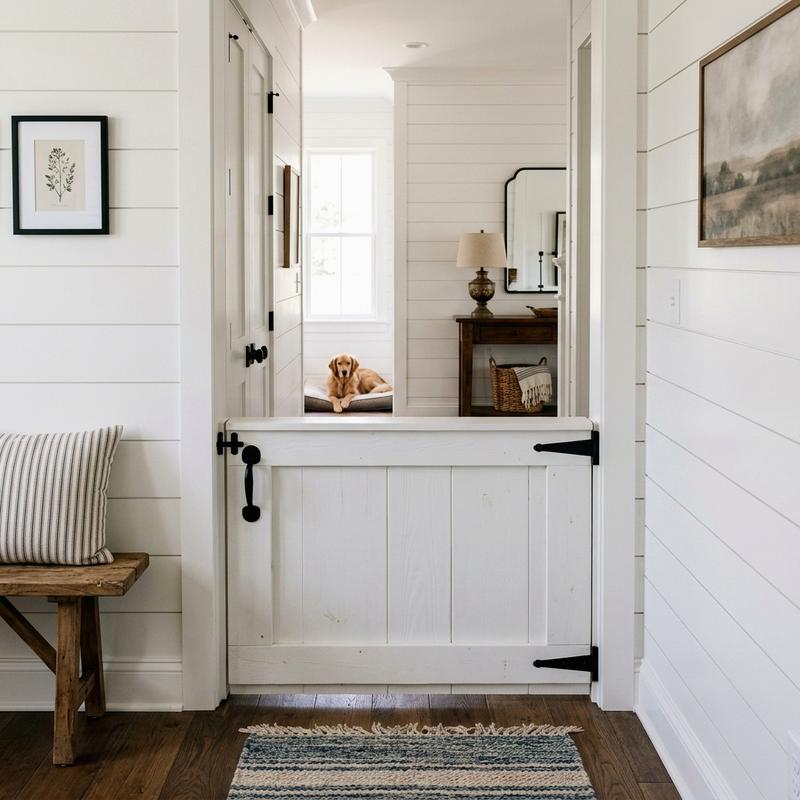
Pet Gates and Baby Gate Alternatives: Built-In Wooden Gates and Modern Barriers
Our team at HomeTunez frequently consults with homeowners who are frustrated by how traditional plastic and metal tension gates disrupt their home’s interior flow. In my interior architecture practice, I always emphasize that containing pets does not require compromising your home’s aesthetic character. Standard retail pet gates are often unsightly, clunky, and difficult to operate, acting as an architectural roadblock in hallways and doorways. By exploring custom built-in wooden gates and modern barriers, you can integrate animal containment directly into your home’s millwork and cabinetry, transforming a functional necessity into an elegant design feature.
A well-designed home should cater to the needs of every family member, including your pets, without sacrificing visual harmony. Built-in solutions like sliding pocket gates, custom Dutch doors, and floating acrylic barriers offer a sophisticated way to manage traffic flow while maintaining clean lines. These modern gates are engineered to retract into walls or blend seamlessly with your wainscoting when not in use. Designing containment zones allows you to keep pets out of sensitive areas like formal dining rooms, carpeted spaces, or home offices, protecting your furnishings from shedding and scratches while keeping your animals safe.
Pocket gates are particularly useful in busy transitions like staircases and mudrooms. Unlike swing gates that protrude into high-traffic paths and create tripping hazards, pocket gates slide smoothly into hollow wall spaces or custom cabinet cavities. This design allows you to open or close the barrier effortlessly with one hand. Creating these dedicated boundaries also helps establish clear boundaries during training, helping your pet understand where they are allowed to roam. It also provides peace of mind when hosting guests who may be allergic or uncomfortable around animals, allowing you to contain your pet safely without locking them in a dark room.
Pairing your physical barriers with smart home monitoring can further elevate your pet management strategy. For instance, you can place the best smart indoor security cameras for home facing your custom gate to see if your pet is waiting patiently or attempting to jump over it. Having visual surveillance near transitions allows you to verify that the gate is closed securely and check on your pet’s comfort throughout the day. This combination of physical containment and smart technology creates a safer, more connected environment, proving that modern home design is at its best when form and function work hand-in-hand.
Material Science and Durability in Pet Barriers
Selecting the right materials for built-in pet gates is essential for ensuring longevity and safety. Dogs are notorious for scratching, chewing, and leaning against gates, which means standard softwoods like pine will quickly show signs of damage. For high-end built-in gates, we rely on hardwoods like white oak, walnut, or maple. These dense timbers offer superior resistance to impact and claw marks. If you prefer a more modern, lightweight look, clear acrylic panels or heavy-duty safety glass are excellent alternatives. These materials allow light to pass through and keep your pet visible, reducing their anxiety while they are separated from you.
The finishes you choose for your custom gate must be both durable and safe for chewing animals. Standard paints can chip easily and contain toxic volatile organic compounds (VOCs) that are harmful if ingested. We recommend finishing your wooden barriers with eco-friendly, low-VOC paints and primers from Farrow & Ball. Their water-based formulations provide a tough, wipeable finish that stands up to daily cleanings while being completely animal-safe. If you prefer the natural look of stained hardwood, using premium, non-toxic wood sealers and cleaning products from Bona will help protect the threshold and baseboards around your gate from moisture, scratches, and discoloration from pet paws.
For gates that feature fabric mesh or soft sliding panels, durability and stain resistance are key. Standard fabrics will tear quickly under sharp claws or absorb odors and stains over time. High-performance outdoor textiles from Sunbrella are perfect for retractable barriers, as their solution-dyed acrylic fibers are highly resistant to tearing, fading, and moisture. If your gate is placed near a transition to an indoor lounge area, utilizing stain-resistant upholstery fabrics from Crypton on adjacent pet beds or seating ensures that wet coats and muddy paws do not cause permanent damage. These fabrics feature a permanent moisture barrier that prevents liquids from soaking into the core.
Keeping your built-in gates clean and free of slobber is essential for maintaining your home’s premium look. Hardwood and acrylic surfaces will naturally collect dust and pet dander over time. I suggest maintaining these barriers with gentle, plant-derived cleaners from Method. Their biodegradable spray cleaners dissolve organic residues and drool marks without leaving behind toxic chemical films that your pet could lick off. Using green cleaning products also protects the finish of your wood and preserves the clarity of acrylic panels, ensuring your custom installations look as pristine as the day they were built.
Choosing clean, sustainable materials for your home installations is part of a broader commitment to a healthy indoor ecosystem. The materials you use for pet containment should align with your overall design philosophy. If you have researched sustainable bedroom design ideas to create a non-toxic, eco-friendly environment for sleeping, you understand the value of avoiding synthetic chemicals. Extending this chemical-free approach to your living areas by selecting natural hardwoods, zero-VOC paints, and plant-based cleaning solutions creates a safer space for everyone in the family, including your pets, protecting their health and wellness.
Built-In Integrations and Styling
Integrating custom pet gates into your home’s architecture requires matching your existing trim, paint colors, and hardware details. The goal is to make the barrier look like a seamless part of the wall or cabinetry. For traditional homes, a custom wooden gate that mimics the design of your staircase balusters or wainscoting panels is the most elegant approach. You can paint the gate to match your baseboards and door trim, making it virtually disappear when closed. For modern and minimalist homes, clear acrylic panels mounted in sleek metal frames provide a floating, unobtrusive barrier that does not break the visual flow of your open-floor plan.
Another innovative option is the half-door or Dutch door. By splitting an existing interior door in half, you can keep the bottom portion closed to contain your pet while leaving the top open to allow light and conversation to flow. This solution is perfect for laundry rooms, kitchens, or home offices. Inside these utility rooms, you can wash dog blankets and fabric mesh gates. When cleaning these textiles, using the best eco-friendly laundry detergent sheets helps protect the fibers and removes odors without exposing your pets to irritating synthetic fragrances or chemical residues that remain on the fabric.
Adding automation to your built-in gates can improve your daily routine. For example, you can install smart latches that open automatically when you approach with your hands full of groceries, or sensors that alert you if a gate is left open. When integrating these electronic components, choosing the correct smart home protocols (Zigbee, Z-Wave, Wi-Fi) is crucial for maintaining a reliable connection. Low-power protocols like Zigbee are excellent for battery-operated door sensors, as they do not clog your Wi-Fi network and communicate efficiently over long distances. This allows your pet gates to interface seamlessly with your home security system, sending alerts directly to your phone.
Staircases are another critical area where custom pet gates are highly beneficial. Standard pressure-mounted gates are notoriously unsafe at the top of stairs, as they can slip under pressure. A custom swing gate should be securely anchored to the wall studs using heavy-duty hinges. To make the installation look intentional, design the gate to match the wood species and stain of your stair treads. When the gate is open, it should fold flat against the wall, held in place by a subtle magnetic catch. This keeps the walkway completely clear and prevents the gate from swinging loose.
Finally, pay attention to the hardware details of your custom barriers. Select hinges, latches, and pulls that match the finishes of your existing door hardware. If your home features brushed brass cabinet pulls, use matching brushed brass latches on your pet gate. You can also install rubber bumpers along the frame to muzzle the sound of the gate closing, preventing annoying rattling noises. These small details elevate the custom build, showing that every aspect of your home was designed with care and precision, resulting in a cohesive and beautiful interior.
Comparing Modern Pet Barriers
To help you evaluate the best containment solutions for your home, our team has compiled a detailed comparison of modern pet barriers. Each option has unique benefits, average installation costs, and durability levels that you should consider based on your home’s layout and your pet’s behavior. Comparing these features will help you choose a solution that fits your budget and design aesthetic.
| Barrier Solution | Average Installed Cost | Durability Rating | Aesthetic Integration | Ease of Operation | Best Location |
|---|---|---|---|---|---|
| Custom Pocket Gate | $800 – $1,500 | Outstanding (20+ Years) | Excellent (Disappears in wall) | High (Slides smoothly) | Hallways, kitchen entries, staircases |
| Split Dutch Door | $500 – $1,000 | Very Good (15-20 Years) | Very Good (Looks like standard door) | High (Latches in middle) | Laundry rooms, home offices, pantry doors |
| Floating Acrylic Gate | $300 – $600 | Good (8-10 Years, scratch prone) | Outstanding (Virtually invisible) | Medium (Can be heavy to lift) | Modern living rooms, open doorways |
| Built-In Wooden Swing Gate | $400 – $800 | Excellent (15+ Years) | Excellent (Matches wainscoting) | High (Self-closing latch) | Staircase bottoms, hallways, entryways |
| Retractable Fabric Barrier | $150 – $300 | Medium (5-7 Years, claw wear) | Good (Rolls up out of sight) | Medium (Requires two hands to lock) | Temporary pet zones, porches, doorways |
Selecting the right barrier depends on the layout of your home and your dog’s size. Large breeds will require taller, sturdier structures like a custom Dutch door or pocket gate, while smaller dogs can be easily contained with a floating acrylic barrier or a wooden swing gate. Combining different gates throughout your home ensures that each zone is optimized for safety and convenience. In the next section, we will provide a step-by-step guide to building a custom wooden swing gate.
Step-by-Step DIY Implementation Guide
Building a custom wooden swing gate is a satisfying DIY project that allows you to create a beautiful, secure barrier that matches your home’s millwork. By choosing quality lumber and matching your existing trim, you can build a gate that looks like a professional installation. Below is our detailed, step-by-step guide to constructing and mounting a custom wooden pet gate.
Step 1: Planning and Measuring
Begin by measuring the width of the doorway or hallway where you plan to install the gate. Measure at three points: the top, middle, and bottom of the opening, as walls are rarely perfectly plumb. Use the narrowest measurement and subtract 1 inch to allow for clearance on the hinges and latch sides. Next, determine the height of the gate. For most dogs, a height of 30 to 36 inches is sufficient, while taller breeds may require up to 42 inches. Mark the mounting locations on your walls, ensuring you align the gate hinges with a solid wall stud for maximum stability.
Step 2: Timber Selection and Cutting
For a durable and high-quality finish, select a hardwood like white oak or poplar that matches your home’s existing trim. Avoid softwoods like pine, which scratch and dent easily. Cut the timber for the outer frame: you will need two vertical stiles and two horizontal rails. Use 1×3 lumber for a sleek look. For the vertical slats, cut several pieces of 1×2 lumber to your desired height. Space the slats no more than 2 to 3 inches apart to prevent your pet from getting their head stuck between them. Sand all wood pieces thoroughly with 120-grit and then 220-grit sandpaper.
Step 3: Assembling the Gate Frame
Lay out your frame pieces on a flat work surface. Use a pocket hole jig to drill pocket holes on the ends of the horizontal rails. Apply wood glue to the joints and secure the frame together using pocket hole screws, checking that the corners are perfectly square. Next, lay out the vertical slats inside the frame, using spacer blocks to ensure even gaps between them. Secure the slats to the rails using pocket screws or wood glue and finish nails. Wipe away any excess glue with a damp cloth immediately, as dried glue will prevent wood stains from absorbing evenly.
Step 4: Sanding and Finishing
Once the glue has dried completely, sand the entire gate assembly one last time to remove any splinters or rough joints. If you plan to paint the gate, apply a coat of high-quality wood primer, followed by two coats of low-VOC paint from Farrow & Ball. Choose a color that matches your baseboards or wainscoting. If you prefer to show the wood grain, apply a pet-safe stain followed by a durable water-based polyurethane sealer. Allow the finish to dry completely in a well-ventilated area before mounting, ensuring no fumes remain when your pet is nearby. This ensures the gate remains easy to clean and maintains its beauty for years.
Step 5: Mounting the Gate and Hardware
Attach heavy-duty, self-closing hinges to the hinge side of the gate, and mount the hinges to the wall stud using long wood screws. Next, install a self-locking latch on the opposite side, ensuring it is positioned high enough that children and pets cannot reach it. Mount a rubber bumper on the door frame to muzzle the closing sound. Just as you seek to optimize your main seating areas with budget-friendly modern living room decor ideas that prioritize flow and safety, ensuring your pet gate swings open completely flat against the wall keeps your hallways clear and prevents tripping hazards. Test the gate multiple times to ensure it swings smoothly and latches securely under light pressure.
Frequently Asked Questions
Why should I choose a built-in pet gate over a standard tension gate?
Built-in pet gates are permanently mounted to wall studs, making them significantly safer and sturdier than tension-mounted alternatives. Tension gates can easily slip or fall over when a large dog leaps or leans against them, creating safety hazards. Custom barriers can be painted to match your home’s trim and designed to slide into walls or match wainscoting, ensuring they do not disrupt your interior design flow or scratch your wall paint. This approach adds lasting value to your home.
What is a pocket pet gate, and how does it work?
A pocket pet gate is designed like a sliding pocket door, retracting into a hollow wall cavity or custom cabinet when open. This structure keeps the walkway completely clear and eliminates the visual clutter of open gates. When closed, it slides out smoothly and latches securely into the opposite frame. Pocket gates are ideal for high-traffic zones like hallways and staircases where swing gates would create a physical obstruction and interrupt daily foot traffic in your house.
How tall should a pet gate be?
For small and medium dogs, a standard gate height of 30 to 36 inches is sufficient to contain them. Large, active breeds that are prone to jumping will require a gate that is at least 42 inches tall. If you have a cat, you may require a taller mesh barrier or a gate with a small pet door built into the base, which allows the cat to pass while containing the dog safely and preventing escapes.
Can I turn a regular interior door into a Dutch pet gate?
You can convert a standard interior door into a Dutch door by cutting it in half horizontally. Re-mount the door using three hinges, with two on the bottom half and one on the top. Install a surface bolt to lock the two halves together, allowing you to operate them as a single door or keep the bottom half closed for pet containment while letting light and conversation circulate freely. This is a great weekend project.
What is the best wood species for building a pet gate?
Hardwoods like white oak, maple, and walnut are the best wood species because they are highly resistant to impact, scratches, and chew marks. Softwoods like pine and cedar are easy to work with but will quickly show signs of damage from active pets. Selecting a matching hardwood species for your gate ensures it blends seamlessly with your home’s existing trim work and stair treads, increasing long-term durability and visual appeal.
How do I sanitize a pet gate safely?
Sanitize your pet gate using mild, biodegradable cleaners that do not contain harsh chemicals like ammonia or bleach. A simple spray of warm water and diluted castile soap or white vinegar works well to dissolve slobber and dirt. Always wipe down the wood or acrylic panels with a dry microfiber cloth afterward to prevent moisture damage to the finish, ensuring the surface remains clean, hygienic, and safe for your entire family.
Are acrylic pet gates durable and scratch-resistant?
Clear acrylic pet gates are highly durable and shatterproof, making them a safe containment option for dogs. However, they are prone to scratching from sharp claws over time. To maintain their clarity, you can use specialty scratch-remover polishes and wipe them down with soft microfiber cloths. They are an outstanding option for homeowners seeking a minimalist, modern aesthetic that allows natural light to circulate throughout the entire open floor plan.
Can I install a pet gate at the top of a staircase?
Yes, you can install a pet gate at the top of stairs, but it must be hardware-mounted to studs. You must never use pressure-mounted gates at the top of a staircase, as they can slip under weight and cause serious falls. Ensure the gate swings inward toward the landing rather than out over the stairs to prevent accidental trips, maintaining maximum safety for your active children and pets at all times.
How do I quiet a noisy pet gate that rattles?
Stop rattling by sticking small adhesive rubber bumpers to the gate frame where it meets the latch post. These bumpers absorb vibrations and mute closing impacts. You should also check the hinge screws and tighten any that have loosened over time from daily use. Lubricating the latches and hinges with a light silicone spray prevents squeaks and ensures quiet, smooth, and seamless operation for your family every single day of the year.
Are there smart sensors that alert me if a pet gate is left open?
You can install smart contact sensors on your pet gates to receive mobile alerts if the barrier is left open. These sensors are easily integrated into your home security system. They run on smart home protocols like Zigbee or Z-Wave, which communicate reliably with your smart hub without overloading your home network, keeping you updated on your pet’s containment status throughout the day and night, even when you are away from home on vacation.
Design Summary
Integrating high-quality, built-in pet gates into your home’s layout is an excellent way to maintain a safe and visually beautiful living environment for everyone. By replacing generic tension barriers with custom wooden pocket gates, Dutch doors, or floating acrylic panels, you elevate your containment solutions into premium architectural details. Using durable materials, safe finishes, and matching hardware ensures that your gates are both functional and long-lasting, seamlessly matching your existing home decor. This architectural synergy ensures that containment zones do not feel like barriers, but rather like natural extensions of your millwork.
Creating these custom barriers also complements how you style your wider living areas for family life. Just as you can utilize budget-friendly modern living room decor ideas to refresh your indoor spaces for comfort and pet-friendliness without overspending, a custom built-in gate can be completed as a budget-friendly project that delivers high-end visual appeal. Merging pet management with your home’s millwork and decor elements ensures your property remains cohesive, elegant, and organized. Ultimately, modern pet containment shows that you do not have to sacrifice style to create a happy, safe home for your animals, blending wellness with high architecture.
To learn more about optimizing your space, explore our guide on Smart Home Tech for Seniors.
For additional tips on creating a beautiful home, read our article about Non-Slip Flooring Solutions.
If you are planning a renovation, you might also find our ideas on Wheelchair Accessible Bathroom Design helpful.