
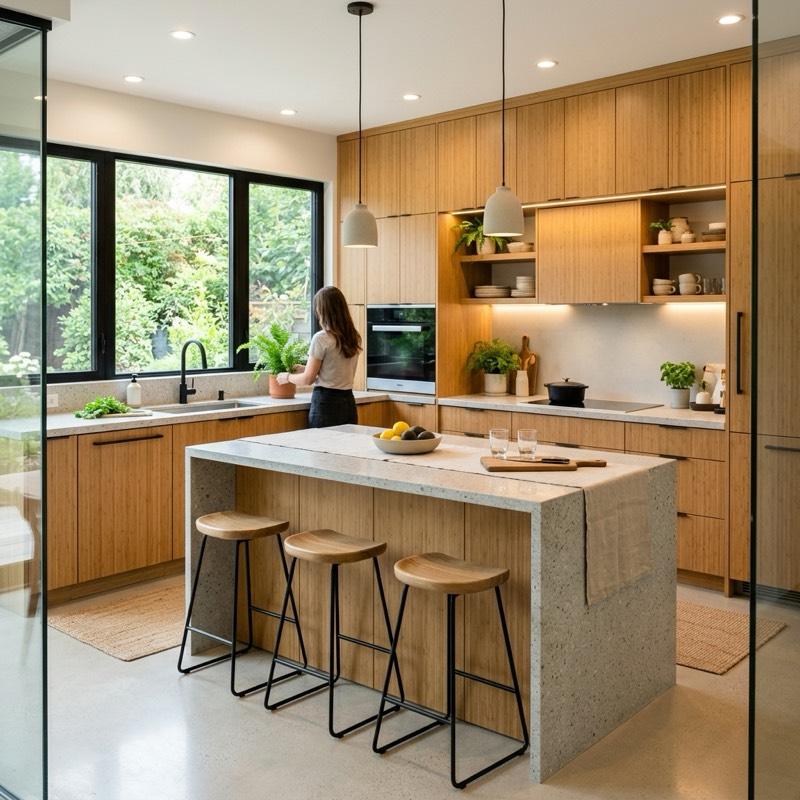
When remodeling a home with an eye toward environmental responsibility, the kitchen is the most impactful place to start. As the room that requires the most resources, it also presents the greatest opportunity for green design choices. Cabinetry makes up the largest physical volume of furniture in any kitchen layout. By selecting eco-friendly cabinetry materials, you can create a healthy cooking environment that minimizes carbon emissions. You can use this comprehensive sustainable kitchen cabinets guide to learn about rapidly renewable timbers, non-toxic finishes, and circular design strategies to design a stunning green kitchen.
What are Sustainable Kitchen Cabinets?
Sustainable cabinets are kitchen storage units manufactured, transported, and installed using environmentally responsible methods. This includes using timbers sourced from responsibly managed forests, utilizing recycled or reclaimed materials, and avoiding toxic chemical binders that release harmful gases into your home. Eco-friendly cabinets must also be built to last; durable construction ensures they do not need to be replaced for decades, reducing landfill waste. Choosing sustainable cabinets improves your indoor air quality, supports responsible forestry, and creates a clean, premium kitchen space that feels organic and connected to nature.
1. Choose Bamboo as a Rapidly Renewable Alternative
Bamboo is one of the most eco-friendly cabinet materials available. Although it looks like wood, bamboo is actually a fast-growing grass that can be harvested every three to five years without killing the plant’s root system. This rapid growth rate makes it a highly renewable resource compared to hardwood trees, which take decades to mature. Bamboo cabinet panels are incredibly durable, naturally water-resistant, and feature a unique, linear grain pattern that fits beautifully with modern, minimalist, and Japandi kitchen styles. It is a premium choice that offers high strength and a striking contemporary look.
2. Opt for FSC-Certified Hardwood Cabinetry
If you prefer traditional wood cabinets, look for materials certified by the Forest Stewardship Council (FSC). When reading a sustainable kitchen cabinets guide, certification is the most important indicator of true sustainability. The FSC logo guarantees that the timber was harvested from forests managed to preserve biodiversity, protect local water resources, and respect indigenous land rights. FSC-certified white oak, maple, and cherry are excellent choices for kitchen cabinetry, providing a classic look, long-term durability, and the peace of mind that your home remodel did not contribute to deforestation.
3. Use Reclaimed Wood for Unique Character
For a rustic, warm kitchen design, reclaimed wood cabinetry is an outstanding option. Reclaimed wood is salvaged from old barns, historic factories, or shipping pallets. By repurposing this existing timber, you eliminate the need to harvest new trees, reduce the energy required for manufacturing, and save materials from landfills. Reclaimed wood features a beautiful patina, natural weathering, and unique nail holes that add immediate history and character to your kitchen walls. Each cabinet door tells a unique story, making it a wonderful conversation starter while keeping your environmental footprint very low.
4. Avoid Formaldehyde and Choose Low-VOC Finishes
A vital focus of any sustainable kitchen cabinets guide is the health of your home’s indoor air. Traditional cabinets are often constructed using particleboard or MDF made with urea-formaldehyde glues. These glues release formaldehyde gas into your kitchen for years, a process known as off-gassing. To keep your indoor air clean, ensure your cabinet boxes are made from formaldehyde-free plywood or solid wood. Plus, specify that your cabinets are finished with water-based, low-VOC (Volatile Organic Compound) paints or natural plant oils, which do not release toxic chemical fumes into your home, keeping your family safe.
5. Select Eco-Friendly Cabinet Backing (Formaldehyde-Free Plywood)
The interior structure of the cabinets (the backing and shelving) is often where manufacturers cut corners by using cheap, toxic composite woods. When sourcing sustainable cabinetry, ask for cabinet boxes made from zero-formaldehyde plywood. Plywood constructed with soy-based adhesives (such as Soyatur technology) is an excellent, non-toxic alternative to standard glues. Not only does this plywood eliminate harmful chemical off-gassing, but it is also stronger, lighter, and more moisture-resistant than standard particleboard, ensuring your cabinets will not swell, sag, or degrade when exposed to kitchen humidity.
6. Reface Existing Cabinets to Reduce Landfill Waste
Sometimes the most sustainable choice is to reuse what you already have. Modern sustainable kitchen cabinets guide recommendations often suggest refacing as a highly effective way to remodel. If your current cabinet boxes are structurally sound, you do not need to tear them out. Instead, you can simply replace the cabinet doors and drawer fronts with new, eco-friendly panels, while leaving the existing frames intact. Refacing saves up to 75% of the wood waste from going to the landfill, cuts the project cost in half, and significantly reduces the carbon footprint associated with manufacturing and transporting new cabinet frames.
7. Integrate Recycled Metal Hardware and Accents
To complete your eco-friendly kitchen layout, select sustainable hardware. Look for cabinet handles, drawer pulls, and hinges made from recycled metals, such as recycled brass, copper, or aluminum. Manufacturing hardware from recycled metal uses up to 90% less energy than refining raw ore, significantly reducing the carbon footprint of your kitchen accents. You can also source vintage hardware from architectural salvage shops, giving antique pieces a second life and adding a charming, custom-designed touch to your modern eco-friendly cabinetry panels.
8. Sourcing, Certifications, and Long-Term Maintenance
When shopping for sustainable cabinets, look for manufacturers who hold certifications from reputable green organizations. In addition to FSC certification for wood, look for the Kitchen Cabinet Manufacturers Association (KCMA) Environmental Stewardship Program (ESP) seal. To maintain your eco-friendly cabinets, clean them using non-toxic, plant-based soaps and a damp microfiber cloth. Avoid harsh chemical cleaners that can damage natural wood oils and release chemicals into your air. Periodically re-apply natural wax or plant-based oil to raw wood cabinet doors to keep them looking beautiful and protected. This routine maintenance not only preserves the aesthetic beauty of the materials but also extends their lifespan significantly. By choosing to care for your cabinets with gentle, biodegradable agents, you prevent chemical breakdown of the sealants and avoid contaminating your indoor air. Over time, proper care ensures that your investment in premium sustainable cabinetry continues to pay off in both aesthetic appeal and environmental durability.
Summary: Eco-Friendly Cabinetry Selection Checklist
Select your kitchen cabinetry materials responsibly using this checklist compiled from our sustainable kitchen cabinets guide:
| Material Type | Eco-Friendly Choice | Sustainability Purpose |
|---|---|---|
| Renewable Slat | Rapidly renewable bamboo panels or FSC-certified hardwoods | Eliminates deforestation and supports responsibly managed forest land |
| Cabinet Box | Formaldehyde-free plywood made with soy-based adhesives | Prevents toxic chemical off-gassing and improves indoor air quality |
| Cabinet Finishes | Water-based, zero-VOC paints or natural, plant-based wood oils | Protects timber without releasing chemical fumes into the kitchen |
| Circular Choice | Refacing existing cabinet frames with new bamboo front doors | Saves wood waste from landfills and lowers transport emissions |
| Cabinet Knobs | Recycled brass, copper handles, or salvaged antique pulls | Lowers energy consumption by avoiding the refinement of raw metals |
In short, by utilizing this sustainable kitchen cabinets guide, you can design a beautiful, high-functioning kitchen that aligns with your environmental values. Whether you select rapidly renewable bamboo, FSC-certified hardwoods, or decide to reface your existing frames, you are making a positive impact on both your home health and the planet. Take the time to research your manufacturers, choose non-toxic glues, and enjoy your beautifully crafted, eco-friendly culinary retreat.
To learn more about optimizing your space, explore our guide on Sustainable Geothermal Heating and Cooling.
For additional tips on creating a beautiful home, read our article about Sustainable Solar Power Home Battery Storage.
If you are planning a renovation, you might also find our ideas on Rainwater Harvesting System for Home helpful.
To discover more sustainable choices, check out our tips on Upcycled Home Decor Ideas.
Enhance your living space further by exploring our recommendations for Best Eco Friendly Laundry Detergent Sheets.