
Drafty windows and doors are like throwing money straight out the window, forcing your heating and cooling systems to work twice as hard. During our years of staging homes and optimizing property layouts at HomeTunez, we noticed that sealing gaps around exterior openings is one of the most cost-effective ways to cut energy bills. Weatherproofing keeps drafts out, dampens outdoor noise, and blocks dust or insects from creeping inside. Let’s walk through the best strategies to seal your home and create a cozy, energy-efficient space.
1. Finding Air Leaks and Locating Drafts
Before you begin weatherproofing, you must locate the gaps where air is escaping. We recommend inspecting your window and door frames on a cold, windy day. Run your hand slowly along the trim to feel for drafts, or hold a lit incense stick near the seams. If the smoke begins to dance or blows sideways, you have found an active air leak. Check the exterior caulking around the frames for cracks, peeling, or missing sections.
Drafty sleeping areas can disrupt your sleep cycle and make your room feel uncomfortably cold at night. Sealing drafts is a key part of creating a comfortable sleep sanctuary. If you are reorganizing your sleeping spaces for comfort, you can integrate these insulation steps with our favorite sustainable bedroom design ideas to keep your bedroom quiet, warm, and chemical-free.
2. Choosing and Installing Weatherstripping
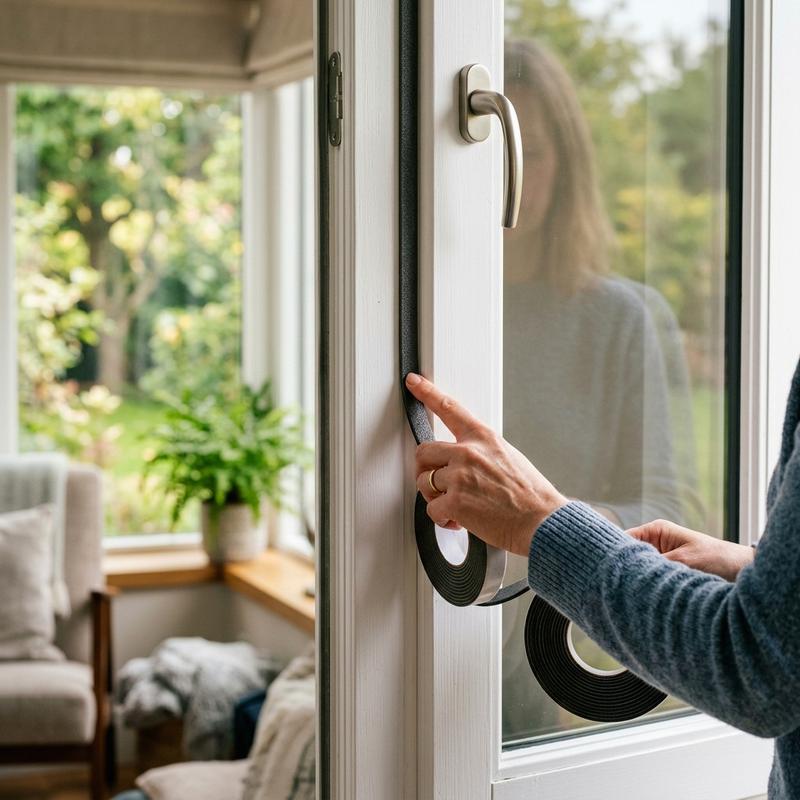
Weatherstripping is the best way to seal the moving parts of your windows and doors. For sliding sash windows, we use self-adhesive V-strip weatherstripping because it compresses flat when the window is closed, creating a tight seal. For door frames, adhesive foam tape or silicone hollow-bulb seals work best. Ensure you wipe down the door and window tracks with a vacuum like a Dyson or Shark to clear out dirt before applying the adhesive. Clean tracks ensure the weatherstripping sticks firmly and lasts for years.
To seal the large gap under your front or back door, install a heavy-duty door sweep. A sweep consists of a metal strip holding a vinyl or rubber fin that slides along the floor, blocking cold air completely. If you are weatherproofing entryways, you can combine these tasks with security upgrades. Placing one of the best smart indoor security cameras for home in your foyer allows you to keep an eye on entry doors. This combination of physical weatherproofing and visual monitoring keeps your entry points completely secure.
3. Smart Automation and Window Treatments
Weatherproofing can also connect to your smart home system to maximize energy savings. Many homeowners install contact sensors on their windows that automatically turn off the HVAC system when a window is opened. If you install these contact sensors, make sure they support compatible smart home protocols like Zigbee, Z-Wave, and Wi-Fi. This ensures your window sensors communicate reliably with your Nest or Honeywell smart thermostat, preventing the system from heating the outdoors.
Fabric draft blockers, or draft snakes, are a popular choice to block drafts at the bottom of doors and window sills. Over time, these fabric tubes collect dust, pet hair, and dirt from the floor. We suggest washing these fabric draft stoppers regularly to keep your entryways clean. Clean these fabric items using the best eco-friendly laundry detergent sheets to wash away floor grime without exposing your home to chemical residue or artificial scents.
4. Caulking and Hiding Weatherproofing Materials
Exterior frames require a flexible, weather-resistant caulk to seal the gap between the window frame and your home’s siding. We use 100% silicone or polyurethane caulking, which will not crack under extreme temperatures. If caulking or foam tape looks messy on your interior window trim, you can easily hide it. Look at our favorite budget-friendly modern living room decor ideas to style your windows with elegant curtains or textured Roman shades. This keeps your windows looking beautiful while hiding ugly insulation foam.
For wooden trim that has been scuffed during caulking, a fresh coat of paint will restore its beauty. We love using premium, low-VOC paint from Farrow & Ball to touch up window sills and frames. A neat coat of paint seals the wood fibers and makes the weatherproofing work look completely seamless, ensuring your living room feels warm and looks elegant.
Weatherproofing Materials Comparison
| Material | Best Use Case | Durability | Ease of Installation |
|---|---|---|---|
| Adhesive Foam Tape | Door jams, top/bottom window sashes | 1 to 2 years (low) | Very Easy (peel-and-stick) |
| V-Strip (Tension Seal) | Sides of sliding sash windows | 5+ years (medium) | Easy (cut to size) |
| Silicone Caulk | Stationary exterior frame gaps | 10+ years (high) | Medium (requires caulk gun) |
| Aluminum Door Sweep | Bottom gap of exterior doors | 5+ years (high) | Medium (requires screws) |
Taking the time to weatherproof your windows and doors keeps cold drafts out and keeps your home warm and cozy. Sealing cracks and applying durable weatherstripping protects your home from moisture damage and outdoor dust. This simple weekend project is a highly effective way to save energy and create a quiet, comfortable house.
Frequently Asked Questions
Should I use silicone or acrylic latex caulk for windows?
Use 100% silicone caulk for exterior window frames because it is completely waterproof, flexible, and will not shrink over time. For interior window trim where you plan to paint over the caulk, use a high-quality acrylic latex caulk with silicone. Pure silicone caulk cannot be painted, so it will ruin your interior paint work.
How do I stop cold air from leaking through a keyhole?
For keyholes and mortise locks, you can install a small metal keyhole cover, or escutcheon plate, that swings open when you insert the key. This plate blocks wind from blowing straight through the keyhole. For mail slots, installing a draft-reducing brush or a magnetic flap will seal the gap and stop cold air leaks.
Can I weatherproof windows using shrink wrap film?
Shrink wrap window film is an excellent temporary winter fix for old, drafty single-pane windows. Apply the double-sided tape along the window trim, press the clear plastic film to the tape, and use a hair dryer to heat the film until it shrinks tight. This creates an insulating dead-air space that stops drafts completely.
To learn more about optimizing your space, explore our guide on Smart Home Tech for Seniors.
For additional tips on creating a beautiful home, read our article about Non-Slip Flooring Solutions.
If you are planning a renovation, you might also find our ideas on Wheelchair Accessible Bathroom Design helpful.