
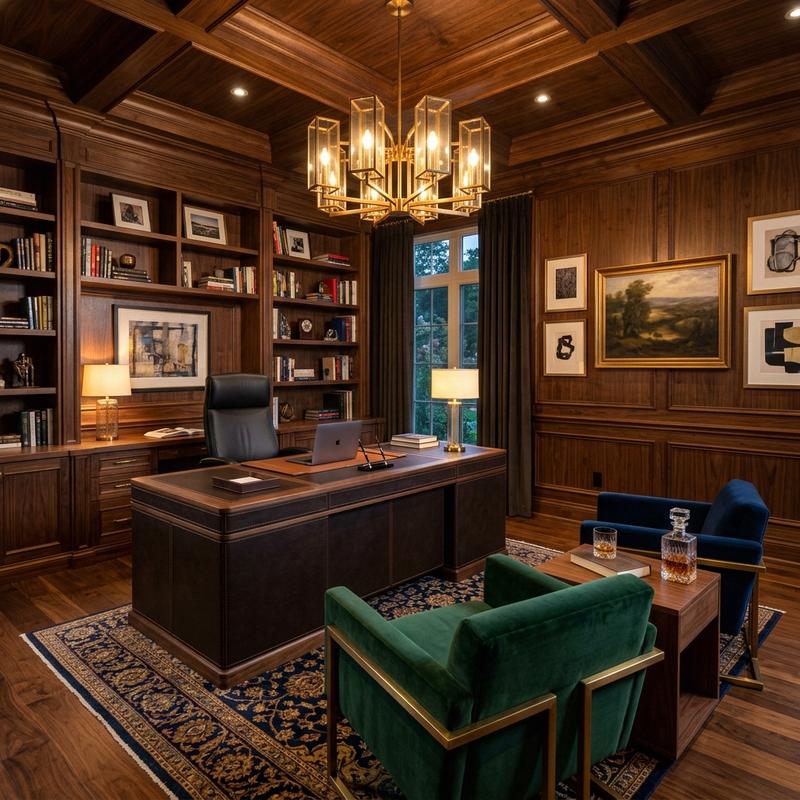
In our modern era of executive leadership, creative direction, and high-value remote work, the executive study has transcended the role of a simple workspace. It has become a physical expression of personal style, professional achievement, and design taste. Incorporating a Luxury Home Office Design is more than just buying high-end furniture. It is a detailed architectural project that combines spatial proportion, premium material palettes, layered lighting, and customized millwork to create a powerful, inspiring environment. As interior architects and space planners, we have designed executive studies for CEOs, founders, and creative directors. We know that a true luxury office must balance visual drama with quiet functionality. In this comprehensive guide, we will explore the design language of high-end studies and detail five premium executive styling tips to design an inspiring workspace.
The Design Language of Luxury Studies: Materiality and Presence
To design a luxury home office, you must understand the language of materiality and presence. In our design practice, we focus on tactile authenticity—using real, premium materials that age beautifully and feel luxurious to the touch. This means selecting solid woods like dark walnut and white oak, full-grain Italian leathers, polished brass, and natural marbles like Calacatta or Nero Marquina. Avoiding synthetic laminates or imitation finishes is essential, as authentic materials add weight, depth, and character to the space.
The second concept is spatial presence. A luxury study must feature a clear focal point, typically centered around a custom executive desk and a statement backdrop wall. The room should feature distinct functional zones: a work zone centered around the desk, a conversational seating zone for meetings or reading, and a display zone featuring curated books and fine art. By organizing the layout into these zones, you create a sense of scale, comfort, and refinement that is characteristic of premium architectural design.
Finally, acoustics are critical for luxury workspaces. A high-end office must feel quiet and isolated from the rest of the home. This requires installing solid-core wood doors, double-pane window glass, and sound-absorbing wall treatments. In our designs, we use custom fabric-wrapped wall panels, wool drapery, and thick silk-blend rugs to absorb sound, creating a quiet environment for video calls, focus, and quiet reflection, keeping your workspace private.
5 Premium Executive Styling Tips for Luxury Offices
1. Custom Floor-to-Ceiling Walnut Cabinetry and Integrated Library Walls
Custom built-in cabinetry is the foundation of any luxury executive study. Built-ins utilize the room’s height, creating a library wall that serves as a stunning backdrop for video calls and client meetings. Choose rich, dark woods like American walnut or stained white oak to add warmth and architectural weight to the room.
Work with a local cabinet maker to build custom shelving with integrated LED strip lighting hidden inside the shelves. This lighting casts a warm, soft glow on your books and art pieces. Install closed cabinet doors at the base of the library wall to hide file drawers, printers, and tech hubs. The Poltrona Frau Executive Cabinets are a premium choice, combining leather-wrapped panels with polished metal details to create a highly refined storage wall.
2. Large Custom Leather-Wrapped Executive Desks
The executive desk is the central centerpiece of the study, and it should make a statement of strength and design excellence. When choosing a desk, avoid basic writing tables. Look for large, sculptural desks made from solid walnut, topped with fine leather or honed marble, and featuring hidden cable routing paths built into the desk legs.
The Knoll Florence Knoll Executive Desk is an iconic, minimalist design featuring a heavy chrome base and a large oval marble or oak top. For a classic, tailored look, choose a custom desk wrapped in full-grain Italian leather from Poltrona Frau. Place the desk in the center of the room in the “Command Position,” facing the entrance, with your leather executive chair anchored against the built-in library wall, creating a commanding workspace.
3. Velvet Conversational Accent Seating and Coffee Table Zones
A luxury study should feel like a private club, complete with a conversational seating zone separate from the desk. This zone provides a relaxed space for reading, brainstorming, or hosting informal meetings with clients and business partners. Anchor this zone with a pair of comfortable accent chairs and a low coffee table.
Select comfortable, sculptural armchairs upholstered in rich mohair velvet, bouclé, or soft leather. The Herman Miller Eames Lounge Chair and Ottoman is a timeless choice that adds instant design prestige. Pair the seating with a low, solid marble coffee table and a soft silk-blend area rug to define the zone. This layout adds depth, layer, and comfort to the study, making it a highly functional retreat.
4. Architectural Lighting: Sculptural Chandeliers and Recessed Wall Washers
Lighting is critical for highlighting the architecture and materials of your luxury study. Avoid generic ceiling fixtures or single light sources. Instead, design a layered lighting plan combining a statement sculptural chandelier, adjustable task lighting, and hidden ambient accent lights to create depth and warmth.
Mount a premium sculptural chandelier in the center of the room, such as a brass and hand-blown glass fixture from Apparatus Studio. Use recessed ceiling spotlights as “wall washers” to highlight your built-in cabinetry and wall art. Place an elegant brass task lamp on your desk, and install dimmable LED strip lights behind your shelves, allowing you to adjust the room’s mood and brightness throughout the day.
5. Fine Art Curation, Wool Rugs, and Premium Brass Details
The final touch in luxury office design is curating premium art and accessories. Hang large abstract oil paintings, framed architectural sketches, or fine art photography on the walls. Choose artwork that reflects your personality and coordinates with the room’s color palette, adding a layer of culture and refinement.
Anchor the room with a large, custom-sized wool and silk rug that coordinates with the wood and leather finishes. Use desk accessories made from premium materials, such as a leather desk pad, a brass tray for pens, and solid marble paperweights. By selecting and styling these curated details, you can design a cohesive, highly personalized study that looks like a masterpiece of premium interior design.
Comparison: Traditional vs. Modern Luxury Executive Study
| Design Element | Traditional Luxury Study | Modern Luxury Study |
|---|---|---|
| Wood Selection | Heavy mahogany, dark cherry, ornate oak carvings | Rich dark walnut, natural white oak, clean lines |
| Desk Profile | Massive pedestal desk, heavy wood paneling | Sculptural marble, leather wraps, floating steel bases |
| Lighting Style | Traditional bankers lamps, brass chandeliers | Sculptural glass art, hidden LEDs, recessed spots |
| Seating Fabrics | Tufted Chesterfield leather, heavy brocades | Mohair velvet, boucle, full-grain Italian leathers |
A Step-by-Step Guide to Planning Your Luxury Study Layout
To design the layout of your luxury study, follow this simple four-step process. First, determine the wall for your built-in library cabinets, typically the largest unbroken wall facing the room’s entrance. Second, place your desk in the center of the room, facing the door with your chair anchored against the built-in cabinets. Third, set up your conversational seating area in a corner or near a window, arranging the accent chairs and coffee table over a distinct area rug. Finally, install your layered lighting, ensuring each zone has its own dimmable light source. Planning these details guarantees a highly functional and visually stunning workspace.
Once your layout is designed, focus on cable management. Work with your carpenter to drill hidden holes inside your desk legs and cabinets to run power cables out of sight. Keep your desktop clear of chargers by installing hidden charging pads beneath the wood surface. By planning every detail of your layout, you can design a beautiful executive office that keeps you focused, comfortable, and inspired.
Frequently Asked Questions
1. What is the command position in office layout design?
The command position requires placing your desk so that you face the room’s entrance from a distance, with your back anchored against a solid wall. This setup provides a sense of security and keeps your field of view open, reducing distractions.
2. What are the best woods for a luxury home office?
The best woods for a luxury study are American walnut, white oak, and rosewood. These woods feature beautiful natural grain patterns, offer great durability, and age rich and dark, adding warmth and elegance to your office cabinetry.
3. Why are solid-core doors important for luxury studies?
Solid-core doors are filled with solid wood, providing density that blocks sound waves. Hollow-core doors allow sound to pass through easily, while solid doors block hallway noise and family sounds, keeping your study private and quiet.
4. How do I choose a luxury office chair?
Look for office chairs that combine ergonomic support with premium materials, such as full-grain leather and polished steel. The chair should offer adjustments for seat height, seat depth, armrests, and lumbar support, keeping you comfortable.
5. What is the benefit of layered lighting in a study?
Layered lighting combines a statement sculptural chandelier, adjustable task lighting, and hidden ambient accent lights. This setup allows you to adjust the room’s brightness based on the time of day, creating depth and a warm atmosphere.
6. How do I design a conversational seating zone?
Anchor the zone with a pair of sculptural accent chairs and a low marble coffee table over a plush area rug. Place this seating area near a window or fireplace, separate from your desk, creating a relaxed space to read and talk.
7. What are the best fabrics for luxury office seating?
The best fabrics for office seating are mohair velvet, bouclé, and full-grain Italian leather. These fabrics offer a soft, comfortable texture, are highly durable, and add a touch of color and refinement to your armchairs and sofas.
8. How do I hide messy printer and tech cables?
Work with your carpenter to build custom cabinets with integrated cable trays and grommet holes. Place printers and hard drives inside closed credenza drawers with pull-out shelves, keeping cables hidden and desktops clear.
9. What accessories add a luxury feel to a desk?
Add a luxury feel to your desk by using accessories made from premium materials, such as a leather desk pad, a brass tray for pens, and solid marble paperweights. Keep the desk organized and free of plastic accessories.
10. Can I build a luxury office in a small room?
Yes, you can design a luxury workspace in a small room by choosing custom built-in cabinets that utilize vertical wall space, selecting compact furniture with slim metal legs, and using a light color palette to keep the space feeling open.
To learn more about optimizing your space, explore our guide on Smart Home Tech for Seniors.
For additional tips on creating a beautiful home, read our article about Non-Slip Flooring Solutions.
If you are planning a renovation, you might also find our ideas on Wheelchair Accessible Bathroom Design helpful.
To discover more sustainable choices, check out our tips on Grab Bars and Safety Features.
Enhance your living space further by exploring our recommendations for Aging in Place Home Modifications.