
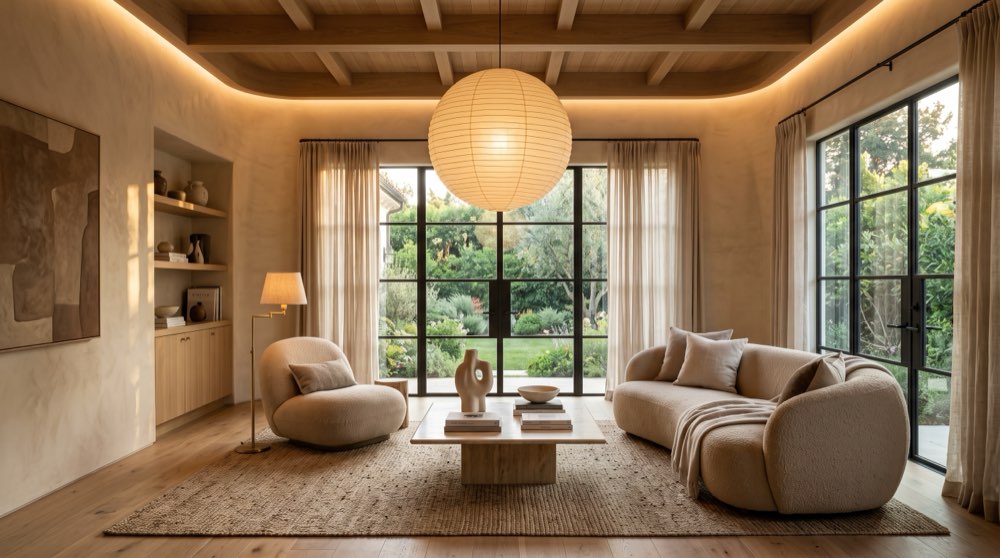
Lighting is the most transformative, yet frequently misunderstood element of residential interior design. Throughout my fifteen years as an interior architect and spatial lighting consultant, I have seen improper lighting flatten stunning architectural details, drain room warmth, and cause unnecessary eye strain. In 2026, living room lighting design has evolved beyond basic illumination—it is now treated as an art form that sculpts space, establishes emotional mood, and enhances daily wellbeing.
The era of relying on a single central ceiling fixture—or blasting a living space with harsh recessed downlights—is officially over. Modern homeowners recognize that a cozy, inviting living room requires a multi-layered lighting strategy combining ambient, task, and accent illumination. By pairing low-glare architectural fixtures with sculptural statement lamps and warm dimming technology, you can create a luminous sanctuary that shifts effortlessly from daytime productivity to evening relaxation.
In this definitive 2026 lighting guide, we will explore twelve major living room lighting trends dominating professional design projects this year. We will examine paper lantern pendants, sculptural floor lamps, indirect cove lighting, picture lights, kelvin temperature selection, and smart dimming controls. Whether you are building a new home or upgrading your existing lamps, these expert strategies will elevate your living room’s atmosphere instantly.
1. The Resurgence of Sculptural Paper Lantern Pendants
Paper lantern pendants have captured the hearts of top interior architects worldwide. Inspired by Isamu Noguchi’s iconic 1950s Akari light sculptures, these organic paper and fabric pendants diffuse light into a soft, ethereal cloud that eliminates harsh glare entirely. In 2026, oversized paper pendants are taking center stage above living room coffee tables and main seating arrangements.
The beauty of a paper pendant lies in its ability to fill vertical volume without visual heaviness. Constructed from delicate mulberry paper or crinkled linen stretched over slender bamboo ribs, paper pendants cast an even, golden glow across 360 degrees. Brands like CB2, West Elm, and Hay now offer oversized spherical and lantern silhouettes that add architectural poetry to minimalist and organic spaces.
When hanging a statement paper pendant in your living room, position the bottom edge of the shade at least seven feet above the floor to maintain clear sightlines. If your coffee table sits directly beneath the pendant, you can lower it slightly to 65 to 70 inches above the floor to create an intimate visual anchor. Pair paper pendants with soft warm 2700K LED bulbs to maximize their cozy, cocooning glow.
2. Multi-Layered Ambient, Task, and Accent Lighting Architecture
Professional interior lighting design is built upon the classic “Lighting Triad”—the strategic combination of ambient, task, and accent illumination. Relying on only one lighting type leaves a room feeling flat, shadowy, or uncomfortably bright. A well-designed living room layers all three types to establish balance and flexibility.
Ambient Lighting: Provides general room illumination, replacing natural daylight during evening hours. This includes soft cove lighting, dimmable recessed lights, and large pendant fixtures that bounce light off white ceilings.
Task Lighting: Delivers focused illumination for specific activities like reading, crafting, or working on a laptop. Slender floor lamps positioned next to reading armchairs and adjustable desk lamps on sideboards serve as ideal task lights.
Accent Lighting: Highlights architectural features, wall textures, artwork, and decorative objects. Picture lights mounted above gallery art, LED strip lights concealed inside book shelving, and small uplights tucked behind indoor trees create visual depth and drama across the perimeter of the room.
3. Warm Kelvin Color Temperatures (2700K vs. 3000K)
Selecting the correct color temperature—measured in Kelvins (K)—is the single most important decision when choosing LED lightbulbs for your living room. Cool white bulbs (4000K to 5000K) contain high blue-light spectrum energy, mimicking noon sunlight. While cool light works well in commercial offices, it feels harsh, clinical, and unwelcoming inside a residential living space.
For living room environments, stick strictly to **2700K (Warm White)** or **3000K (Soft White)** LED bulbs. A 2700K color temperature replicates the warm, golden glow of traditional incandescent bulbs, relaxing the nervous system and preparing your body for restful sleep. In rooms with deep wood paneling or warm plaster walls, 2700K light enhances natural timber tones beautifully.
If your living room functions as a daytime home office, consider installing smart dim-to-warm LED bulbs (such as Philips Hue or Lutron Ketra). These intelligent bulbs emit crisp 3500K light during morning work hours to boost focus, and automatically shift to warm 2200K golden light as evening approaches, creating an automated circadian lighting environment.
4. Hidden Concealed LED Cove and Plaster Grazing Lights
One of the quietest, most luxurious lighting trends of 2026 is concealed architectural cove lighting. Rather than displaying visible bulbs or metal light fixtures, cove lighting hides flexible LED strip channels inside ceiling drops, wall niches, baseboard reveals, or behind floating media consoles.
Wall grazing—where high-density LED strips are mounted within a shallow channel two inches from a textured wall—washes light down across plaster, stone, or slatted wood surfaces. This grazing effect highlights subtle surface textures, creating rich architectural shadows without casting direct glare into eyes. If you are exploring slatted wood features or TV alcoves, read our detailed guide on living room TV wall ideas to see how integrated cove lighting transforms media surrounds.
Always specify high CRI (Color Rendering Index) LED strip lights with a CRI of 90 or higher. High CRI lighting ensures that fabric colors, natural wood grains, and wall paint hues render with true vibrancy, avoiding the gray, muddy appearance caused by low-quality LED tape.
5. Picture Lights and Framed Art Illumination
Mounting dedicated picture lights above wall artwork adds instant gallery-worthy refinement to a living room. A picture light casts a focused pool of warm light down across canvas paintings, photography, or prints, drawing the eye toward wall features and establishing sophisticated focal points around the perimeter of the room.
Slim, battery-operated or hardwired brass picture lights (from brands like Rejuvenation, Visual Comfort, or Flos) feature rotatable shade heads that allow you to adjust beam direction precisely. Choose picture light fixture widths spanning roughly one-half to two-thirds the width of the framed artwork below it.
Picture lights look exceptionally captivating when illuminating curated art arrangements above sofas or sideboards. If you are planning an art wall installation, browse through our pre-measured layout templates in living room gallery wall ideas to discover how pairing brass picture lights with grid and salon layouts elevates your home’s artistic character.
6. Portable Cordless Rechargeable Table Lamps
The rise of high-capacity lithium-ion batteries has birthed one of the most practical living room lighting trends: portable cordless table lamps. Traditional table lamps require nearby electrical wall outlets, resulting in hazardous black power cords stretching across open floors or behind floating sofas.
Cordless rechargeable lamps (such as the Flos Last Order, Artemide Como, or affordable alternatives on Amazon) offer 10 to 20 hours of continuous warm illumination on a single USB-C charge. You can place a cordless lamp anywhere—on a floating coffee table, a bookshelf niche, a patio threshold, or directly on top of a stack of books—without worrying about outlet locations.
Look for cordless lamps featuring touch-sensitive top dimmers that allow you to adjust brightness seamlessly. Their compact, wire-free silhouettes keep surfaces uncluttered, making them particularly useful for floating furniture arrangements in open-concept living rooms.
7. Sculptural Arching Floor Lamps for Over-Sofa Lighting
Arching floor lamps (inspired by Achille Castiglioni’s classic 1962 Arco lamp) remain an enduring favorite among interior architects for anchoring seating layouts. A dramatic arching lamp features a heavy marble or steel base positioned in a room corner, with a long curved metal arm extending light overhead into the center of the seating zone.
Arching lamps eliminate the need for hardwired ceiling junction boxes, delivering focused overhead light directly over coffee tables or sectionals. They are an exceptional lighting solution for apartment renters or homes with concrete ceilings where installing new overhead fixtures is impossible.
Ensure the arching shade hangs high enough (at least 6.5 feet from the floor) so guests do not bump their heads when standing up from the sofa. Pair an arching brass floor lamp with an expansive sectional couch to create an inviting conversational nook. Before finalizing your seating layout, consult our expert sectional sofa buying guide to ensure your sofa depth and lamp placement align comfortably.
8. Low-Profile Recessed Micro-Can Downlights
Traditional four-inch and six-inch recessed ceiling cans—often derided by interior designers as “ceiling acne”—are being rapidly replaced by modern low-profile micro-can downlights. Micro-cans feature tiny one-inch or two-inch apertures that sit flush with drywall, delivering powerful, quiet illumination without disrupting sleek ceiling planes.
Modern micro-cans utilize deep regression and black baffle trims to conceal the light source inside the ceiling cavity. When walking through a room equipped with deep-recessed micro-cans, you see comfortable light on floor surfaces and furniture without seeing harsh bright glare from the ceiling lights themselves.
Position micro-can downlights strategically along room perimeters, six to twelve inches away from walls, to bounce light down vertical surfaces. Bouncing light off walls makes living rooms feel visually expansive while avoiding direct downward shadows on people sitting below.
9. Tactile Natural Lampshades: Linen, Rattan, and Pleated Fabric
In 2026, lampshades are no longer treated as simple white utility covers. They have become rich tactile canvas surfaces that introduce warmth, pattern, and hand-crafted texture to living room lighting fixtures. Natural woven lampshades break up hard metal and glass surfaces, reinforcing a relaxing organic environment.
Conical pleated linen shades, hand-woven rattan domes, unbleached burlap drums, and turned wooden bases add artisan warmth to table and floor lamps. When illuminated from within, woven rattan and pleated linen filter light into rich, dappled patterns across nearby walls.
Tactile lampshades pair effortlessly with warm neutral wall colors, jute rugs, and plush upholstery. If you want to explore how organic textiles create a cozy, layered atmosphere, explore our feature on boho living room inspiration to see how rattan lampshades and fringed textiles bring earthy soul into living spaces.
10. Low-Glare Lighting Design for Small Living Rooms
Lighting a compact living room requires a delicate touch. Over-lighting a small space with bright ceiling fixtures accentuates tight walls and makes the room feel chaotic. Conversely, dark shadows in small corners shrink perceived room dimensions.
In small living rooms, focus on bouncing light off major vertical surfaces. Place slender floor lamps in dark room corners, mount wall sconces on either side of the sofa, and hang light-reflecting mirrors opposite window sources. If you are decorating a compact space or apartment floor plan, read our comprehensive list of small living room decorating tips to discover how strategic lighting and furniture scaling expand small interiors.
Choose wall sconces with up-and-down light distribution. Uplighting bounces off the ceiling to raise perceived room height, while downlighting illuminates side tables comfortably, delivering multi-directional warmth without taking up precious floor space.
11. Smart Dimmable Lighting Systems and Scene Controls
A static lighting scheme that stays at full brightness all day fails to support the dynamic ways we use living rooms. Installing smart dimmable lighting controls allows you to transform your living room’s mood at the touch of a button or voice command.
Smart dimmer switches (such as Lutron Caséta or Leviton Decora Smart) replace standard wall switches, allowing you to set customized lighting scenes. For example, program a **”Morning Scene”** where ambient cove lights and lamps illuminate at 80% brightness, a **”Reading Scene”** focusing task lamps near armchairs, and a **”Movie Night Scene”** where all lights dim to 10% while TV wall backlights glow softly.
Smart lighting automation can also be synchronized with sunrise and sunset times. Automatically dimming lights as evening approaches encourages natural melatonin production, promoting healthier sleep patterns for your entire family.
12. Statement Linear Chandeliers Above Living Room Zones
For open-concept floor plans with high or vaulted ceilings, linear chandeliers serve as breathtaking architectural anchors. A linear chandelier features a long horizontal metal frame supporting multiple light sources, spanning across a large living room seating area.
Look for minimalist linear chandeliers constructed from matte black iron, brushed brass, or frosted glass globes. The long horizontal silhouette echoes the lines of sectionals and coffee tables, drawing the eye across the room and establishing clear spatial boundaries within large open floor plans.
Ensure linear chandeliers are hung on a dedicated dimmer switch so brightness can be adjusted effortlessly. When set to low levels during evening parties, a linear chandelier casts a warm, starry canopy of light over your seating layout.
Real-World Case Study: Transforming a Dark Living Room Lighting Scheme
To demonstrate the practical impact of multi-layered lighting, consider a recent studio renovation project involving a 1980s suburban home in Denver. The living room featured a single ceiling fan light fixture with harsh 4000K daylight bulbs, leaving the corners in deep shadow while creating blinding glare in the center of the seating area.
Our design team executed a complete lighting overhaul without tearing down drywalls. We installed a soft LED cove channel behind a newly constructed fluted oak TV wall, added a brass picture light above a central gallery wall, and positioned a paper lantern pendant light above the coffee table.
We replaced all cool bulbs with warm 2700K dimmable LED smart lamps and added two cordless rechargeable table lamps on floating side tables. The transformation was dramatic: room shadows vanished, harsh glare was eliminated, and the homeowners gained total control over evening ambiance, turning a sterile space into a cozy luxury sanctuary.
Living Room Lighting Rules of Thumb
- Ceiling Height Clearance: Maintain at least 7 feet of clearance from the floor to the bottom of any hanging chandelier or pendant light in main walking paths.
- Table Lamp Proportion: The bottom of a table lamp shade should sit at eye level (approximately 40 to 42 inches from the floor) when sitting on the sofa.
- Distance to Walls: Position recessed downlights 18 to 24 inches away from walls to wash vertical surfaces smoothly without casting scalloped shadows.
- Dimmer Universal Rule: Install dimmer switches on 100% of living room light fixtures to control ambient mood effortlessly.
Architectural Lighting Budget Allocation Blueprint
Allocating your lighting budget strategically across key fixture categories ensures you achieve high-end visual impact without overspending. Follow this designer investment breakdown for living room lighting makeovers:
- Statement Ambient Fixture (40% of Budget): Invest in your central paper pendant, linear chandelier, or primary arc floor lamp that serves as the visual focal point upon entering the room.
- Architectural Wall Sconces & Picture Lights (25% of Budget): Allocate funds for perimeter wall fixtures that illuminate gallery artwork and wash vertical plaster or wood surfaces with warm low-glare light.
- Task Lamps & Cordless Lighting (20% of Budget): Sourced for reading chairs and sideboards. Cordless rechargeable lamps provide versatile light without requiring electrical outlet re-wiring.
- Smart Dimmers & Warm LED Bulbs (15% of Budget): High CRI (90+) warm 2700K LED lightbulbs and smart wall dimmers ensure total control over room atmosphere.
Maintenance Protocols for Fixture Materials
Keep your lighting fixtures looking pristine with simple material care protocols:
- Paper & Linen Shades: Dust paper lantern shades weekly using a dry feather duster or soft compressed air. Avoid liquid cleaners, which can wrinkle mulberry paper or stain unbleached linen.
- Brass & Metal Fixtures: Wipe unlacquered brass and blackened iron fixtures with a dry microfiber cloth. Avoid harsh chemical polishes, allowing natural brass to develop a rich patina over time.
- Glass Globes: Clean frosted and clear glass globes using a damp microfiber cloth sprayed with mild glass cleaner, ensuring power is turned off before wiping.
Frequently Asked Questions (FAQ)
1. What is the best Kelvin color temperature for a living room?
Stick to 2700K (Warm White) or 3000K (Soft White) LED lightbulbs. A 2700K color temperature delivers a warm, golden, candle-like glow that relaxes the mind and creates an inviting, cozy atmosphere during evening hours.
2. How many lumens do I need for a living room?
A living room generally requires 1,500 to 3,000 total lumens of combined light, depending on room size and wall colors. Rather than getting all lumens from one bright ceiling fixture, distribute lumens across 3 to 5 layered lamps and accent fixtures.
3. Are recessed downlights still stylish in modern living rooms?
Large traditional recessed cans are out of style. Today’s design favors modern 1-inch or 2-inch micro-can downlights with deep regression and black baffles, positioned along room perimeters to wash walls gently without creating glare.
4. How do I light a living room with no ceiling light fixture?
Layer floor lamps, table lamps, cordless rechargeable lamps, and plug-in wall sconces. Connect these lamps to a smart wall switch or wireless smart plugs so you can turn on all lamps simultaneously from your main wall switch.
5. Where should a paper lantern pendant light be hung in a living room?
Hang paper lantern pendants over the central coffee table or main seating arrangement. Ensure the bottom of the shade sits at least 65 to 70 inches above the floor over tables, or 7 feet high in open walking paths.
6. What is the benefit of cordless rechargeable table lamps?
Cordless lamps contain built-in rechargeable batteries, eliminating unsightly black electrical cords. You can place them anywhere—on floating coffee tables, bookshelves, or sideboards—delivering 10 to 20 hours of warm light without needing a wall outlet.
7. How does lighting bounce affect room size perception?
Bouncing light off light-colored walls and ceilings pushes vertical surfaces outward visually, making small or narrow living rooms feel significantly larger, airier, and more open.
8. Should all lightbulbs in a living room match in color temperature?
Yes. Keep all lightbulbs within the same room consistent—either all 2700K or all 3000K. Mixing cool 4000K bulbs with warm 2700K bulbs creates visual dissonance and uncoordinated room lighting.
9. How high should a picture light be mounted above artwork?
Mount picture lights 2 to 4 inches directly above the top edge of the frame. Adjust the shade angle so the light beam covers the entire canvas surface evenly from top to bottom.
10. Why are dimmer switches essential for living room lighting?
Dimmer switches allow you to adjust room brightness dynamically to match different activities—from high brightness for cleaning or working to low, warm levels for evening movie nights and relaxing.