
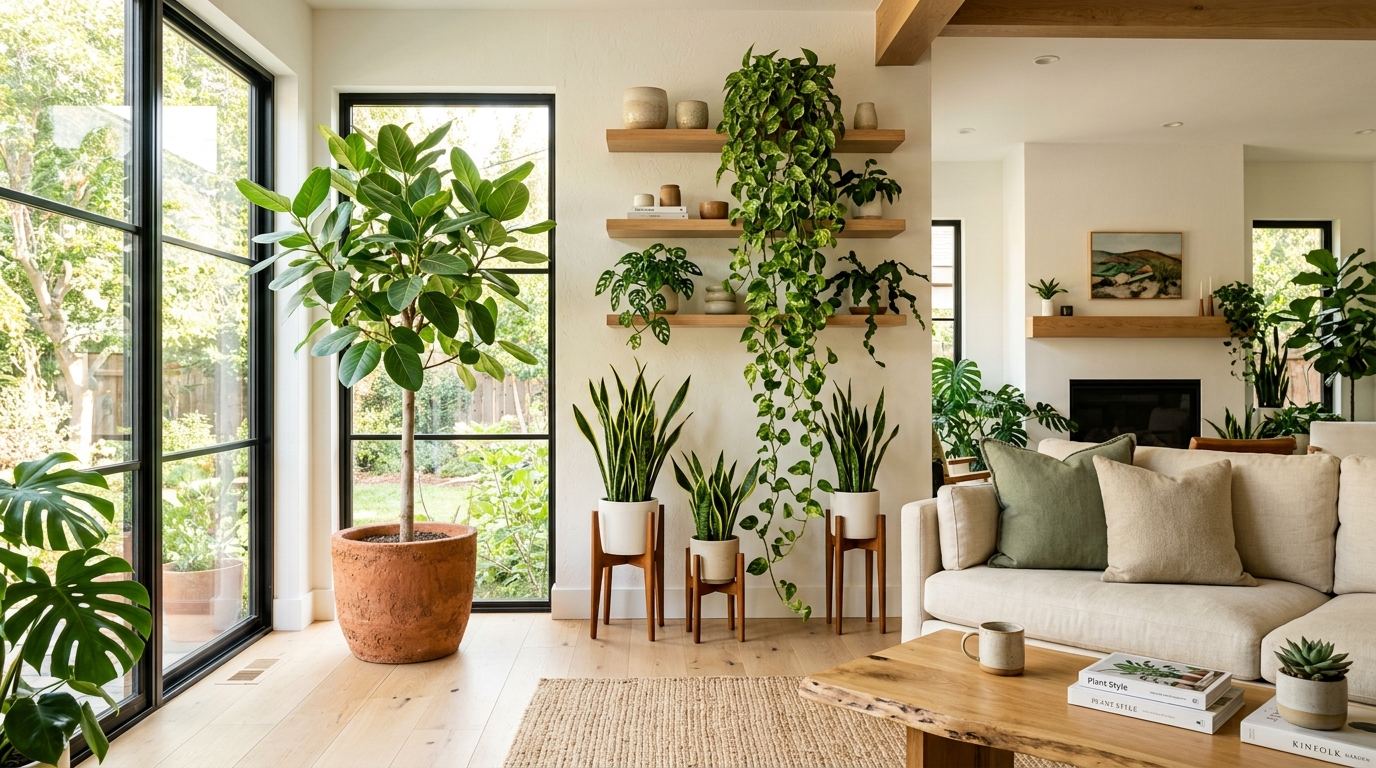
Biophilic design—the practice of connecting indoor living environments directly to the natural world—has become a foundational pillar of modern residential architecture. Incorporating live indoor plants into your living room does far more than introduce vibrant chlorophyll color; it purifies indoor air, softens rigid furniture lines, reduces stress levels, and infuses your home with organic energy. Throughout my fifteen years as an interior architect, I have seen how thoughtful plant curation elevates living rooms into calming, sanctuary-like retreats.
Decorating with indoor plants involves much more than scattering random small pots across window sills. Biophilic styling is an art form that requires matching plant species to your room’s natural light conditions, scaling planters to furniture proportions, layering plant heights (from ground statement trees to ceiling macramé hangers), and selecting artisan ceramic pots that harmonize with your interior color palette.
In this master biophilic guide, we will unpack fifteen indoor plant decor ideas for living rooms. We will cover plant species selection for low, medium, and bright light, statement tree positioning, shelf styling, plant stand curation, pest maintenance, and planter aesthetics that transform your space into a lush, air-purifying haven.
1. Statement Floor Trees for Living Room Corners
Incorporating a large statement indoor tree (5 to 7 feet tall) in a primary room corner is one of the most impactful biophilic styling choices you can make. A tall statement tree fills awkward empty corner volume, drawing the eye upward and anchoring vertical room proportions.
Ficus Audrey (Ficus Benghalensis): Features velvety matte green leaves and striking pale cream bark. Ficus Audrey is far more forgiving than the notoriously fickle Fiddle Leaf Fig, thriving in bright indirect window light.
Olive Tree (Olea Europaea): Offers delicate silvery-sage leaves and slender woody branches that complement Scandinavian, organic modern, and Mediterranean interiors. Position Olive Trees directly in front of sunny south or west-facing windows.
Pot your statement tree in a large terracotta, glazed earthenware, or concrete planter with adequate drainage. If you are styling plants in organic interiors, explore our feature on boho living room inspiration to see how statement trees pair with natural fiber rugs and linen seating.
2. Trailing Plant Canopy on High Floating Wall Shelves
High floating wall shelves offer ideal platforms for cascading trailing plants. Allowing green leafy tendrils to spill down across vertical wall surfaces breaks up hard drywall planes and adds gentle organic movement to your living room.
Pothos Varieties (Golden, Marble Queen, Jade): Virtually indestructible trailing plants that thrive in low-to-medium light. Their heart-shaped variegated leaves cascade downward gracefully.
Heartleaf Philodendron (Philodendron Hederaceum): Features delicate dark green heart-shaped leaves that trail several feet long, tolerating low-light apartment corners effortlessly.
Position trailing plants on upper floating shelves above your sofa or credenza. Ensure shelves receive soft indirect daylight, and trim trailing vines periodically to encourage lush, bushy growth.
3. Tabletop Plant Styling with Architectural Succulents
Styling coffee tables, media sideboards, and side tables with small-scale architectural plants introduces tactile greenery without crowding surface utility.
Snake Plant (Sansevieria Trifasciata): Features rigid, sword-like vertical leaves edged in yellow. Snake plants carry low visual weight, tolerate deep shade, and are exceptional air purifiers.
ZZ Plant (Zamioculcas Zamiifolia): Features glossy dark green oval leaves that reflect light. ZZ plants store water in underground rhizomes, requiring minimal watering and thriving under low-light artificial lamps.
Pair tabletop succulents with a stack of hardcover art books and a scented candle. If you are organizing media surfaces, review our feature on living room TV wall ideas to see how low-profile plants complement floating media consoles.
4. Hanging Macramé Plant Hangers for Window Nooks
Hanging plants from ceiling hooks or window frames utilizes empty vertical air space, freeing up precious floor area in small living rooms.
Suspend hand-knotted cotton macramé plant hangers in front of window nooks or next to reading armchairs. Place lightweight pots containing trailing plants (like String of Pearls or Hoyas) inside the macramé cradles.
Hanging plants at varying heights creates a dynamic floating green canopy that catches natural window light, adding bohemian warmth to your home. If you are decorating a compact space, explore our list of small living room decorating tips for vertical plant styling hacks.
5. Creating a Dedicated Botanical Window Seat Sanctuary
Converting an empty window bay or sill into a dedicated botanical display transforms natural light zones into peaceful garden nooks.
Line window sills with a collection of small hand-thrown ceramic pots holding African Violets, Peperomias, and Ferns. Group plants in odd numbers (threes or fives) to create natural visual balance.
Combine plants with varying leaf textures—pairing smooth glossy leaves with feathery fern fronds—to create a rich miniature indoor garden that catches morning sunlight.
6. Plant Stand Clusters of Varying Heights
Placing multiple plant pots flat on the floor can look cluttered and disorganized. Grouping plants on mid-century wooden or metal plant stands creates structured visual hierarchy.
Arrange three plant stands of varying heights (e.g., 12-inch, 18-inch, and 24-inch stands) in a room corner. Top stands with matching ceramic pots holding Monstera Deliciosa, Bird of Paradise, and Calatheas.
Raising plants off the floor exposes foliage to better daylight, improves air circulation around leaves, and makes floor cleaning effortless.
7. Biophilic Wall Shelving with Integrated LED Grow Lights
If your living room lacks bright natural windows, installing floating wall shelves equipped with subtle LED grow lights allows lush plants to thrive in dark rooms.
Mount full-spectrum LED grow light strips underneath floating wooden shelves, concealing wires inside wall raceways. Full-spectrum LED lights emit crisp warm white light that supports photosynthesis without turning your room purple.
Display shade-loving plants—such as Boston Ferns, Calathea Rattlesnake, and Marantas—on grow-light shelves to create a vibrant living green wall feature.
8. Ceramic and Terracotta Planter Aesthetics
The pots and planters you choose are just as important as the plants themselves. Using cheap plastic nursery pots ruins high-end interior aesthetics. Artisan planters unify plants into your decor theme.
Terracotta Pots: Porous clay pots that allow soil to breathe, preventing root rot. Terracotta introduces warm sun-baked ochre tones ideal for bohemian and organic modern homes.
Glazed Ceramic Urns: Matte white, greige, or speckled ceramic pots provide clean, refined containers for modern and Scandinavian living rooms.
Ensure all decorative planters feature bottom drainage holes and matching saucers to catch excess water, protecting hardwood floors and wood furniture from moisture damage.
9. Large Leaf Statement Plants for Modern Furniture Pairings
Plants with massive, architectural leaves act like living sculptures, complementing streamlined modern sectionals and travertine coffee tables.
Monstera Deliciosa (Swiss Cheese Plant): Famous for its large split leaves featuring natural perforations (fenestrations). Monsteras add dramatic tropical shape next to low-slung sofas.
Bird of Paradise (Strelitzia Nicolai): Features broad paddle-like glossy leaves that reach 6 to 8 feet high, adding luxurious resort-style elegance to high-ceiling living rooms.
Pair large-leaf statement plants with neutral upholstery. Before selecting seating to face your plant display, consult our detailed sectional sofa buying guide to choose fabric textures that pair beautifully with biophilic foliage.
10. Creating a Lush Fireside Plant Hearth Display
During spring and summer months when fireplaces are inactive, decorating empty fireplace hearths with potted indoor plants transforms cold brick or stone into a vibrant green focal feature.
Arrange a cluster of shade-tolerant potted plants—such as Cast Iron Plants, Peace Lilies, and Ferns—inside the fireplace opening and across the hearth step.
The lush green leaves contrast beautifully against dark firebrick or tile surrounds, keeping your fireplace area active and beautiful year-round.
11. Hydroponic Glass Vessel Plant Propagation Display
Displaying plant cuttings propagating in water inside clear glass vessels adds delicate science-inspired beauty to coffee tables and bookshelves.
Take vine cuttings of Pothos, Monstera Adansonii, or Philodendron and place stems inside clear glass beaker vases or wall-mounted test tube racks filled with clean water.
As white roots grow through the clear glass over several weeks, the glass vessels catch ambient lamp light, providing a fascinating living science display.
12. Biophilic Room Dividers with Open Plant Bookshelves
In open-concept living rooms, open-backed wooden bookshelves filled with dense houseplants serve as airy, natural room dividers.
Position an open-frame bookshelf perpendicular to a wall between your living lounge and dining area. Fill shelves with a mixture of bushy plants (like Boston Ferns and Calatheas) and books.
The dense green foliage creates a screen that offers visual privacy while allowing natural daylight and air to pass freely between open zones.
13. Low-Light Apartment Plant Selections
If your apartment living room faces a narrow courtyard or receives minimal direct sunlight, select shade-tolerant plant species that thrive under low light.
Cast Iron Plant (Aspidistra Elatior): Extremely tough plant with dark green leathery leaves that survives deep shade, low humidity, and irregular watering.
Peace Lily (Spathiphyllum): Features dark glossy leaves and white spathe blooms, signaling when it needs water by drooping gently before rebounding upon watering.
Parlor Palm (Chamaedorea Elegans): Compact palm featuring delicate feathery fronds that tolerates low light while adding soft tropical texture to side tables.
14. Integrating Indoor Plants with Wall Art and Galleries
Blending indoor plants with wall art creates a cohesive artistic installation where living foliage frames artwork naturally.
Position trailing plants on floating shelves directly above or beside gallery art frames, allowing leafy tendrils to frame canvas prints softly. If you are arranging art wall displays, explore our templates in living room gallery wall ideas for frame spacing rules.
Pair botanical sketches, architectural line drawings, and black-and-white photos with real green leaves to reinforce your home’s biophilic narrative.
15. Essential Plant Care and Pest Prevention Protocols
Keep your indoor plant collection thriving with simple routine maintenance protocols:
- Water Mindfully: Check soil moisture before watering by inserting your finger 2 inches into the soil. Water only when the top 2 inches feel dry to prevent root rot.
- Wipe Dust Off Leaves: Dust accumulates on broad leaves, blocking daylight absorption. Wipe leaves monthly with a damp microfiber cloth.
- Pest Prevention: Inspect leaf undersides regularly for spider mites or mealybugs. Treat pests immediately using organic Neem oil spray.
- Rotate Pots Monthly: Rotate plant pots 90 degrees once a month so foliage receives balanced daylight exposure, preventing plants from leaning lopsidedly toward windows.
Living Room Plant Light & Care Cheat Sheet
- Bright Direct Light (South Windows): Olive Trees, Cacti, Succulents, Fiddle Leaf Figs.
- Bright Indirect Light (East/West Windows): Ficus Audrey, Monstera Deliciosa, Bird of Paradise, Pothos.
- Low Light (North Windows / Inner Rooms): Snake Plants, ZZ Plants, Cast Iron Plants, Heartleaf Philodendron.
- Humidity Lovers (Mist Weekly): Boston Ferns, Calathea Rattlesnake, Peace Lilies.
Real-World Case Study: Biophilic Living Room Transformation
To demonstrate the practical impact of biophilic plant design, consider a recent studio project involving a modern living room in Portland. The homeowners felt their newly renovated space was sleek but cold and sterile, lacking organic warmth and life.
Our design team executed a biophilic plant transformation. We placed a 6-foot tall statement Ficus Audrey tree in a raw terracotta planter in the sunny main corner, installed floating white oak wall shelves holding trailing Marble Queen Pothos above the sofa, and grouped a ZZ Plant and Snake Plant on mid-century plant stands.
The transformation was immediate: the vibrant green foliage softened rigid room lines, introduced natural movement as daylight shifted, purified indoor air, and turned the sterile room into a soothing, spa-like living sanctuary.
Biophilic Plant Curation & Maintenance Blueprint
- Statement Corner Trees: Ficus Audrey or Olive Trees in terracotta pots.
- High Trailing Shelves: Pothos or Heartleaf Philodendron on floating shelves.
- Tabletop Succulents: Snake Plants or ZZ Plants on sideboards. Read our guide on living room storage solutions for sideboard styling.
- Organic Textures: Pair plants with jute rugs and rattan furniture. See our feature on boho living room inspiration for natural textile styling.
Indoor Plant Lighting Needs and Window Orientations
Matching plant species to window exposures ensures long-term growth. South-facing windows offer bright direct sunlight ideal for Olive Trees and Cacti. East and West windows provide bright indirect daylight perfect for Ficus Audrey and Monsteras. North windows suit shade-tolerant Snake Plants and ZZ Plants.
Organic Fertilizer and Potting Soil Mix Blueprint
Use well-draining potting soil enriched with perlite and orchid bark to prevent soil compaction and root rot. Feed indoor plants with organic liquid kelp fertilizer once a month during spring and summer growth seasons, reducing feeding during dormant winter months.
Biophilic Room Design and Plant Health Benefits
Biophilic interior design incorporates live indoor plants, natural daylight, unrefined timber, and stone to lower stress levels and improve wellbeing. Indoor plants purify air by absorbing volatile organic compounds (VOCs) and releasing fresh oxygen, creating a healthy indoor environment.
Potting Soil Selection and Drainage Requirements
Use well-draining potting soil enriched with perlite and orchid bark to prevent soil compaction and root rot. Always choose planters with bottom drainage holes and saucers, allowing excess water to drain freely to protect plant roots and hardwood floors.
Seasonal Plant Care and Pruning Protocols
Prune yellowing leaves and trim leggy vines in spring to encourage dense foliage growth. Feed plants monthly with organic liquid kelp fertilizer during spring and summer, reducing feeding during dormant winter months.
Biophilic Plant Curation and Lighting Orientation Matrix
Successful indoor plant decoration relies on matching plant foliage to window exposures. Position sun-loving Olive Trees directly in sunny south windows. Place Ficus Audrey and Monsteras near east or west windows receiving bright indirect daylight. Use shade-tolerant Snake Plants and ZZ Plants in dark interior rooms or under warm LED grow lights.
Living Room Plant Styling & Potting Blueprint
- Statement Corner Trees: Ficus Audrey or Olive Trees in raw terracotta planters.
- High Floating Shelves: Trailing Pothos or Philodendron vines spilling down wall surfaces.
- Tabletop Succulents: Snake Plants or ZZ Plants on sideboards. Read our living room storage solutions guide.
- Natural Fiber Pairings: Pair plants with jute rugs and rattan furniture. See our boho living room inspiration guide.
Step-by-Step Biophilic Plant Care and Repotting Guide
Proper repotting ensures indoor plants grow healthy foliage without becoming root-bound or developing fungal soil diseases. Select a decorative terracotta or ceramic planter that is 2 to 3 inches wider in diameter than the plant’s current nursery pot, ensuring the new planter features bottom drainage holes.
Line the planter base with a layer of chunky orchid bark or lava rocks to promote rapid drainage. Remove the plant gently from its old pot, loosening root balls gently. Fill around root balls with a fresh well-draining soil mix containing peat moss, perlite, and organic compost. Water thoroughly after repotting and place the plant in soft indirect daylight to acclimate smoothly.
Indoor Plant Pest Prevention and Leaf Cleaning Protocols
Protecting indoor plants from common pests (like spider mites, mealybugs, or fungus gnats) requires simple preventive care. Inspect leaf undersides and stem joints weekly for pest webbing or white residue, treating affected foliage immediately with organic Neem oil spray.
Wipe broad leaves (such as Monstera and Ficus Audrey) monthly with a damp microfiber cloth to remove accumulated dust. Clean leaves absorb daylight efficiently, promoting robust photosynthesis and keeping plants looking vibrant and healthy.
Biophilic Plant Curation & Styling Blueprint
Incorporating live indoor plants into living room interiors bridges indoor space with nature. Position a tall 6-foot statement Ficus Audrey or Olive Tree in a sunny main corner, place trailing Pothos vines on high floating shelves, and group Snake Plants or ZZ Plants on sideboards to improve indoor air quality and bring vibrant chlorophyll life to your home.
Indoor Plant Decor for Living Room Summary
Incorporating live indoor plants into living room interiors bridges indoor space with nature. Position a tall 6-foot statement Ficus Audrey or Olive Tree in a sunny main corner, place trailing Pothos vines on high floating shelves, and group Snake Plants or ZZ Plants on sideboards to improve indoor air quality and bring vibrant chlorophyll life to your home.
Frequently Asked Questions (FAQ)
1. What are the best indoor plants for a dark living room?
Snake Plants, ZZ Plants, Cast Iron Plants, Heartleaf Philodendrons, and Peace Lilies thrive in low-light environments, requiring minimal direct sunlight to maintain lush green leaves.
2. How do I prevent indoor plants from damaging hardwood floors?
Always place plant pots inside decorative glazed ceramic or terracotta planters equipped with matching saucers, and place felt floor protector pads under planter bases to prevent scratch marks and moisture ring stains.
3. How often should I water indoor living room plants?
Most indoor plants prefer soil to dry out slightly between waterings. Check soil moisture weekly by inserting your finger 2 inches deep—water thoroughly only when the top soil feels dry.
4. Are indoor plants safe for homes with cats and dogs?
Some popular plants (like Monstera, Pothos, and Snake Plants) are toxic if ingested by pets. Safe pet-friendly plants include Parlor Palms, Boston Ferns, Peperomias, Spider Plants, and Calatheas.
5. How high should a large floor plant stand?
Select floor plant stands 12 to 24 inches high. Raising pots off the floor exposes foliage to better daylight, improves air circulation around leaves, and makes vacuuming easy.
6. What is biophilic design in living rooms?
Biophilic design is an architectural approach that incorporates natural elements—such as live plants, natural daylight, unrefined wood, stone, and raw fibers—into indoor spaces to improve wellbeing and lower stress.
7. Why are my indoor plant leaves turning yellow?
Yellow leaves are most frequently caused by overwatering and soggy soil, which suffocates plant roots. Allow soil to dry out between waterings and ensure pots have bottom drainage holes.
8. How do I clean dust off broad indoor plant leaves?
Wipe leaf surfaces monthly with a damp microfiber cloth dipped in tepid water. Cleaning off dust allows leaves to absorb maximum daylight for healthy photosynthesis.
9. Can I use artificial plants in a modern living room?
High-quality faux botanical trees (such as real-touch faux Fiddle Leaf Figs or faux Olive Trees) can work in windowless corners, but live plants are preferred for their air-purifying and biophilic benefits.
10. How do I group indoor plants like an interior designer?
Use the Rule of Threes: group three plants of varying heights, leaf shapes, and pot textures together in a room corner or on plant stands to create a natural, harmonious garden cluster.